

The Truth About Life Expectancy: How Cystic Fibrosis Care Is Changing in 2026

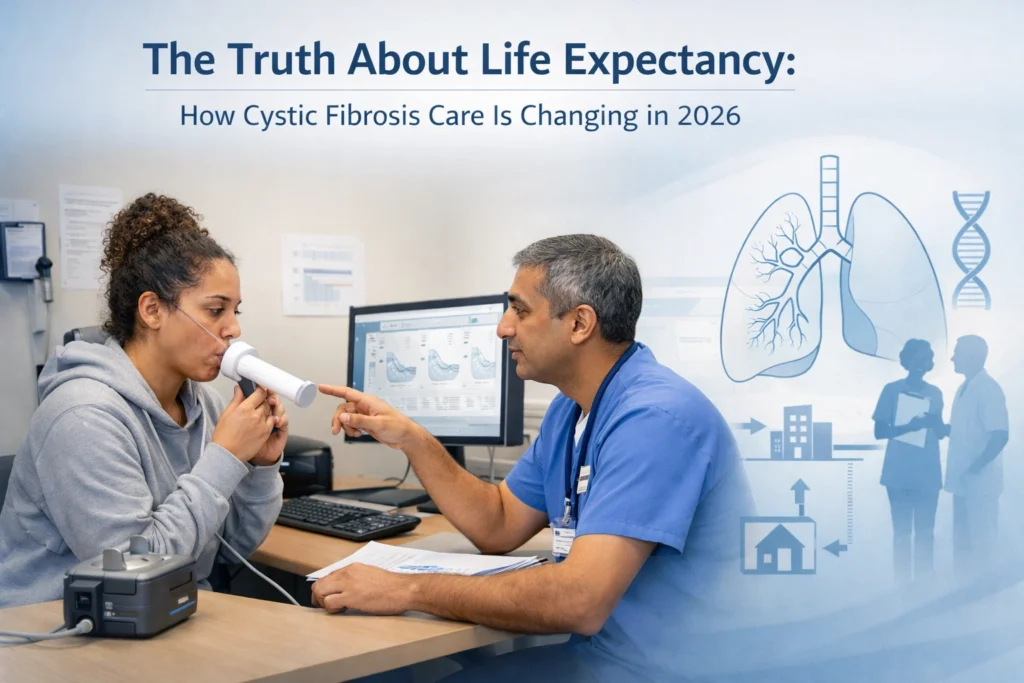
The landscape of cystic fibrosis (CF) care has undergone one of the most profound transformations in modern medicine. For those working within respiratory care UK or engaging in life sciences engagement uk, the shift from CF being a life-limiting childhood condition to a manageable chronic disease of adulthood is a testament to decades of clinical perseverance and molecular innovation.
As we move through 2026, the conversation around CF has shifted. We are no longer merely discussing survival into adulthood; we are discussing retirement, long-term career paths, and the complexities of ageing with a multi-system genetic condition. This blog explores the current reality of life expectancy, the factors driving these changes, and what this looks like on the ground for patients, clinicians, and the wider healthcare network.
What is the life expectancy of a person with cystic fibrosis in 2026?
One of the most frequent questions asked by families and newly diagnosed individuals is: "How long do cystic fibrosis patients live?" Historically, the answer was sobering. In the 1960s, median survival was often cited as being under 15 years. However, the trajectory since then has been consistently upward.
Based on recent registry data and predictive modelling, the median predicted survival for a child born with CF today is now reaching into the mid-60s. Specifically, research suggests that for those born between 2020 and 2024, the median survival is predicted to be approximately 65 years (Source: CF Foundation Patient Registry, 2024).
In practice, this means that the majority of people living with CF today are adults. In the UK, more than 60% of the CF population is over the age of 18. This demographic shift has necessitated a significant restructuring of healthcare networking uk, as adult CF services now require the same, if not more, resource and specialized focus as paediatric wings.
Does CF get worse with age?
Cystic fibrosis remains a progressive, life-long condition. While the rate of progression has slowed dramatically due to modern interventions, the underlying genetic mechanism, a malfunction in the CFTR protein, continues to affect the body over time.
What we observe on the ground is that the nature of the "worsening" has changed. Previously, the primary concern was rapid, irreversible lung damage and chronic respiratory failure in early life. Today, while lung health remains a priority, we see the emergence of age-related complications and multi-organ involvement. This includes:
- CF-Related Diabetes (CFRD): As patients live longer, the cumulative impact on the pancreas often leads to insulin deficiency.
- Bone Health: Long-term malabsorption of vitamins and the inflammatory nature of the disease can lead to early-onset osteoporosis or osteopenia.
- Renal and Hepatic Health: The long-term use of complex medication regimens requires careful monitoring of kidney and liver function.
What this looks like for clinicians is a move toward a "whole-patient" approach. It is no longer enough to be a specialist in the lungs; the modern CF MDT (Multidisciplinary Team) must integrate endocrinology, gastroenterology, and geriatric care into the standard care pathway.
The drivers of change: Why is survival increasing?
The leap in life expectancy is not the result of a single "silver bullet," but rather the convergence of several clinical and systemic advancements.
1. Neonatal Screening and Early Intervention
Early diagnosis is perhaps the most critical factor in long-term outcomes. By identifying CF within the first weeks of life via the heel-prick test, the NHS can initiate nutritional support and airway clearance before significant lung damage or malnutrition occurs.
2. The Era of CFTR Modulators
While we do not name specific products, the introduction of a class of drugs known as CFTR modulators has fundamentally altered the disease course for approximately 90% of the population. These treatments target the protein defect itself rather than just treating the symptoms (e.g., thinning mucus). Clinical papers have corroborated that these therapies can increase life expectancy by an estimated 8 to 10 years when started early in life.
3. Aggressive Nutritional and Infection Management
The "standard of care" in the UK involves rigorous mucociliary clearance and the proactive use of antibiotics to manage chronic infections like Pseudomonas aeruginosa. The integration of dietitians into every CF clinic has also ensured that patients maintain the BMI necessary to withstand respiratory exacerbations.

Caption: A visual representation of the multidisciplinary team approach required for modern cystic fibrosis management in the UK.
How old is the longest-living person with cystic fibrosis?
It is important to remember that "median survival" is a statistical projection, not a personal expiration date. There are many individuals living with CF who have far exceeded the historical averages.
While individual records vary, there are documented cases of people with CF living into their late 70s and even early 80s. These individuals often have specific "mild" genetic mutations or have benefited from exceptionally early and consistent care. These "outliers" provide invaluable insights for researchers into the factors that promote long-term resilience, including physical activity, adherence to treatment, and perhaps most importantly, access to specialized CF centres.
A note on the reality of care
Despite these advancements, it would be a mistake to suggest that CF is "cured" or that the burden of care has vanished. For many, maintaining this increased life expectancy requires hours of daily treatment, including nebulisers, physiotherapy, and dozens of tablets.
Furthermore, a subset of the CF community, those with "nonsense" mutations or rare genotypes, cannot yet benefit from the latest modulator therapies. For these patients, the focus remains on traditional symptom management and, in some cases, lung transplantation.
What this means for Life Sciences and the NHS
For those involved in life sciences engagement uk, the challenge now lies in "Phase 2" of the CF revolution. This includes:
- Developing therapies for the "final 10%" who cannot use current modulators.
- Addressing the long-term side effects of life-long medication.
- Improving the delivery of care through digital health and home monitoring to reduce the "treatment burden."
For the NHS, the challenge is capacity. As more patients live longer, adult CF centres are reaching a tipping point. We need robust healthcare networking uk to share best practices and ensure that geographical location does not dictate a patient's access to life-extending innovations.
Conclusion
The truth about life expectancy in 2026 is one of cautious optimism. We have moved the needle from a childhood tragedy to a chronic adult reality. While the road ahead still contains challenges: particularly regarding the equity of access and the management of an ageing CF population: the progress made is undeniable.
At The Respiratory Network, we believe that the best way to continue this progress is through the sharing of insight and the fostering of better conversations between patients, clinicians, and industry.
Join the Conversation
Are you a healthcare professional, a member of the life sciences community, or someone with lived experience of CF? We invite you to become a part of our growing network.
- Become a Member: Connect with peers and access exclusive resources at https://therespiratorynetwork.co.uk/members.
- Join the Discussion: Visit our forums to discuss the latest in respiratory care: https://therespiratorynetwork.co.uk/forums.
- Stay Updated: Follow our latest news and events at https://therespiratorynetwork.co.uk/news-feed.
Together, we can ensure that the next chapter of cystic fibrosis care is as transformative as the last.
 Please note that the information provided in this blog is for educational and networking purposes only. It does not constitute medical advice. Always consult a qualified healthcare professional regarding specific medical concerns, diagnosis, or treatment plans. We encourage you to discuss any information found here with your clinical team.



Responses