

Six Months Sooner: Navigating the New MHRA-NICE Joint Approval Pathway


As we move toward the close of March 2026, the UK healthcare landscape is preparing for one of the most significant structural shifts in recent years. On April 1st, the Medicines and Healthcare products Regulatory Agency (MHRA) and the National Institute for Health and Care Excellence (NICE) will officially launch their Aligned Pathway.
For those working within the respiratory space: whether in clinical leadership, life sciences, or patient advocacy: this change is more than a bureaucratic adjustment. It marks a fundamental move away from the traditional, sequential model of drug approval toward a parallel system designed to reduce the time it takes for new treatments to reach the frontline.
In practice, the goal is to bring new medicines to patients up to six months sooner than previously possible. Understanding the mechanics of this pathway is essential for anyone involved in pathway innovation and long-term service planning.
The Shift from Sequential to Parallel
Historically, the journey of a new medicine through the UK system followed a linear path. A manufacturer would first seek regulatory approval from the MHRA to ensure the product was safe and effective. Only after this marketing authorisation was granted would NICE begin its final assessment of the product’s cost-effectiveness. This "sequential" approach often created a lag: frequently around 90 days or more: where a medicine was licensed but not yet recommended for use within the NHS.
The new Aligned Pathway removes this gap. By synchronizing the MHRA’s licensing decision with NICE’s value assessment, both agencies can now work alongside one another. What this looks like on the ground is a system where NICE can publish its draft and final guidance contingent on regulatory approval, allowing for a simultaneous release of information.

The Joint Scientific Advice Service
A cornerstone of this new framework is the Joint Scientific Advice Service, which also becomes operational this April. For Life Sciences partners, this represents a single-entry point for pre-market guidance. Instead of navigating two separate sets of requirements, developers can receive coordinated advice on trial design, evidence requirements, and economic modeling.
In practice, this early engagement is intended to prevent the late-stage hurdles that often delay access. By aligning evidence requirements early in the development cycle, the hope is that the data produced will satisfy both the safety requirements of the regulator and the value requirements of the health technology assessor simultaneously.
What This Looks Like on the Ground
For an Integrated Care System (ICS) lead or a clinical lead in a respiratory hub, the Aligned Pathway changes the "lead-in" time for service transformation. When a new treatment for chronic obstructive pulmonary disease (COPD) or severe asthma enters the final stages of approval, the window for workforce planning and pathway design becomes much tighter: but also more predictable.
What patients and clinicians often describe is a frustration with the "postcode lottery" of access that can occur when guidance is delayed or unclear. The Aligned Pathway seeks to provide a clearer signal to the NHS. Because NICE guidance will be published alongside the license, providers can begin the practical work of implementation: such as updating local formularies and training staff: with greater certainty.

Eligibility and the Role of UK PharmaScan
It is important to note that this pathway is not an automatic default for every new medicine. It is a choice, and it requires a high degree of forward planning from industry partners. To be eligible, companies must register their products on UK PharmaScan at least three years before they expect to receive marketing authorisation.
This requirement for early notification is a practical measure. It allows the system to "horizon scan" more effectively, ensuring that the NHS is not blindsided by new high-cost or high-impact treatments. For those of us involved in Life Sciences Engagement UK, this underscores the need for constant, transparent communication between developers and the healthcare system.
The Impact on Respiratory Care
Respiratory medicine is uniquely positioned to benefit from this acceleration. We are currently seeing a significant wave of innovation in biologics and targeted therapies. These treatments often require complex delivery mechanisms or specific diagnostic criteria to be met before they can be administered.
When access is accelerated by six months, the administrative and logistical burden on the NHS shifts. We no longer have a long "waiting period" to prepare. Instead, the preparation must happen in parallel with the regulatory process. In practice, this means that while a medicine is being assessed for its clinical value, the NHS must already be considering the Pathway Innovation required to deliver it: such as diagnostic capacity and specialist nursing numbers.

Observed Realities and Early Adopters
The transition to this model has been in the works for some time. As of late 2025, over 25 pharmaceutical companies had already registered as early adopters of the pathway. The first set of guidance produced under this new system is expected as early as June 2026.
Observational data suggests that while the pathway offers speed, it also demands higher quality evidence from the outset. Because there is less time to "fix" evidence gaps between the MHRA and NICE stages, the pressure on the quality of real-world data and clinical trial outcomes is higher. For the respiratory community, this means our focus on robust data collection and Diagnostics is more critical than ever.
A Measured Approach to Innovation
While the promise of "six months sooner" is a compelling one, it is important to remain grounded. Faster approval does not automatically equate to faster adoption on the ward or in the community. The Aligned Pathway solves the regulatory delay, but it does not solve the local implementation challenges: such as workforce shortages or estate constraints: that often slow down the arrival of new treatments at the patient’s bedside.
The value of this new pathway lies in its ability to provide a "predictable horizon." When we know exactly when a treatment will be available, we can align our NHS Strategy to meet it.
Moving Forward Together
The Aligned Pathway represents a maturing of the relationship between the regulator, the assessor, and the industry. It acknowledges that in a modern healthcare system, safety and value are not two separate conversations to be had months apart: they are two sides of the same coin.
As we look toward the launch on April 1st, the focus must remain on how we, as a network, use this saved time. If the system grants us an extra six months of access, we must ensure that our pathways are ready to receive that innovation without creating new bottlenecks elsewhere.
Join the Conversation
Understanding these shifts is central to our mission at The Respiratory Network. We believe that by bringing together the different parts of the system, we can navigate these changes more effectively.
We invite you to join us for our upcoming Round Table event on the 29th of April at The King’s Fund. This will be a vital opportunity to discuss the practicalities of the Aligned Pathway and other recent policy shifts with colleagues from across the NHS and Life Sciences.
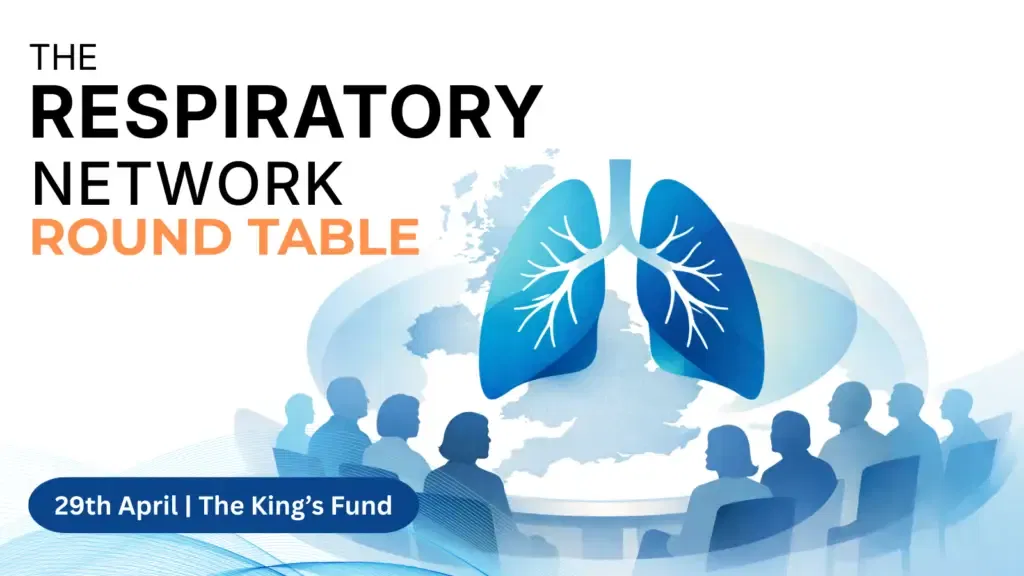
You can find more details and register for our upcoming events through our Events Page.
Medical Disclaimer: The information provided in this blog is for informational purposes only and does not constitute medical advice. Always seek professional clinical guidance for medical conditions.


Responses