

COPD vs. Asthma: The Diagnostic Challenge in the NHS

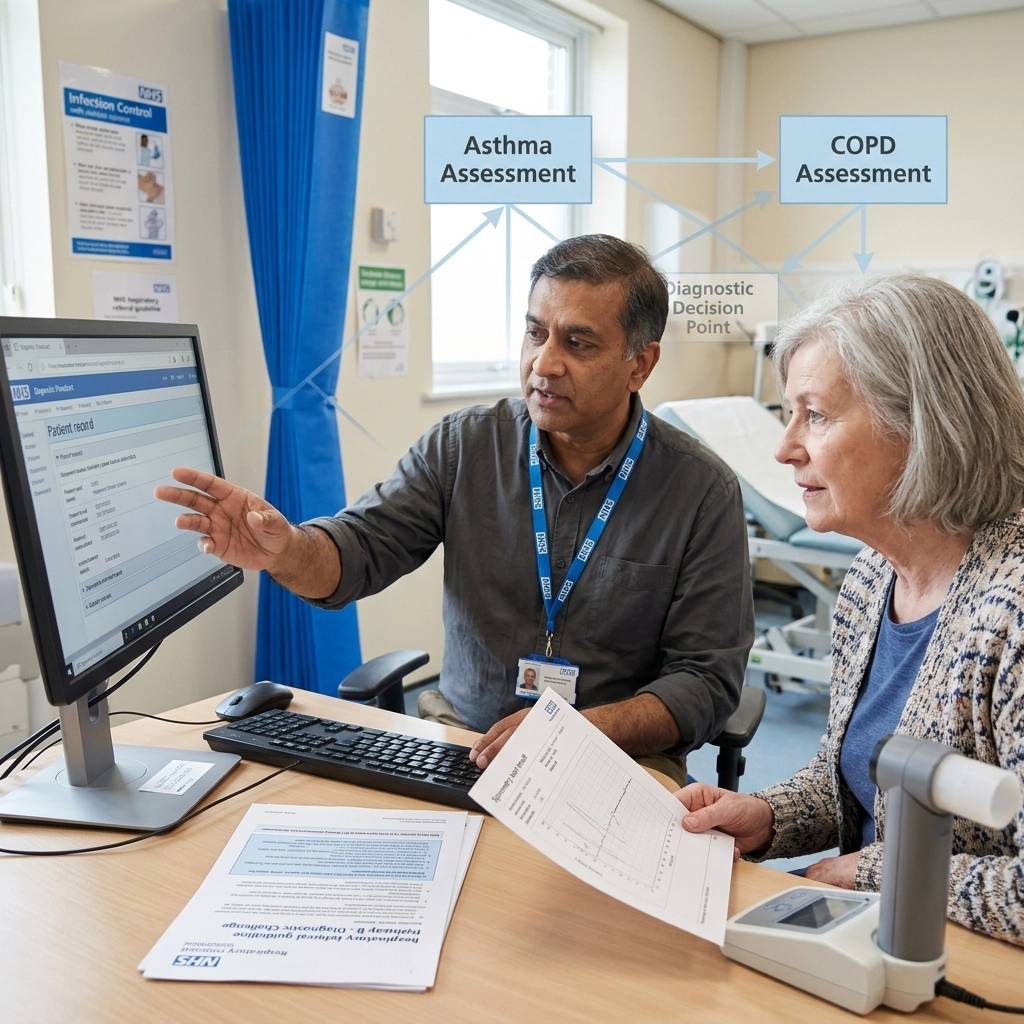
In the current landscape of NHS respiratory care, the distinction between Chronic Obstructive Pulmonary Disease (COPD) and asthma is frequently described by clinicians as one of the most persistent hurdles in primary care. While the two conditions are distinct in their pathophysiology and long-term outlook, the reality on the ground is often far more blurred.
For a patient presenting with breathlessness, a persistent cough, or wheezing, the journey to an accurate label is rarely a straight line. In practice, these symptoms are the common currency of many respiratory conditions. However, the diagnostic pathway chosen early on determines the trajectory of care for years to come. When the system is under pressure, as it currently is, the challenge moves from being a purely clinical puzzle to a systemic and resource-based one.
The Reality of Clinical Overlap
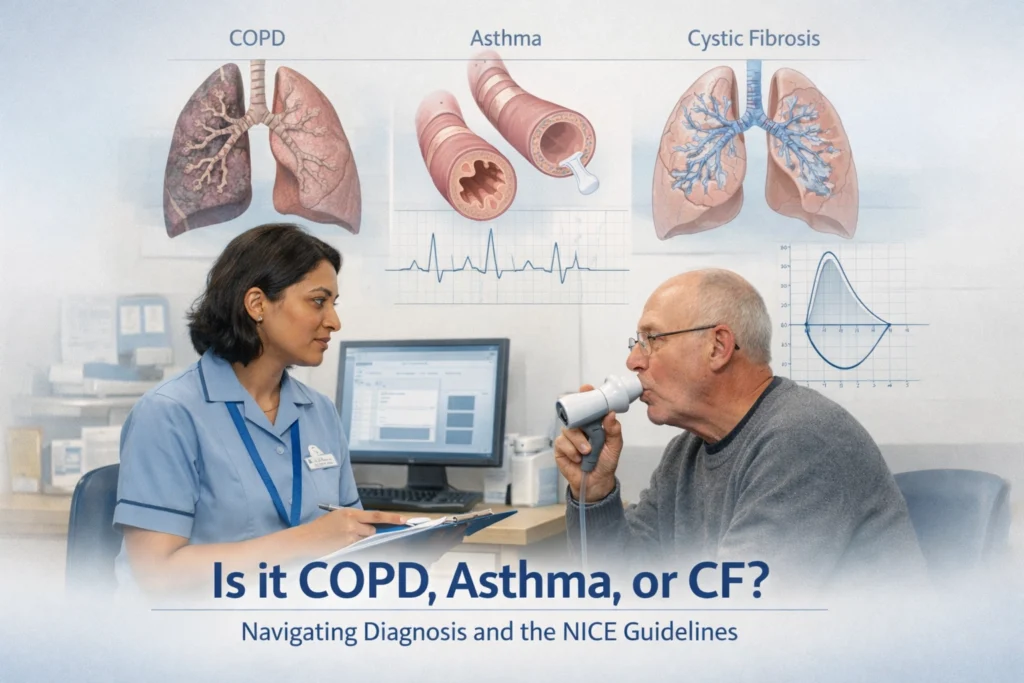
Differentiating between COPD and asthma is difficult because they share a significant clinical "vibe." Research suggests that approximately 17% to 19% of patients with obstructive airway diseases actually sit within an overlap zone. These individuals may demonstrate features of both conditions, such as the persistent airflow limitation typically seen in COPD alongside the allergic triggers or variable symptoms often associated with asthma.
In practice, the traditional markers used to separate the two: age, smoking history, and the presence of allergies: are helpful but not infallible. While COPD is often associated with older adults and a history of smoking, we are increasingly seeing non-smokers with significant lung impairment. Conversely, while asthma is frequently diagnosed in childhood, adult-onset asthma is a well-recognised clinical reality that can mirror the progressive nature of COPD.
What patients and clinicians often describe is a "diagnostic grey area." This ambiguity is not just a matter of semantics; it impacts how resources are allocated across Integrated Care Systems (ICS) and how patient outcomes are measured at a population health level.

The Diagnostic Toolset: Standards vs. Access
The gold standard for differentiating these conditions remains spirometry. By measuring the volume of air an individual can inhale or exhale and the speed at which they can do so, clinicians look for specific patterns. Specifically, post-bronchodilator spirometry is used to see if airflow obstruction is reversible. In asthma, we typically expect to see a significant improvement in lung function after certain interventions; in COPD, the obstruction is characterized as "fixed" or non-reversible.
Another tool that has gained prominence in the NHS pathway is Fractional exhaled Nitric Oxide (FeNO) testing. This measures levels of inflammation in the airways, which can be a strong indicator of an asthmatic component.
However, the challenge within the NHS is not a lack of knowledge about these tools, but rather the variability in access. Following the pandemic, spirometry backlogs became a significant bottleneck. In many regions, the "diagnostic restart" has been slow, leading to a reliance on symptomatic diagnosis rather than physiological testing. This creates a risk of misclassification, where COPD may be underdiagnosed in its early stages, or asthma may be over-treated as a fixed obstruction.
For more insights into how these diagnostic challenges are being managed at a local level, you can view some of our community discussions here and here.
Systemic and Leadership Challenges
The diagnostic challenge is as much a leadership and workforce issue as it is a clinical one. For an Integrated Care System to deliver accurate diagnostics, it requires a coordinated approach that spans primary, secondary, and community care.
1. Workforce and Training
Performing high-quality spirometry requires specific training and certification (such as the ARTP register). What we see on the ground is a workforce under immense pressure, where the time required to perform and interpret these tests is often at a premium. Without a dedicated, well-supported workforce, the diagnostic pathway remains fragile.
2. Resource Allocation
The "postcode breath" phenomenon is real. Resource allocation varies significantly between Primary Care Networks (PCNs). Some have invested in diagnostic hubs that centralise testing, while others still struggle with fragmented equipment and a lack of clear referral pathways. Leadership within the NHS must decide whether to invest in "bricks and mortar" diagnostic centres or to support more mobile, community-based solutions.
3. Data and Insights
From a Life Sciences perspective, the lack of a clear, definitive diagnosis at the population level makes it difficult to align innovation with need. If 20% of a cohort is "unclassified" or "overlapping," it becomes harder to measure the effectiveness of new service models or technologies.
The Patient Perspective: Lived Experience of the "Grey Area"
From the perspective of those with lived experience, the diagnostic journey can be a source of significant anxiety. Being told you have "asthma-like symptoms" or "probable COPD" without a definitive test result can lead to a lack of engagement with management plans.
Patients often describe the frustration of "trying one thing after another" while waiting for a formal lung function test. In a system where early intervention is key to preserving lung health, these delays are more than just administrative: they are life-altering. The Respiratory Network focuses on ensuring that the patient voice is central to these pathway discussions, highlighting that a diagnosis is not just a clinical label, but the starting point for a better quality of life.
You can read more about patient engagement strategies in our forum here.
Aligning Industry and the NHS
Life Sciences partners are not just observers in this diagnostic challenge; they are an integral part of the solution. Whether it is through providing better diagnostic hardware, supporting the digital integration of test results, or helping to fund educational initiatives for the workforce, the industry has a clear role to play.
However, this engagement must move from a transactional model to a transformational one. Instead of simply providing a tool, industry partners can work with NHS leaders to map the entire pathway, identifying where the "leakage" occurs and how to streamline the move from symptom to confirmed diagnosis. This alignment is a core focus of our upcoming events and round table discussions.
Moving Toward Pathway Excellence
The challenge of differentiating COPD and asthma in the NHS is not insurmountable, but it does require a shift in focus. We need to move away from viewing diagnostics as a "one-off" event and start seeing it as a continuous process of assessment.
What is needed now is:
- Standardisation: Ensuring that every patient, regardless of their location, has access to the same quality of physiological testing.
- Integration: Ensuring that data from spirometry and FeNO tests follows the patient through the system, reducing the need for repeat testing and clinical confusion.
- Collaboration: Bringing together clinicians, patients, and industry to co-produce pathways that are realistic, sustainable, and effective.
In practice, this means supporting our PCNs and ICS leads to prioritise respiratory diagnostics as a pillar of long-term health, rather than an elective "add-on."
Join the Conversation
Understanding the nuances of respiratory diagnostics is a collaborative effort. Whether you are an NHS lead looking to redesign your local pathway, a patient advocate wanting to share your journey, or a Life Sciences professional looking to support system change, we invite you to join us.
Our next major gathering will be at The King’s Fund on April 29th, where we will be diving deeper into these systemic challenges during our Round Table event. This is an opportunity to move beyond the data and discuss the real-world solutions that can make a difference on the ground.
Follow us for more updates:
- Join The Respiratory Network
- Connect with us on social media for daily insights.
- Explore our forum for deep dives into NHS Strategy and Life Sciences Engagement.
By working together, we can ensure that the diagnostic challenge becomes a diagnostic standard, providing clarity for patients and efficiency for the NHS.
Disclaimer: The following information is provided by The Respiratory Network for informational and networking purposes only. It does not constitute medical advice, diagnosis, or treatment recommendations. For any individual health concerns or clinical decisions, please consult a qualified healthcare professional or refer to official clinical guidelines.
Responses