

7 Care Gaps Undermining Asthma and COPD Care in the UK (And How ICSs Are Fixing Them)

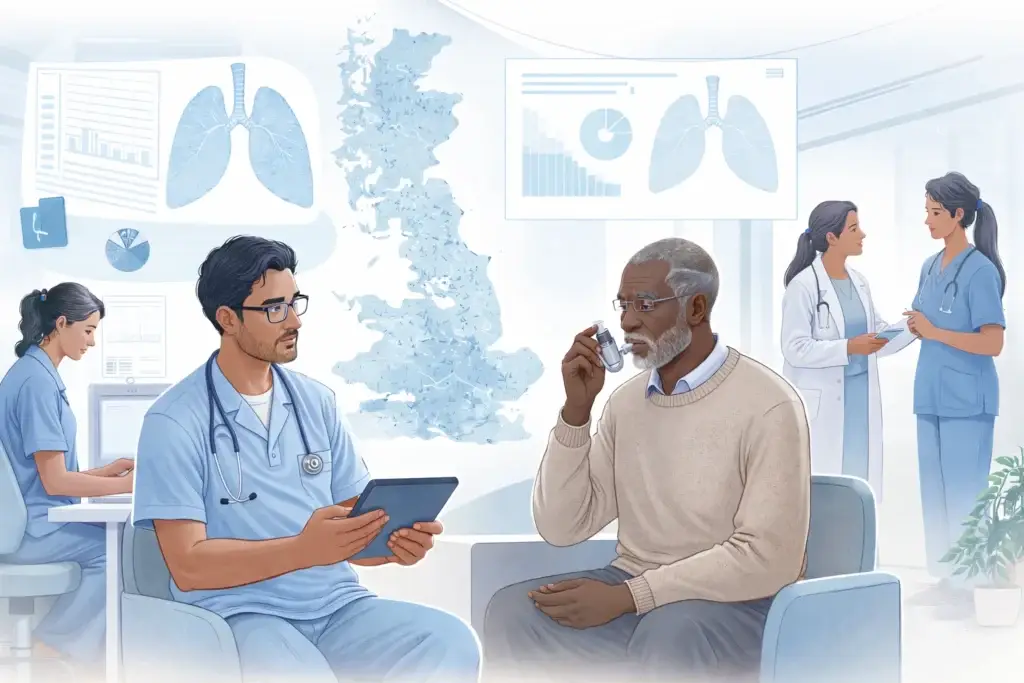
Respiratory disease remains one of the leading causes of emergency hospital admissions in England. Despite decades of clinical guidance, national strategies and local improvement programmes, the gaps in asthma care UK and COPD care UK continue to widen for many patients.
What makes this particularly frustrating is that most of these gaps are well documented. We know what good respiratory care looks like. The challenge lies in delivering it consistently across a fragmented system.
Integrated Care Systems (ICSs) were designed to address exactly this kind of problem: bringing together NHS organisations, local authorities and other partners to plan and deliver joined-up care. But are they making a difference where it counts?
This piece examines seven persistent care gaps affecting people living with asthma and COPD across the UK, and explores how ICSs are beginning to close them.
Gap 1: Late and Missed Diagnoses
More than a third of people surveyed in recent studies were unable to recognise the signs of COPD. Around one in four were initially misdiagnosed with a chest infection or persistent cough before eventually receiving the correct diagnosis.
In practice, this means thousands of people are living with progressive lung disease without knowing it: or without receiving the right treatment early enough to slow its progression.
For asthma, the picture is similarly concerning. Patients often describe years of symptoms being attributed to allergies, anxiety or being "a bit chesty" before a formal diagnosis is made.
What ICSs are doing: Several systems have begun investing in case-finding programmes within primary care, using data to identify patients with repeated respiratory presentations who have never received spirometry or a formal diagnosis. Some are embedding respiratory-trained pharmacists and nurses in community settings to improve diagnostic capacity.

Gap 2: Limited Access to Spirometry
Spirometry is the gold-standard test for diagnosing COPD and assessing asthma control. Yet 21% of patients report being unable to access this essential diagnostic test.
The reasons are familiar: insufficient trained staff, lack of equipment in primary care, long waits for hospital-based lung function services. The pandemic made this worse, and many services have not fully recovered.
What ICSs are doing: Some ICSs have established community diagnostic centres with dedicated respiratory pathways, reducing reliance on overstretched hospital services. Others have funded training programmes to increase the number of healthcare professionals qualified to perform and interpret spirometry in general practice.
Gap 3: Declining Quality of Routine Care
Between 2021 and 2022, the proportion of COPD patients receiving all five fundamentals of recommended care dropped from 24.5% to just 17.6%. That means less than one in five patients are receiving the basic standard of care outlined in national guidance.
This includes things like smoking cessation support, flu and pneumococcal vaccinations, inhaler technique checks, and referral to pulmonary rehabilitation.
These are not complex interventions. They are the building blocks of effective COPD management: and they are being missed at scale.
What ICSs are doing: A growing number of systems are using population health management tools to identify patients who have not received recommended care elements. By flagging these individuals to practices: and in some cases, directly to patients: ICSs are helping to close the gap between what should happen and what actually does.

Gap 4: Falling Rates of Pulmonary Rehabilitation
Pulmonary rehabilitation is one of the most effective interventions for people with COPD. It improves exercise tolerance, reduces breathlessness, and lowers the risk of hospital admission. Yet referral and completion rates have fallen by over 4% in recent years.
What patients and clinicians often describe is a system where rehabilitation services are under-resourced, geographically patchy, and difficult to access for those with mobility issues or work commitments.
What ICSs are doing: Some ICSs have expanded access to pulmonary rehabilitation by commissioning hybrid models: combining face-to-face sessions with digital options. Others are working with community organisations to deliver rehab in non-clinical settings, making it more accessible for people who struggle to attend hospital-based programmes.
Gap 5: Gaps in Annual Reviews
Annual reviews are a cornerstone of long-term condition management. For people with asthma or COPD, they offer an opportunity to assess control, adjust treatment, check inhaler technique, and identify emerging complications.
Evidence shows that patients who do not receive annual reviews experience substantially worse outcomes. Yet considerable gaps remain in how consistently these reviews are delivered.
What ICSs are doing: Several systems have introduced respiratory-specific quality improvement collaboratives, bringing together practices to share learning and standardise review processes. Some are also exploring the use of patient-initiated follow-up, where individuals are supported to request a review when they notice a change in symptoms: rather than waiting for an appointment that may never come.

Gap 6: Workforce Shortages and Capacity Constraints
Underpinning many of these care gaps is a fundamental issue: there are not enough people with the right skills in the right places.
Primary care teams are stretched. Community respiratory services are under-resourced. Secondary care is still managing the backlog from COVID-19. The NHS Workforce Strategy has acknowledged the need to address these gaps, but progress on the ground remains slow.
What ICSs are doing: Workforce planning is now a core function of ICSs. Some are investing in training pipelines for respiratory nurses and physiotherapists. Others are exploring task-sharing models, where pharmacists, health coaches, and support workers take on elements of respiratory care under clinical supervision.
This is not a quick fix: but it is a more coordinated approach than what came before.
Gap 7: Fragmented Respiratory Pathways
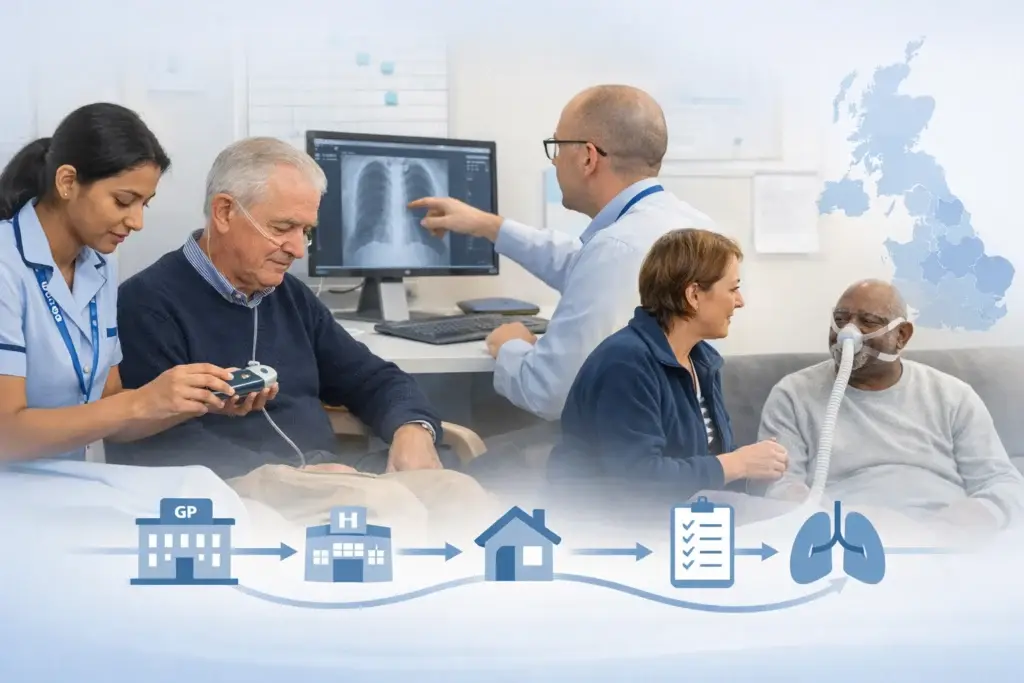
Perhaps the most significant gap is structural. Too often, the respiratory pathway is not a pathway at all: it is a series of disconnected touchpoints that patients navigate largely on their own.
A person with COPD might see their GP, attend a hospital clinic, visit a community pharmacy, and receive home oxygen: all without any of those services communicating effectively with each other.
What ICSs are doing: This is where the ICS model has the most potential. By bringing together commissioners, providers and community partners, ICSs can design integrated respiratory pathways that follow the patient rather than the organisation.
In some areas, this has led to the creation of respiratory networks: forums where clinicians, managers and patient representatives come together to align services and share accountability for outcomes.
Where Do We Go From Here?
The seven gaps outlined here are not new. They have been identified in audits, patient surveys and clinical reviews for years. What has changed is the system's capacity to respond.
ICSs are not a silver bullet. They face their own challenges: financial pressure, competing priorities, and the sheer complexity of coordinating care across multiple organisations. But they do offer something that was previously missing: a structure for accountability at a population level.
For respiratory care, this matters. Asthma and COPD affect millions of people in the UK. The costs: human and financial: of getting it wrong are enormous. But the interventions that work are well understood. The task now is implementation.
At The Respiratory Network, we bring together NHS leaders, Life Sciences professionals and patient advocates to share insight and drive improvement across the respiratory pathway.
If you are working to close these gaps in your system, we would welcome your voice in the conversation.
Join us at our Round Table 2026 or explore more at The Respiratory Network.

Responses