

Putting Patients at the Heart of the UK Respiratory Pathway


There's a phrase that's been quietly reshaping how we think about respiratory health in the UK. It's simple, but it carries weight: "what matters to someone" alongside "what's the matter with someone."
For years, respiratory care followed a fairly predictable pattern. A patient presents with symptoms, receives a diagnosis, and gets handed a treatment plan. The clinician leads, the patient follows. It worked, to a point. But as the pressure on NHS services has grown and our understanding of chronic respiratory conditions has deepened, something had to shift.
That shift is patient engagement. And it's changing the landscape of respiratory health uk in ways that matter to everyone involved: patients, clinicians, commissioners, and industry alike.
What Patient-Centered Care Actually Looks Like
Let's be clear about what we're talking about here. Patient engagement healthcare uk isn't a buzzword or a tick-box exercise. It's a fundamental reorientation of how care is planned, delivered, and experienced.
In practice, it means moving away from a reactive, disease-specific model toward something more coordinated. Care organised around individual needs, preferences, and goals rather than around the convenience of the system.
What patients and clinicians often describe is a shift from "here's your inhaler, see you in six months" to genuine conversations about lifestyle, values, and what good looks like for that particular person. It's treatment tailored to individual abilities and circumstances, not a one-size-fits-all protocol.

This isn't soft thinking. The evidence is clear. When patients are genuinely engaged in their care, clinical outcomes improve. Emergency admissions can reduce and treatment adherence can improve when shared decision-making is done well (see NICE guideline NG197: Shared decision making (evidence reviews) and Joosten et al., systematic review on SDM effects on adherence and health status (PubMed). And perhaps most importantly, patients report feeling more confident managing their own health.
Shared Decision-Making: More Than a Conversation
One of the cornerstones of this approach is shared decision-making. It sounds straightforward, but doing it well requires time, skill, and a willingness to let go of some professional control.
In a shared decision-making conversation, the clinician brings their expertise about the condition and the available options. The patient brings their expertise about their own life: what they can realistically commit to, what side effects they can tolerate, what matters most to them.
What this looks like on the ground varies. For someone with COPD, it might mean discussing whether pulmonary rehabilitation fits around their caring responsibilities. For someone with severe asthma, it might involve weighing the benefits of a biologic therapy against the practicalities of regular hospital visits.
The point is that patients aren't passive recipients anymore. They're active participants in planning their care. And when they're involved in those decisions, they're far more likely to stick with the treatment plan.
Self-Management: Building Confidence, Not Dependence
Closely linked to shared decision-making is the emphasis on self-management support. This is about equipping patients with the knowledge, skills, and confidence to manage their respiratory condition day-to-day.
It's not about abandoning people to figure things out alone. It's about building capability so that patients know when their symptoms are under control, when something's changing, and when they need to seek help.
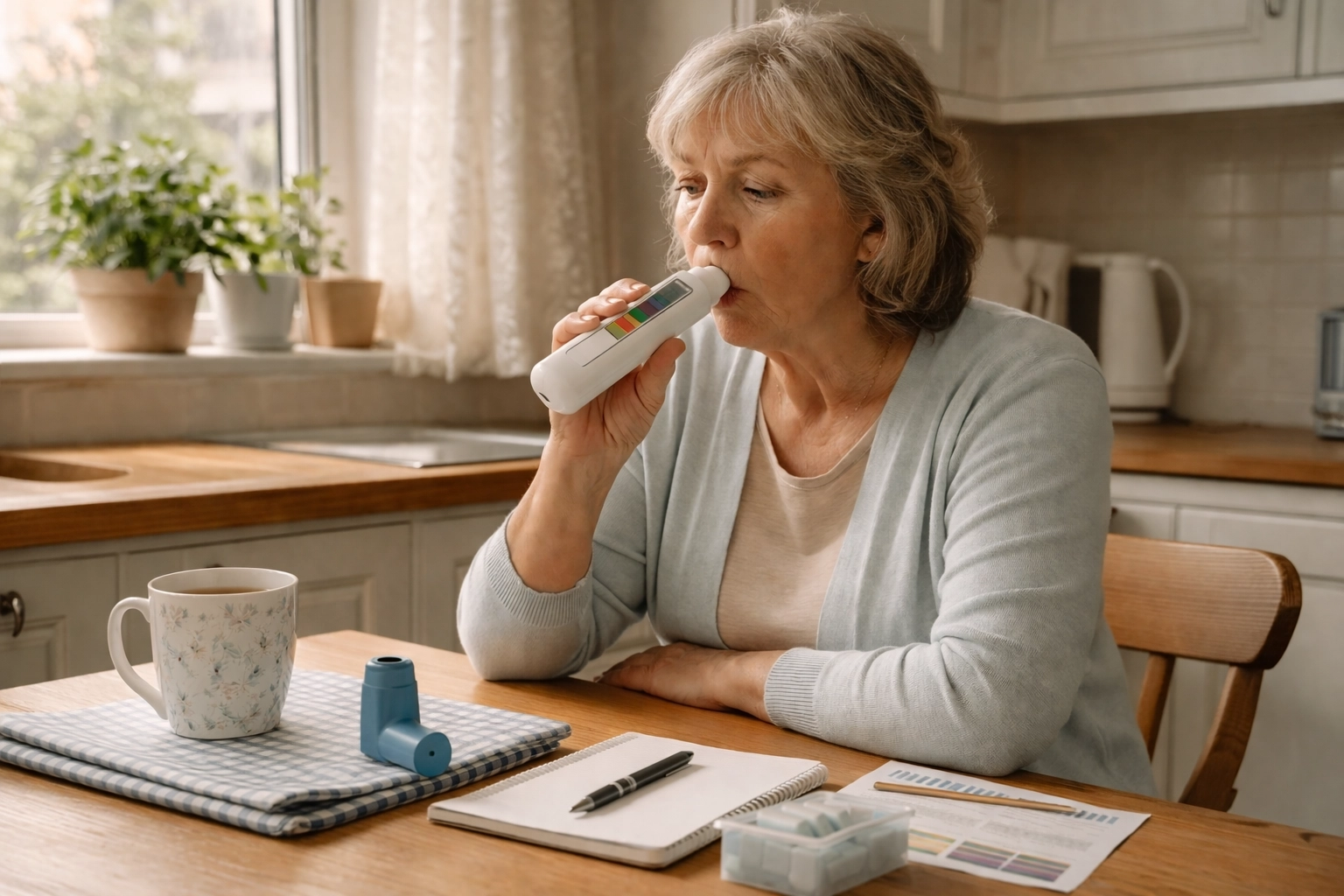
Pulmonary rehabilitation programmes are a good example. They combine supervised exercise with education about breathing techniques, medication management, and coping strategies. Patients who complete these programmes often describe feeling like they've got their lives back: not because their lung function has dramatically changed, but because they understand their condition better and feel more in control. The clinical evidence base is well established, including Cochrane reviews showing improvements in exercise capacity and quality of life, and (in some settings) reduced readmissions after exacerbations (see Cochrane evidence summary: pulmonary rehabilitation following COPD exacerbation).
The NHS Long Term Plan recognised this back in 2019, prioritising improved access to pulmonary rehabilitation and supported self-management. Progress has been uneven, but the direction of travel is clear.
How the System Is Adapting
Patient engagement doesn't happen in isolation. It requires the whole system to adapt: commissioners, organisations, and healthcare professionals all working toward the same goal.
Several strategies are gaining traction across respiratory services in the UK:
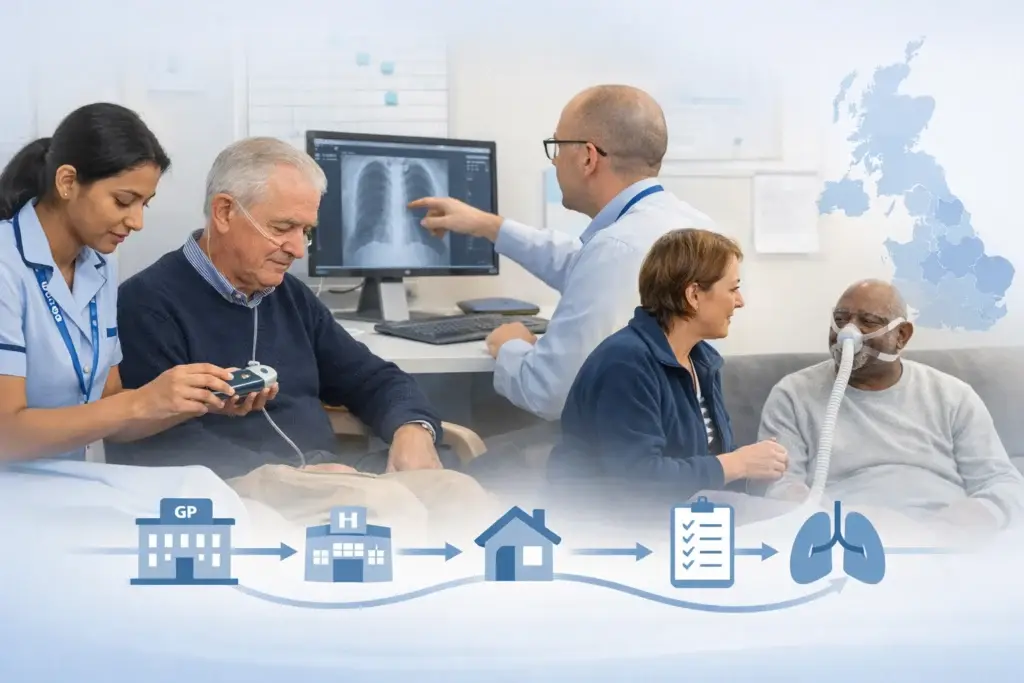
Integrated care pathways that ensure patients receive the right care from the right professional at the right time. This means better coordination between primary care, community services, and secondary care, with clear referral routes and standardised care bundles (see the BTS/PCRS joint position statement on integrated care: BTS news summary and full statement PDF via PCRS).
Hospital-at-home schemes and admission avoidance programmes that keep patients out of hospital where possible. For many people with respiratory conditions, being at home with the right support is both clinically appropriate and personally preferable. NHS England has set out practical expectations for respiratory outpatient transformation and admission avoidance in the Transforming elective care services: Respiratory handbook (PDF), alongside more recent operational guidance for virtual wards and respiratory pathways (e.g. NHS England guidance note: virtual ward care for acute respiratory infection including COPD).
One-stop clinics that streamline access to specialist care. Rather than multiple appointments across different sites, patients can see the professionals they need in a single visit. It respects their time and reduces the burden of navigating a fragmented system.
Preventative approaches that focus on vaccination, early intervention, and lifestyle support. The goal is promoting lifelong lung health rather than waiting until illness has already taken hold.

Both the British Thoracic Society and the Primary Care Respiratory Society have endorsed integrated, patient-centered care as their official position (see the BTS/PCRS Joint Position Statement on Integrated Care (PDF)). This isn't a fringe idea anymore. It's mainstream.
What This Means for Different Stakeholders
For patients and their advocates, this shift represents something genuinely meaningful. Being listened to, being involved, having your preferences taken seriously: these aren't small things. They change the experience of living with a respiratory condition.
For clinicians, particularly those in primary care, patient engagement offers a different kind of relationship with patients. It's more collaborative, more satisfying professionally, and often more effective clinically. But it also requires training, protected time, and organisational support.
For the Life Sciences sector, understanding patient engagement is essential. Treatments that don't fit into real lives won't be used properly. Devices that are too complex won't be adopted. The most elegant clinical solution is worthless if patients aren't willing or able to use it. Engaging with patients and their lived experience isn't just ethically important: it's commercially relevant.
The Challenges That Remain
None of this is easy. Time pressures in primary care make meaningful conversations difficult. Not every patient wants to be involved in decisions: some prefer to defer to clinical expertise, and that preference deserves respect too. Health inequalities mean that some patients are better equipped to engage than others, and the system needs to account for that.
There's also a risk of placing too much responsibility on patients. Self-management is valuable, but it shouldn't become self-reliance by another name. The system still needs to be there when people need it.
Progress requires a shared responsibility across commissioners, healthcare professionals, organisational processes, and patients themselves. No single part of the system can deliver this alone.
Where We Go From Here
The direction is set. Patient engagement healthcare uk is no longer optional: it's the foundation of modern respiratory care. The NHS Long Term Plan, professional bodies, and local integrated care systems are all aligned on this.
What's needed now is consistent implementation. Turning policy into practice. Making sure that every patient with a respiratory condition in the UK has the opportunity to be genuinely involved in their care.
That means continuing to invest in education and training for healthcare professionals. It means commissioning services that have time built in for real conversations. And it means listening to patients: not as a formality, but as a genuine source of insight about what's working and what isn't.
The respiratory pathway works best when patients are at its heart. Not as passive recipients, but as active partners.
Want to be part of the conversation? At The Respiratory Network, we bring together patients, clinicians, and industry to share insight and shape better respiratory care. Join our community or come along to our upcoming Round Table 2026 to connect with others who are working to put patients first.

Responses