

The Future of NHS Respiratory Services: What You Need to Know


If you work in respiratory care in the UK, you've probably noticed something shifting. The conversations are different. The policy language has changed. And there's a growing sense that 2026 could be the year where NHS respiratory services genuinely start to look different from the ground up.
This isn't about another restructure or a glossy strategy document that sits on a shelf. What's happening now feels more practical, more connected to the realities that clinicians and patients describe every day. So let's break down what's actually changing, what it means for respiratory care UK, and what you need to keep an eye on.
The Scale of the Challenge
Let's start with the numbers, because they matter.
One in five people in the UK are affected by respiratory conditions. In 2024, the NHS recorded over 850,000 emergency admissions related to respiratory disease. That's not a blip. That's sustained, year-on-year pressure that touches every part of the system: from primary care to acute trusts to community teams stretched thin.
COPD rates are rising. Pneumonia admissions remain stubbornly high. Diagnostic capacity hasn't kept pace with demand. And underlying all of this is the reality of air quality, deprivation, and the long tail of smoking-related illness that will take decades to fully work through.
Anyone working in NHS respiratory services already knows this. What's changing is how the system is choosing to respond.

The NHS Ten-Year Health Plan and Respiratory Care
The NHS 2025 Ten-Year Health Plan has identified respiratory care as a central test of whether the system can genuinely deliver on integration and prevention.
That's significant. It means respiratory isn't being treated as a standalone specialty problem. It's being positioned as a proving ground for the kind of joined-up, community-focused, prevention-led care that the NHS has been talking about for years but struggled to deliver at scale.
In practice, this translates into a few key priorities:
- Scaling diagnostic capacity : making spirometry, sleep-disordered breathing assessments, and other tests available in community and pharmacy settings, not just hospitals
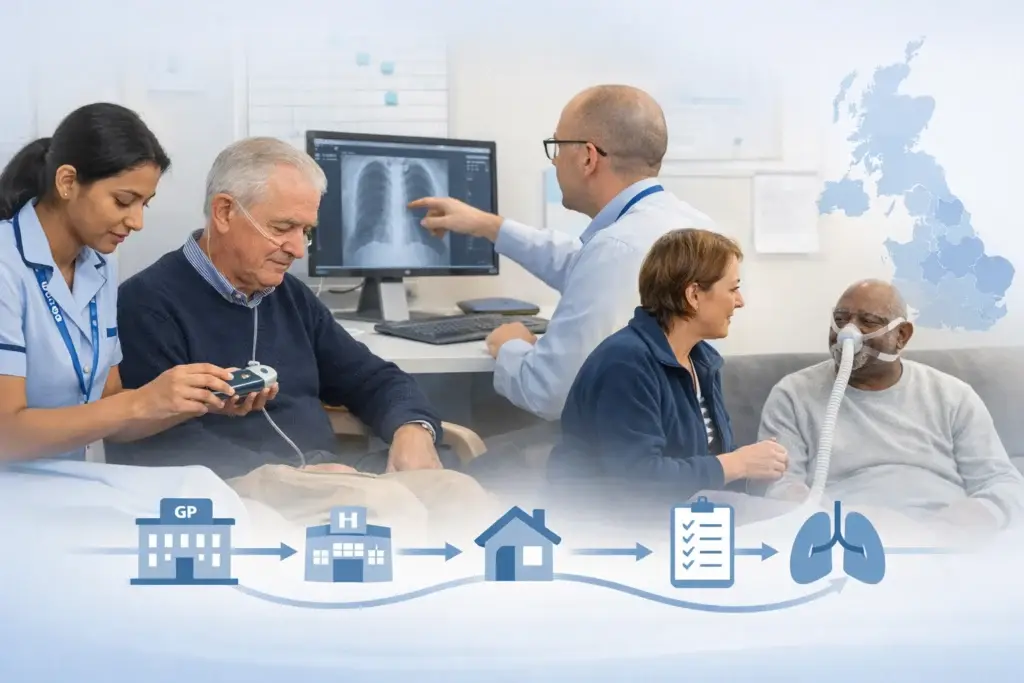
- Expanding community models : reducing reliance on emergency admissions by building out remote monitoring, home-based care management, and proactive outreach
- Strengthening the workforce : creating sustainable training pathways and supporting multidisciplinary teams that can work across traditional boundaries
- Embedding digital and AI : using technology for earlier detection, better monitoring, and population-level prevention
- Prevention at the core : integrating prevention strategies across Integrated Care Systems rather than treating them as an afterthought
None of this is revolutionary on paper. What matters is whether it actually happens.
Community-Based Care: Where the Real Shift Is Happening
If there's one area where respiratory care UK is likely to look noticeably different by the end of 2026, it's in the expansion of community-based services.
The logic is straightforward. Most people with respiratory conditions don't need to be in hospital most of the time. What they need is consistent, accessible support that helps them manage their condition, spot deterioration early, and avoid the crisis moments that lead to A&E.
What this looks like on the ground is still variable. Some areas are piloting respiratory hubs in primary care networks. Others are expanding the role of community pharmacy in vaccination, inhaler technique reviews, and basic diagnostics. There's growing interest in remote monitoring platforms that can flag changes in symptoms or peak flow before they escalate.
The challenge, as always, is consistency. What works in one ICS doesn't automatically translate to another. Workforce availability differs. Digital infrastructure differs. The relationship between primary and secondary care differs.
But the direction of travel is clear. And for clinicians, patients, and industry partners, understanding how your local system is approaching this is increasingly important.

Digital and AI: Practical Tools, Not Magic Solutions
There's a lot of noise around AI in healthcare right now. Some of it is warranted. Most of it isn't.
In respiratory care, the most promising applications are relatively unglamorous. Population health dashboards that help ICSs identify undiagnosed COPD. Decision support tools that flag patients at risk of exacerbation. Remote monitoring systems that reduce the need for routine clinic visits while keeping clinicians connected to their patients.
The NHS is investing in these tools, but the real work is in implementation. Technology only helps if it integrates with existing workflows, if clinicians trust it, and if patients can actually use it. That means training, change management, and honest evaluation of what's working and what isn't.
For those working in Life Sciences, this creates both opportunity and responsibility. The respiratory sector doesn't need more shiny pilots that disappear after 18 months. It needs solutions that can scale, that respect clinical time, and that genuinely improve outcomes for patients.
Funding: Where the Money Is Going
Transformation doesn't happen without investment, and there are signs that respiratory is finally getting some dedicated attention.
£2.61 million has been awarded to accelerate respiratory transformation across nine regions in England. That's not a headline-grabbing sum, but it's meaningful seed funding for initiatives that can demonstrate value and attract further support.
Community pharmacy is also seeing investment, particularly around vaccination services. The RSV immunisation programme targeting older adults is a good example of how respiratory prevention is being woven into existing infrastructure rather than treated as a separate workstream.

Sustainability and the Inhaler Question
One area that's generating a lot of discussion: and occasional controversy: is the push towards low-carbon inhalers.
The NHS has committed to promoting clinically appropriate low-carbon alternatives, particularly dry powder inhalers over metered-dose inhalers where appropriate. The environmental case is real: MDIs use hydrofluorocarbon propellants that have a significant carbon footprint.
But the shift has to be handled carefully. Patient choice matters. Clinical appropriateness matters. Supply chain resilience matters. What patients and clinicians often describe is a concern that environmental targets might override individual treatment decisions.
The most thoughtful approaches are those that focus on education and shared decision-making rather than blanket switching. Helping patients understand their options, supporting them to use their inhalers correctly, and respecting that the right device is the one that gets used properly.
What This Means for You
If you're a clinician, the next 12 months will likely bring new pathways, new tools, and new expectations around community-based care. Engaging with your ICS, understanding local priorities, and feeding back what's working (and what isn't) has never been more important.
If you're a patient or patient advocate, the emphasis on prevention and community care should, in theory, mean more accessible services and fewer crises. But holding the system accountable to those promises requires staying informed and staying vocal.
If you're in Life Sciences or industry, the opportunity is to be a genuine partner in transformation: not just a supplier. That means understanding the pressures NHS respiratory services face, designing solutions that fit real-world constraints, and committing to long-term collaboration rather than short-term wins.
Staying Connected
The respiratory landscape is moving quickly. Keeping up requires more than reading policy documents. It requires conversation, peer learning, and access to the people shaping what comes next.
That's exactly what The Respiratory Network is here for. If you're not already a member, now's a good time to join the community. And if you want to be part of the conversations that matter, take a look at The Respiratory Network Round Table 2026: where NHS leaders, clinicians, and industry come together to turn policy into practice.
The future of NHS respiratory services isn't written yet. But the people who show up to shape it will have the most influence over what it becomes.


Responses