

Patient Engagement: The Missing Piece in Your Respiratory Pathway Redesign

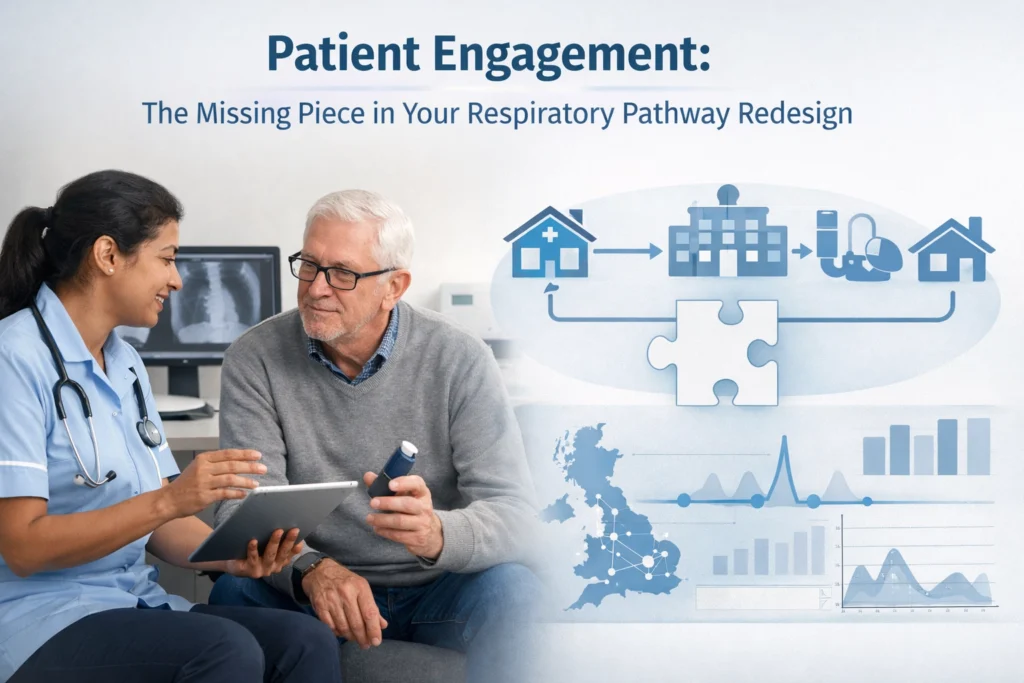
Most respiratory pathway redesigns start with clinical guidelines, capacity models and commissioning frameworks. They map patient flows, measure waiting times and identify bottlenecks in diagnostics or specialist access.
What they often miss is the people who actually use the service.
Not as data points or throughput figures, but as partners in how care is designed and delivered. This gap isn't deliberate, it's structural. Pathway redesign has historically been built around what works for providers, not what works for patients. And that misalignment shows up in everything from poor adherence to avoidable admissions.
The evidence is increasingly clear: involving patients early in pathway design doesn't just improve satisfaction scores. It leads to better clinical outcomes and more sustainable services.[1][2]
The Provider-Focused Problem
For decades, respiratory services were designed from the top down. Clinics were scheduled around workforce availability. Diagnostic pathways followed institutional preference. Education materials assumed patients would adapt to the system, rather than the system adapting to them.
This wasn't malicious. It was pragmatic. The NHS has always operated under pressure, and designing services around clinical capacity made sense in environments where resource constraints were the dominant planning variable.
But what this approach consistently overlooked was how patients actually experience that care. A perfectly efficient pathway on paper can still fail if patients don't understand what's being asked of them, don't feel heard when they raise concerns, or can't navigate the system without multiple phone calls and missed appointments.

Patients' expectations, as research shows, are relatively straightforward: they want to be partners in decisions about their care, to understand whether the right decisions are being made, and to feel empowered rather than processed.[2] When pathways are designed without that input, the disconnect becomes embedded in how services operate.
What Patient Engagement Actually Looks Like
Patient engagement in pathway redesign is not the same as patient feedback. Feedback happens after the fact, through surveys, complaints or friends and family tests. Engagement happens during design.
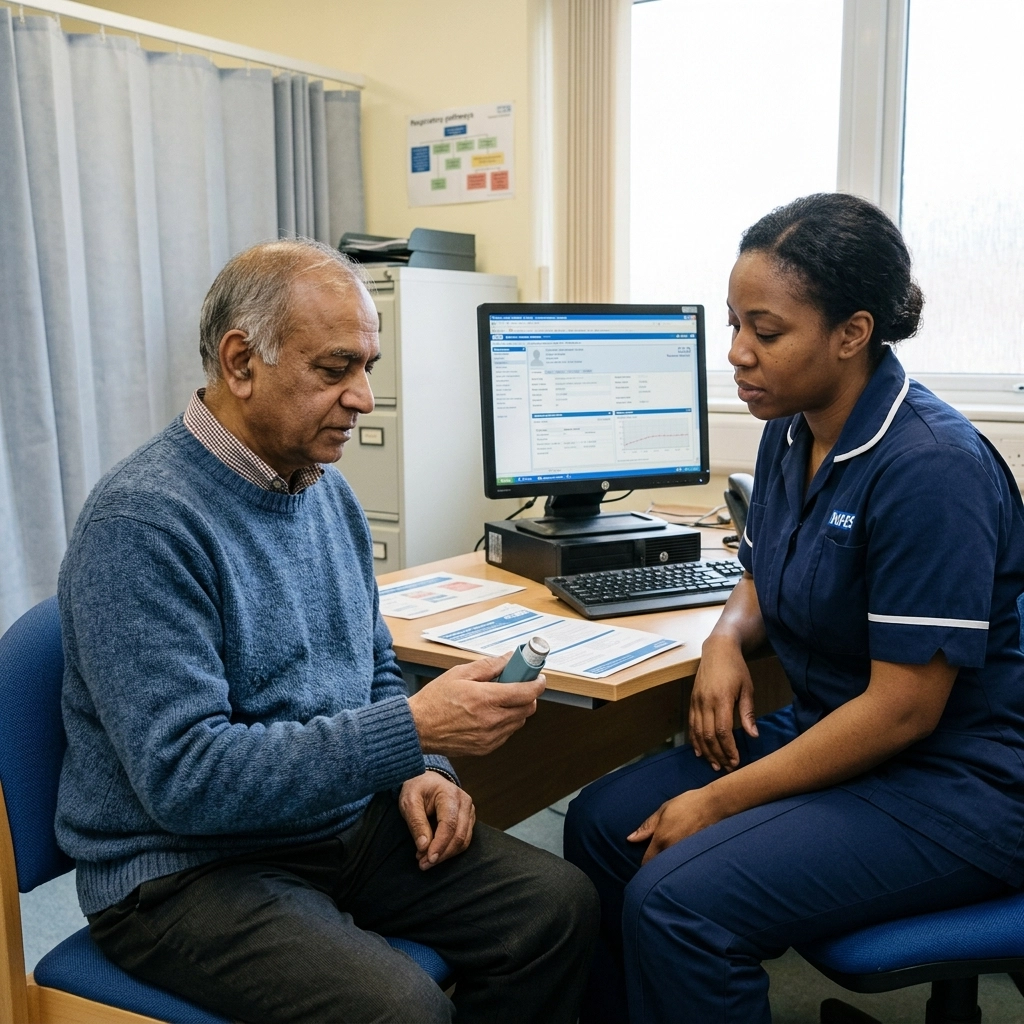
One of the most effective models is experience-based co-design (EBCD), which brings patients and clinicians together to map journeys, identify pain points and test solutions.[1][2] This isn't about asking patients to attend formal workshops or governance meetings where they feel like the only non-clinical voice in the room. It's about meeting people where they are, often at existing patient group meetings, and capturing their lived experience in ways that feel natural rather than performative.
In practice, this might mean:
- Shadowing a patient through their diagnostic pathway to understand where communication breaks down
- Involving patient representatives in pathway governance, particularly those who are also service users
- Testing education materials with patients before rolling them out system-wide
- Using patient feedback to prioritise which parts of a pathway need redesigning first
The difference between co-design and consultation is that patients have decision-making power, not just a voice. Their input doesn't get filtered through clinical interpretation, it directly shapes what gets built.
The Benefits Are Measurable
The case for patient-centered redesign isn't ideological. It's practical.
When respiratory pathways are redesigned with meaningful patient input, several outcomes emerge consistently across different settings:
Service quality improves. Patients who feel their views are sought and acted upon strengthen their relationship with providers, which translates into better engagement across the care continuum.[1] This matters in respiratory care, where long-term adherence to inhaler technique, self-management plans and lifestyle changes directly affects outcomes.
Clinical outcomes improve. Pathways informed by patient experience tend to align more closely with clinical guidance, because patients highlight where current practice deviates from what they've been told to expect.[3] In asthma and COPD care, this often surfaces gaps in review frequency, inhaler education or access to pulmonary rehabilitation, all areas where adherence drives quality of life.
Services become more locally responsive. Patient engagement surfaces issues specific to local populations that wouldn't show up in national datasets.[1] This might include transport barriers, literacy levels affecting self-management materials, or cultural factors influencing how families engage with respiratory services.
Patients report better psychological resilience. Being involved in pathway decisions, particularly around preparation for procedures or understanding treatment options, improves not just clinical outcomes but quality of life and confidence in navigating the health system.[2]
None of this requires additional funding. It requires a shift in how pathway design conversations are convened and who gets to shape them.

How to Do This Well
Effective patient engagement in pathway redesign follows a staged consultative and collaborative approach.[1] It's not a one-off event. It's an ongoing relationship between providers and the communities they serve.
Start small. Identify one part of your respiratory pathway that consistently underperforms: missed appointments, low pulmonary rehab uptake, high A&E attendances for asthma. Bring together a small group that includes clinicians, administrators and patients who've experienced that part of the pathway. Map it together. Ask patients to describe not just what happened, but how it felt and what would have made it easier.
Elevate patient voices at governance level. This doesn't mean tokenistic representation. It means ensuring that people with lived experience of respiratory conditions sit on boards where decisions about pathway redesign are made, and that their input carries the same weight as clinical or operational perspectives.[1]
Test before you scale. Before rolling out a new digital triage system or restructured clinic model, trial it with a small patient group and iterate based on their feedback. This prevents expensive rollouts of systems that look good on paper but don't work in practice.
Document what you learn. Patient engagement generates insight that's valuable beyond the immediate pathway. Needs assessments inform priority-setting across respiratory services and help identify where gaps in care are most keenly felt by the people who experience them.[1]
What This Means for the System
Pathway redesign tends to happen in response to pressure: rising demand, workforce gaps, new commissioning frameworks. Patient engagement introduces a different kind of pressure: one that comes from understanding how care actually lands with the people it's designed to serve.
This doesn't slow down redesign. If anything, it prevents the kind of costly missteps that happen when pathways are built on assumptions that don't hold up in practice.
For NHS teams, it means better intelligence about what needs to change and why. For Life Sciences, it means understanding how patients experience innovation in real-world settings, which informs everything from device design to patient support programmes. For patient advocates, it means a seat at the table where decisions get made, not just feedback loops after the fact.
The challenge isn't whether to involve patients. It's how to do it in ways that are meaningful, sustainable and genuinely influential.
Want to explore what patient-centered pathway redesign looks like in practice? Join our community of NHS leaders, clinicians, Life Sciences partners and patient advocates working to improve respiratory care across the UK. Become a member or join us at our next Round Table event to share challenges and solutions with peers who understand the system you're working in.
References
[1] NHS England. (2024). Experience-based co-design in respiratory pathway redesign.
[2] National Institute for Health and Care Excellence. (2024). Patient engagement and empowerment in healthcare pathways.
[3] British Thoracic Society. (2024). Quality standards for respiratory care delivery.
Responses