

Bridging the Gap: How Life Sciences Can Support NHS Respiratory Recovery

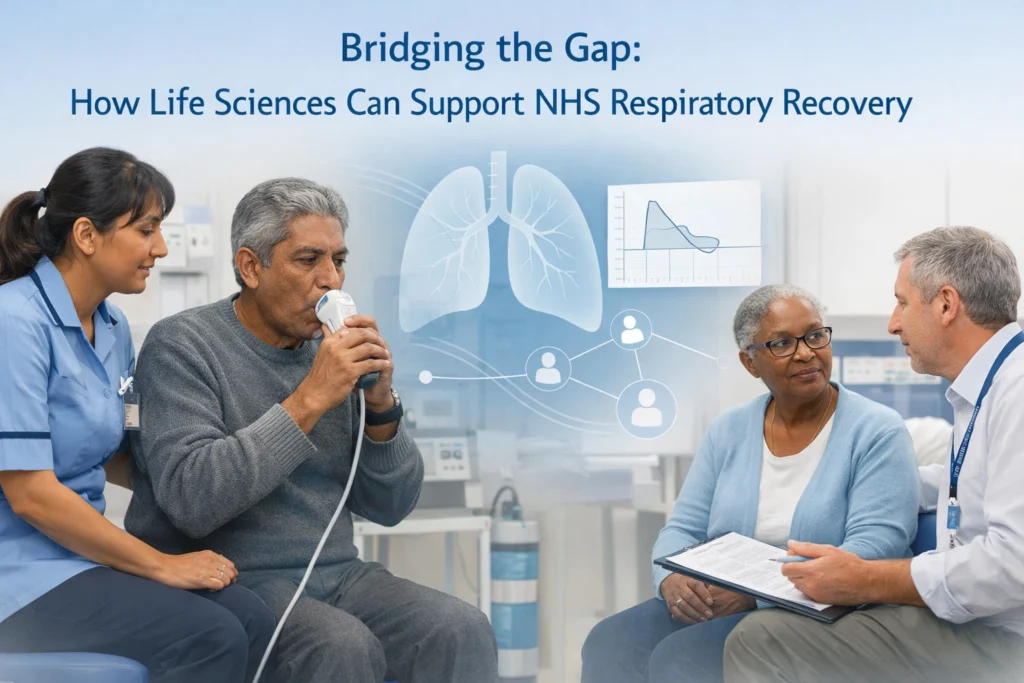
The phrase "Life Sciences partnership" can make people wary: and for good reason. When done badly, it looks like commercial interest dressed up as collaboration. When done well, it's hard to see where one side ends and the other begins.
Right now, NHS respiratory services are under sustained pressure. Waiting lists, workforce gaps, and a backlog of undiagnosed or poorly managed chronic conditions aren't going anywhere quickly. At the same time, Life Sciences holds tools, data infrastructure, and development capacity that the NHS simply doesn't have the bandwidth to build alone.
The question isn't whether these two worlds should work together. It's how they do it in ways that are transparent, clinically grounded, and genuinely useful.
What Life Sciences Actually Brings to the Table

Let's be clear: this isn't about product promotion or market access. It's about capability.
Life Sciences organisations: from diagnostics manufacturers to digital health developers: operate with resources, timelines, and regulatory expertise that allow them to move faster than the NHS can on its own. They develop tools. They run trials. They analyse real-world data at scale. When that capacity is directed toward shared clinical priorities, it can make a tangible difference.
In respiratory care specifically, several areas stand out.
Diagnostic Innovation
One of the clearest examples is the Clinical Respiratory Metagenomics Collaborative Programme, delivered through Guy's & St Thomas' NHS Foundation Trust in partnership with Oxford Nanopore. Using advanced metagenomic sequencing, the programme diagnoses severe respiratory infections within six hours: a timeframe that can be the difference between appropriate treatment and prolonged ICU stays.
With £34.8 million in government funding, it's expanding from 10 to 30 NHS sites. Importantly, it's not just a clinical tool. It feeds surveillance data on known and emerging pathogens to the UK Health Security Agency, creating what's been described as a "world-first combination of clinical service with national biosurveillance."
That's what good collaboration looks like: a tool designed for clinical need, scaled through partnership, with built-in value for public health infrastructure.
AI and Digital Tools
Artificial intelligence is being developed to support respiratory diagnosis: particularly in interpreting spirometry results and stratifying patients at risk of exacerbation. The value here isn't replacing clinical judgement. It's enabling earlier intervention and freeing up capacity for more complex decision-making.
The NHS is developing pathways to adopt these tools through mechanisms like the "innovator passport," which allows proven technologies to roll out system-wide without reinventing procurement at every trust. Life Sciences plays a role in developing the tools; the NHS owns the adoption framework.
Where the NHS Needs More Than Technology
It's tempting to talk about innovation as if it solves workforce gaps. It doesn't.
The British Thoracic Society estimates that at least 1,000 pulmonary rehabilitation physiotherapy posts are needed across the UK: 600 registered and 400 non-registered. Respiratory consultant shortfalls are well documented. No amount of AI or digital diagnostics changes the fact that services need people.
What Life Sciences can do is support education, pathway redesign, and quality improvement work that helps existing teams work more effectively.
Some examples in practice:
- Training and upskilling programmes delivered in partnership with professional bodies, designed around real service pressures rather than product features
- Pathway tools and decision support that allow non-specialist teams in primary care to manage stable respiratory patients confidently, reserving specialist time for complex cases
- Data and insights from real-world evidence studies that help services understand what's working, where gaps exist, and what outcomes look like across different patient cohorts
These aren't headline-grabbing. But they're the kind of contributions that clinicians and service leads actually find useful.
What Good Partnership Looks Like on the Ground
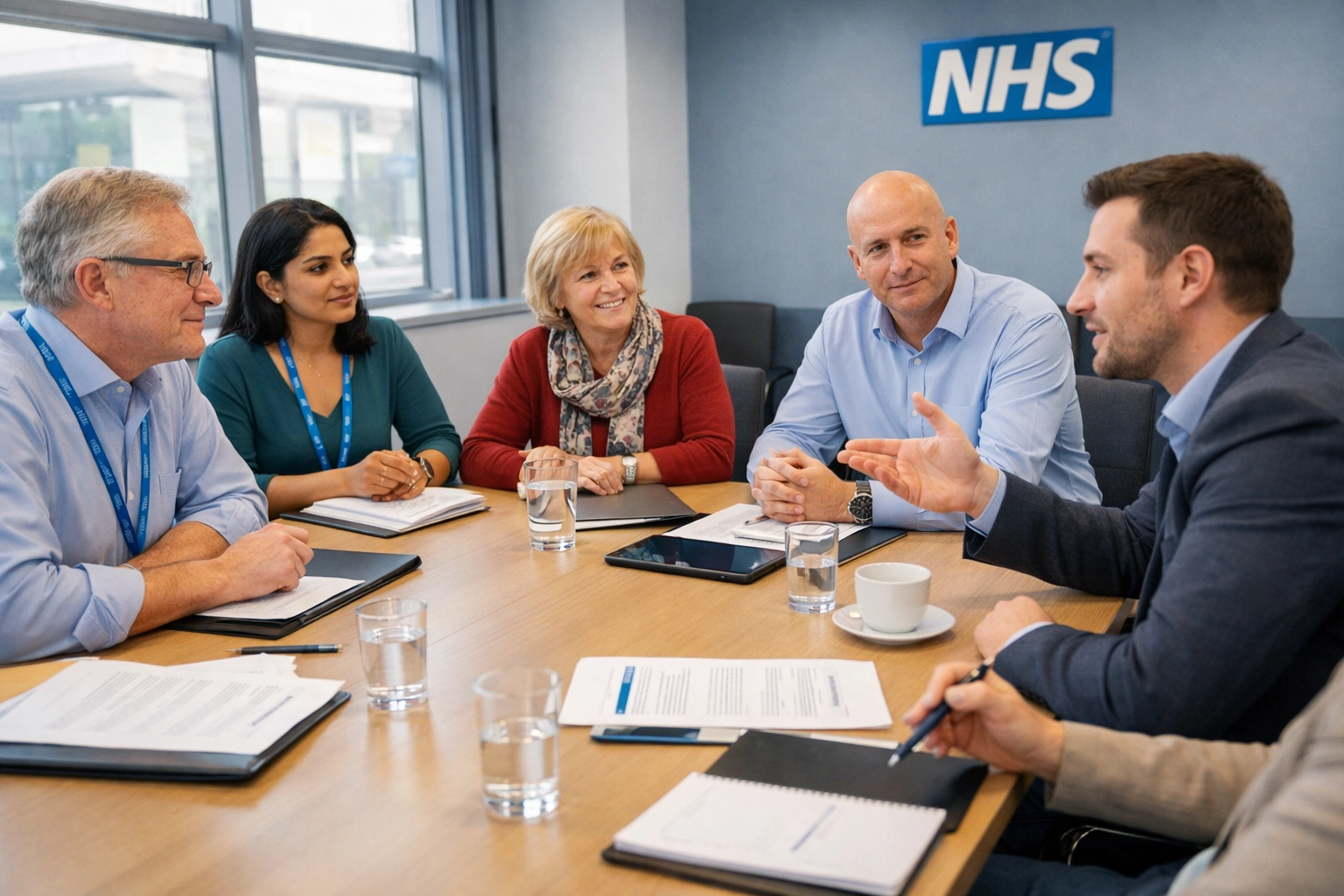
Balanced collaboration requires three voices in the room: Life Sciences, NHS leadership, and patients with lived experience.
When one of those is missing, the conversation skews. Life Sciences without clinical input becomes solution-led rather than problem-led. The NHS without patient insight risks designing services that look efficient on paper but don't reflect how people actually live with respiratory conditions. Patients without professional context can struggle to influence system-level change.

The most effective partnerships are the ones where:
- The clinical need is defined first, and Life Sciences responds to it: not the other way around
- Governance is transparent, with clear agreements about data use, intellectual property, and how findings will be shared
- Patients are involved from the start, shaping what problems are worth solving and what "better" actually looks like
These aren't easy conversations. There's commercial interest on one side, resource constraints on the other, and lived experience that doesn't always align neatly with either. But that tension is productive when it's managed well.
Regulatory and Adoption Infrastructure
The Life Sciences Sector Plan introduced by the UK government provides a framework for faster adoption of innovations that have proven clinical value. This includes regulatory reform to strengthen the Medicines and Healthcare products Regulatory Agency (MHRA), streamlined pathways for digital tools, and targeted support for scaling high-potential companies.
It's worth understanding what this means in practice. It's not a fast-track to market. It's a recognition that the NHS can't afford to wait years for evidence to accumulate while individual trusts negotiate contracts independently. Where something works, there's now infrastructure to roll it out.
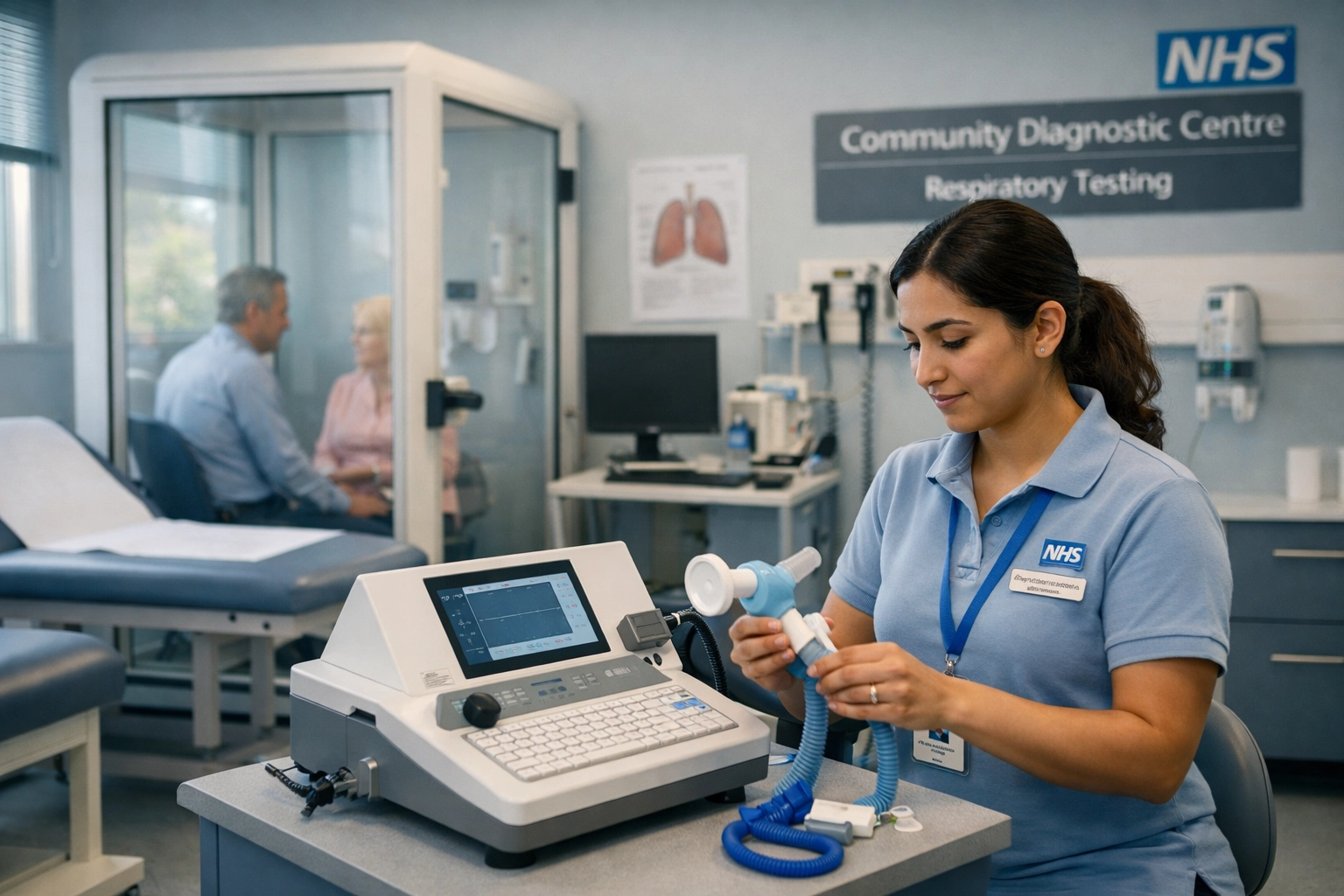
For respiratory services, this matters. Community Diagnostic Centres: 160 across the UK: provide the physical infrastructure where diagnostic innovations can be deployed. The regulatory and adoption framework provides the system-level support to make it happen consistently.
Research as Shared Infrastructure
One area that doesn't get enough attention is research collaboration. The National Institute for Health and Care Research's Translational Research Collaboration in respiratory health brings together leading investigators to conduct experimental and early-phase research. This creates the pipeline that Life Sciences companies can then develop and scale.
It's a model that treats research as shared infrastructure rather than competitive advantage. The NHS benefits from access to cutting-edge science. Life Sciences benefits from well-designed trials with real-world patient populations. Patients benefit from faster access to treatments that might otherwise take years to reach clinical practice.
It's not without complexity: questions about intellectual property, data ownership, and commercial return are ever-present. But the principle is sound: public investment in early-stage research, with private sector capacity to develop and deliver at scale.
What This Isn't
It's worth being clear about what responsible Life Sciences involvement doesn't look like.
It's not product promotion at educational events. It's not shaping clinical guidelines to suit commercial interests. It's not exploiting NHS resource constraints to create dependencies on proprietary systems.
Those things happen. When they do, they damage trust and make future collaboration harder.
The partnerships that last are the ones where Life Sciences shows up to solve problems, not create markets. Where the NHS maintains clinical governance and decision-making authority. Where patients see their priorities reflected in what gets developed and how it's implemented.
Moving Forward
Respiratory recovery in the NHS will require more than goodwill. It will require tools, workforce, data infrastructure, and service redesign: none of which any single organisation can deliver alone.
Life Sciences has a role to play. Not as the solution, but as part of a system that includes clinical leadership, public health priorities, and the people living with respiratory conditions every day.
The best collaborations are the ones where you can't easily separate who contributed what: because the work was genuinely shared from the start.
If you're involved in shaping respiratory services: whether from the NHS, Life Sciences, or as someone with lived experience: we'd value your perspective. Join our upcoming Round Table event where these conversations continue, or become part of our growing community working to improve respiratory care across the UK.

Responses