

Postcode Matters: How NHS Respiratory Leadership is Tackling the North-South Divide

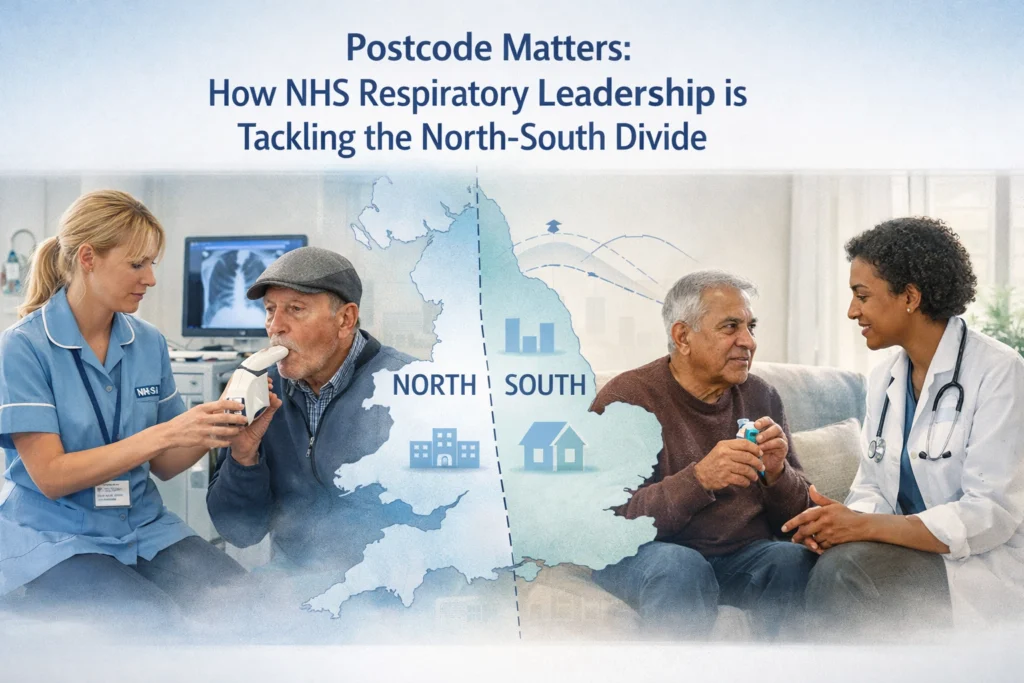
The geographical landscape of the United Kingdom tells a story of significant disparity in lung health. For decades, clinicians and researchers have observed a persistent trend: where you live in the UK often dictates the quality of the air you breathe, the speed of your diagnosis, and your overall life expectancy if you live with a chronic respiratory condition.
Recent data covering the period from late 2023 through 2024 has reinforced a sobering reality. In the North West of England, respiratory emergency admission rates are significantly higher than the national average, with an additional 450 emergency admissions per 100,000 population compared to the rest of the country. This "North-South divide" is not a new phenomenon, but the urgency with which NHS respiratory leadership is addressing it has reached a critical point.
At The Respiratory Network, we observe these challenges through the eyes of those managing the system, those providing the care, and those living with the conditions. Understanding how to close this gap requires a look at both the data and the practical leadership strategies being deployed across the country.
The Reality of Regional Variation
In practice, the North-South divide is less about geography and more about the convergence of socioeconomic factors. Higher rates of respiratory illness in northern regions often correlate with historical industrial exposure, higher smoking prevalence, and a greater density of poor-quality, damp housing.
When we look at respiratory care UK wide, the statistics are stark. A patient in a high-deprivation area is not only more likely to develop a condition like COPD or asthma but is also more likely to experience an acute exacerbation that requires hospitalisation. This puts immense pressure on secondary care services in the North, leading to longer waiting lists and a reactive, rather than proactive, approach to care.
NHS respiratory leadership is currently tasked with a dual challenge: managing the immediate backlog of patients while simultaneously building a system that addresses the root causes of these regional inequalities.
The Evolution of NHS Respiratory Leadership
The shift toward Integrated Care Systems (ICSs) has been a pivotal moment for NHS respiratory leadership. By moving away from a centralised, "one-size-fits-all" model, regional leaders now have the autonomy to tailor respiratory pathways to the specific needs of their local populations.
What this looks like on the ground is a move toward population health management. Leaders in northern regions are increasingly using postcode data not just for tracking, but for active intervention. By identifying "hotspots" of high emergency admissions, teams can deploy targeted services, such as mobile diagnostic units or community-based pulmonary rehabilitation, to the areas where they will have the most significant impact.

Networking for Equity
Bridging the gap is not something the NHS can achieve in isolation. It requires a connected infrastructure where knowledge, data, and best practices are shared across regional boundaries. This is where the concept of a "National Network" becomes vital.
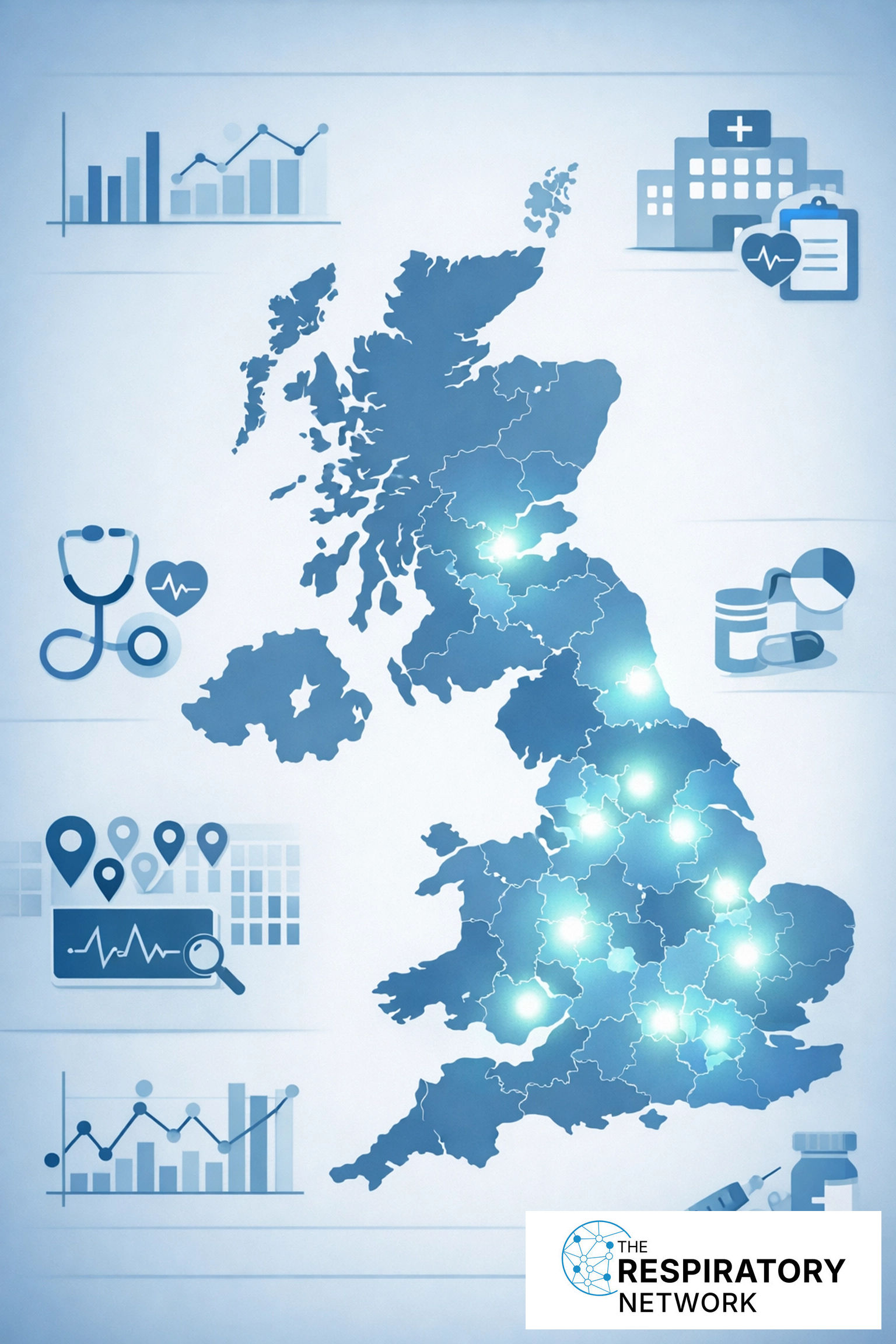
As shown in the connectivity map above, The Respiratory Network serves as a bridge between regional centres. When a leadership team in the South East develops an efficient pathway for early diagnosis, that insight needs to be accessible to a lead in the North East who is struggling with similar diagnostic bottlenecks.
The Role of Life Sciences as Solution Partners
Industry engagement has historically been viewed through the lens of supply and procurement. However, in 2026, the narrative is shifting. Life Sciences companies are increasingly being viewed as "solution partners" who can provide more than just treatments.
In regions with high respiratory burdens, Life Sciences partners are working with the NHS to support data analytics, patient education programs, and the implementation of digital monitoring tools. By aligning industry goals with the NHS’s need to reduce regional health inequalities, these partnerships are helping to create a more resilient respiratory care UK infrastructure.
For example, in areas where patient transport is a barrier to attending specialist clinics, industry-supported virtual wards and remote monitoring technologies are allowing clinicians to manage complex patients in their own homes. This reduces the burden on local hospitals and ensures that patients receive high-quality care regardless of their proximity to a major urban centre.
Lived Experience: What the Data Doesn't Show
While the data highlights the number of admissions, it doesn't always capture the human cost of the North-South divide. For a person living in a high-prevalence area, the reality is often one of "normalised" breathlessness.
In many northern communities, chronic cough and shortness of breath are sometimes viewed as an inevitable part of aging or a legacy of local industry. This perception can lead to late presentations and advanced disease at the point of diagnosis. NHS leadership is addressing this through community engagement, working with local leaders and patient advocates to change the conversation around lung health and encourage earlier intervention.

Moving Toward a Unified Respiratory Pathway
The goal for the coming years is to move from a "postcode lottery" to a unified, yet locally adaptable, respiratory pathway. This involves:
- Standardised Diagnostics: Ensuring that high-quality spirometry and FeNO testing are available in every primary care network, regardless of the region’s socioeconomic status.
- Workforce Resilience: Addressing the shortage of respiratory specialists in high-demand areas by implementing new roles, such as respiratory pharmacists and advanced nurse practitioners.
- Environmental Policy Integration: Recognising that respiratory health is intrinsically linked to housing and air quality policy. NHS leaders are increasingly taking a seat at the table with local authorities to advocate for "lung-healthy" urban planning.
Looking Ahead
Addressing the North-South divide is a long-term commitment. It requires a shift from reactive crisis management to a proactive strategy that values prevention as much as treatment. By leveraging data, empowering regional leadership, and fostering meaningful partnerships with Life Sciences, the UK is beginning to see the framework of a more equitable system.
The conversation is no longer just about identifying where the gaps are; it is about the practical steps we take to close them.
Important Disclaimer: The information and insights shared within this blog post are intended for educational and networking purposes among healthcare professionals and industry stakeholders. This content does not constitute medical advice. For any personal health concerns, diagnosis, or treatment options, please consult a qualified healthcare professional. We do not mention or endorse specific drug names or medications; treatment decisions should always be made by a clinician in consultation with their patient.
Join the Conversation
Are you an NHS leader, a Life Sciences professional, or a patient advocate working to improve respiratory outcomes in your region? We want to hear from you.
- Become a Member: Join our growing community at The Respiratory Network Members to access exclusive resources and discussions.
- Attend Our Next Event: Be part of the strategic discussion at our upcoming Round Table 2026.
- Stay Updated: Follow our latest insights and policy updates by exploring our Post Sitemap.
If you have questions about how we can support your regional respiratory strategy, please Contact Us.


Responses