

The COPD Biologics Revolution: What the New NICE Approval Means for NHS Respiratory Services

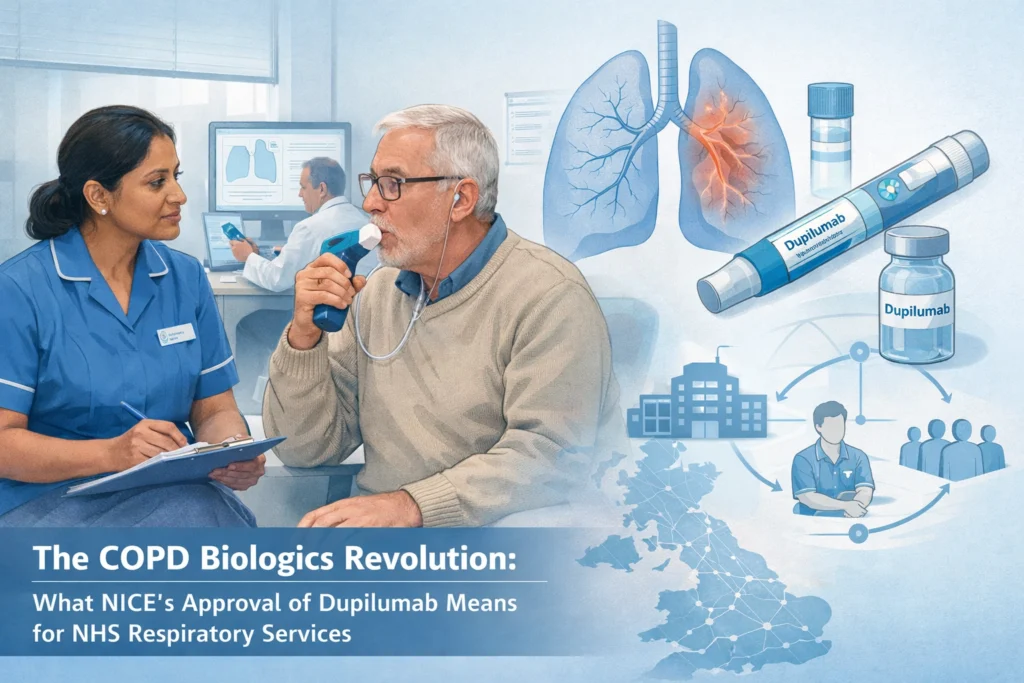
For decades, the conversation around Chronic Obstructive Pulmonary Disease (COPD) has been somewhat static. We have talked about smoking cessation, inhaler technique, and the importance of pulmonary rehabilitation. While these remain the pillars of care, the "ceiling" of what we could offer patients with severe, refractory disease felt quite fixed.
That changed this month. With the final green light from NICE for the first-ever biologic treatment for COPD, we are entering a new era. This isn't just another inhaler or a slightly different combination of existing bronchodilators. It represents a fundamental shift in how we approach the underlying inflammation of the disease.
As we look at the rollout starting in March 2026, NHS leadership and our partners in Life Sciences need to understand that this is more than a clinical update; it is a service delivery challenge and an opportunity to redesign pathways that have long been under pressure.
The Shift from Maintenance to Modulation
In practice, COPD has traditionally been managed as a condition of airflow obstruction. We use medicines to open the airways and steroids to dampen down general inflammation. However, for a significant cohort of patients, roughly 40% of those with COPD, there is a specific type of underlying inflammation characterized by raised eosinophil levels.
What this looks like on the ground is a patient who, despite being on "triple therapy" (LAMA/LABA/ICS) and having excellent inhaler technique, continues to suffer from frequent, debilitating flare-ups. These are the patients who cycle in and out of our emergency departments, placing an immense strain on secondary care.
The newly approved biologic therapy changes the game by targeting the specific pathways responsible for this type 2 inflammation. It isn't just masking symptoms; it is modulating the immune response. In clinical trials, we’ve seen a 30% reduction in flare-ups. For a patient who typically has three or four severe exacerbations a year, that is life-changing.
Identifying the 30,000: The Patient Profile
NICE has been very specific about who this treatment is for. It is recommended for adults with uncontrolled COPD who have raised blood eosinophil levels and have experienced at least one severe flare-up (requiring hospitalisation) or two or more moderate flare-ups in the last 12 months, all while on maximum inhaler therapy.
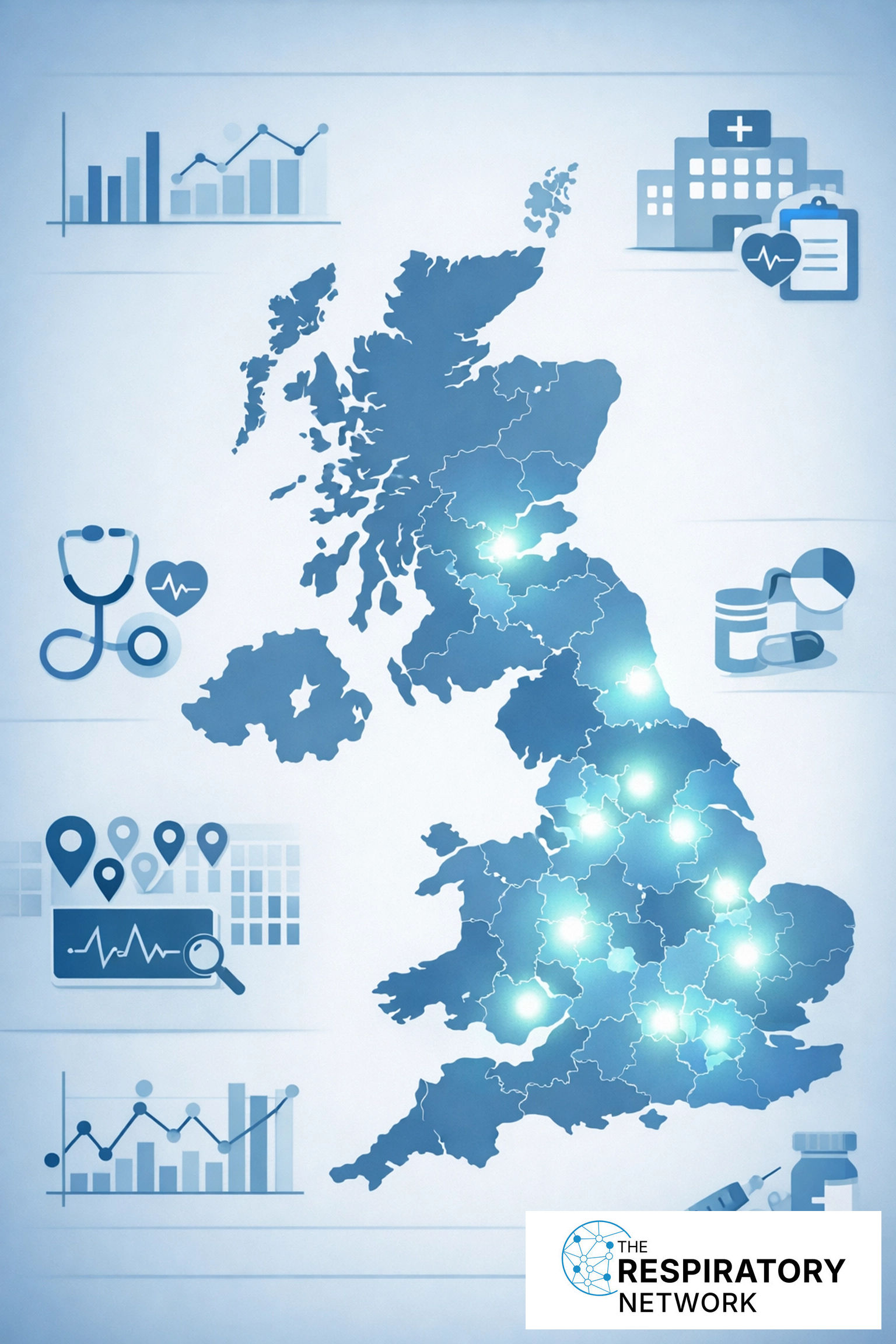
In England alone, approximately 30,000 people meet these criteria. The challenge for Integrated Care Boards (ICBs) and clinical leads is identifying these patients within a system that is already struggling with diagnostic backlogs. We cannot offer a biologic if we haven't first confirmed the diagnosis and checked the eosinophil counts in the blood.
The Economic Argument for NHS Leadership
From a leadership perspective, the primary concern is often the "up-front" cost of high-cost drugs. However, the business case for this biologic is anchored in the massive cost of failure in current COPD care.
COPD currently generates around 130,000 emergency hospital admissions every year in England. When you factor in the cost of an ambulance, the A&E attendance, the bed days, and the subsequent follow-up, a single severe flare-up is incredibly expensive.
Data suggests that by treating just half of the eligible population with this new biologic, the NHS could prevent over 3,600 major attacks and save an estimated £16.5 million. For ICBs looking to reduce elective recovery backlogs by keeping respiratory patients out of emergency beds, this isn't just a clinical win, it’s a financial necessity.
Operational Hurdles: The "4% Gap"
We have to be grounded in reality, though. A new drug doesn't fix a broken pathway. Recent data from the National Respiratory Audit Programme (NRAP) highlighted a shocking statistic: only about 4% of COPD patients are being referred to pulmonary rehab after leaving the hospital.
If we introduce a biologic into a system where the basics of referral and follow-up are missing, we won't see the full benefit. The biologics revolution must be the catalyst for a total pathway review. This means:
- Improving Diagnostic Accuracy: Ensuring that "COPD" on a chart actually means COPD, backed by spirometry and blood tests.
- Home-Based Care: Since this therapy is a self-injected pre-filled pen used every two weeks, we need to ensure patients are supported to self-manage at home, reducing the need for clinic visits.
- Referral Pathways: Bridging the gap between primary care (where the patients are identified) and secondary care (where the biologic is typically initiated).

What This Means for Life Sciences Partnerships
For our colleagues in Life Sciences, this approval marks a shift in how they engage with the NHS. The focus is no longer just on "selling a product" but on "solving a capacity problem."
Industry partners have a massive role to play in supporting the NHS with:
- Patient Identification Tools: Helping clinicians find the 30,000 eligible patients through better data analytics.
- Service Design: Assisting ICBs in building the business cases that NHSE is now asking for.
- Education: Training staff on the specific phenotypes of COPD so that the right patients get the right medicine at the right time.
The Respiratory Network is committed to facilitating these high-level conversations. We know that when Life Sciences and the NHS sit at the same table, the "biologics revolution" moves from a policy paper to a frontline reality.

Preparing Your Service for March 5th and Beyond
As the guidance officially takes effect, clinical leads should be asking:
- Do we have a clear list of our "frequent flyers" who have high eosinophil counts?
- How will we manage the initiation of this biologic, is there capacity in our specialist clinics?
- Are we ready to build the business case based on the new NHSE guidance released this month?
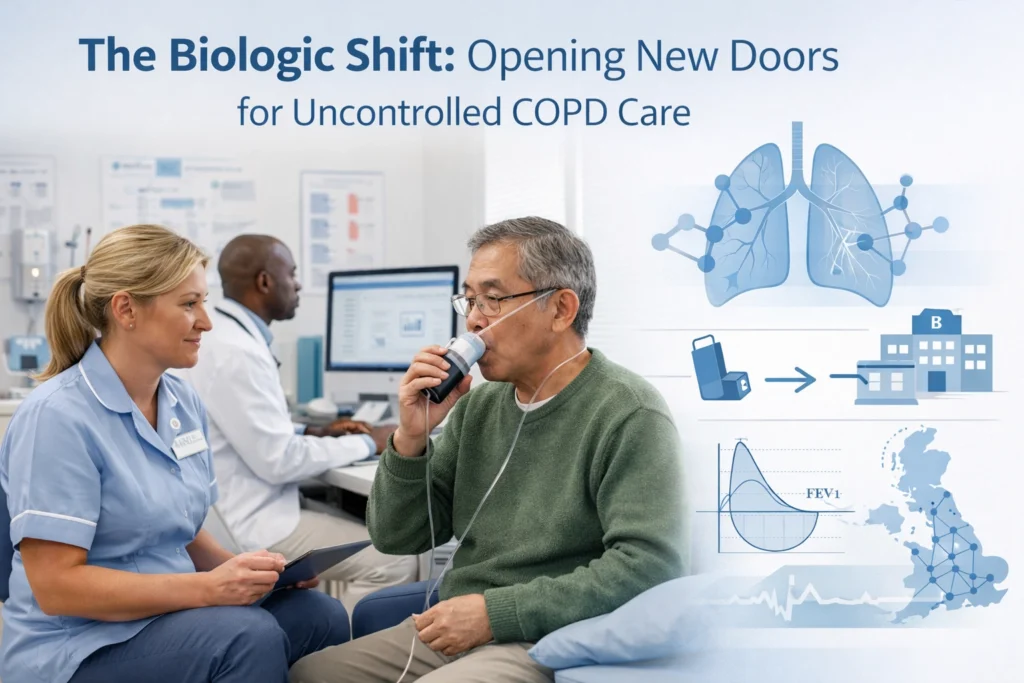
The introduction of biologics into the COPD space is the most significant clinical shift we’ve seen in a generation. It offers a lifeline to those patients who felt they had run out of options. But it also demands that we work differently. We cannot manage tomorrow's medicine with yesterday's pathways
Join the Conversation
Are you a clinical lead or a Life Sciences director working on the COPD biologic rollout? We want to hear from you.
- Become a Member: Join a community that understands the pressure of the system and the potential of new innovation. Join The Respiratory Network
- Attend our Round Table: We are hosting a specific session on "Navigating the Biologic Business Case" in 2026. Register for the Round Table here.
- Get in Touch: Have a specific question about how these changes impact your region? Contact us directly.
Category: NHS Insights
Tags: COPD care UK, NHS respiratory services, Biologics, Respiratory care UK




Responses