
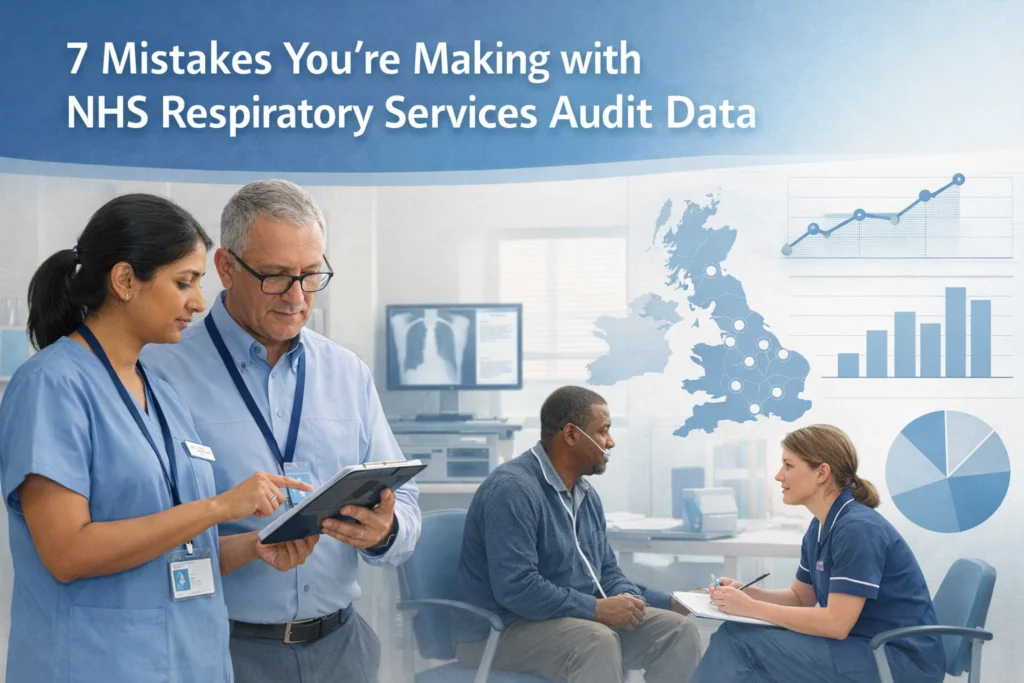
7 Mistakes You’re Making with NHS Respiratory Services Audit Data

In the current landscape of the NHS, data is often described as the "lifeblood" of service improvement. For those working within respiratory pathways, whether you are a clinical lead, a patient advocate, or a director in the Life Sciences sector, audit data from the National Respiratory Audit Programme (NRAP) and local Integrated Care Systems (ICS) provides a map of where we are and where we need to go.
However, having data is not the same as having insight. As we move deeper into 2026, the pressure to meet the 10-year health plan targets means that the way we interpret this data is more critical than ever. In practice, many organisations find themselves data-rich but insight-poor, repeating the same structural errors that prevent clinical findings from translating into better patient outcomes.
What follows is an exploration of the seven most common mistakes currently being made with NHS respiratory services audit data and how a more grounded, collaborative approach can rectify them.
1. Viewing Audit Participation as a "Box-Ticking" Exercise
One of the most significant hurdles in respiratory care is the perception of audits as an administrative burden rather than a clinical tool. What this looks like on the ground is a frantic rush at the end of a quarter to input data into a system that feels disconnected from the daily reality of a busy ward or clinic.
When participation is treated as a compliance task, the quality of the data suffers. If the goal is simply to avoid a "red" status on a national dashboard, the nuances of patient care are lost. To drive real change, audit data must be seen as a reflection of the service's health, intended to highlight where staff need more support rather than where they are failing.
2. Ignoring the Gap in Case Ascertainment
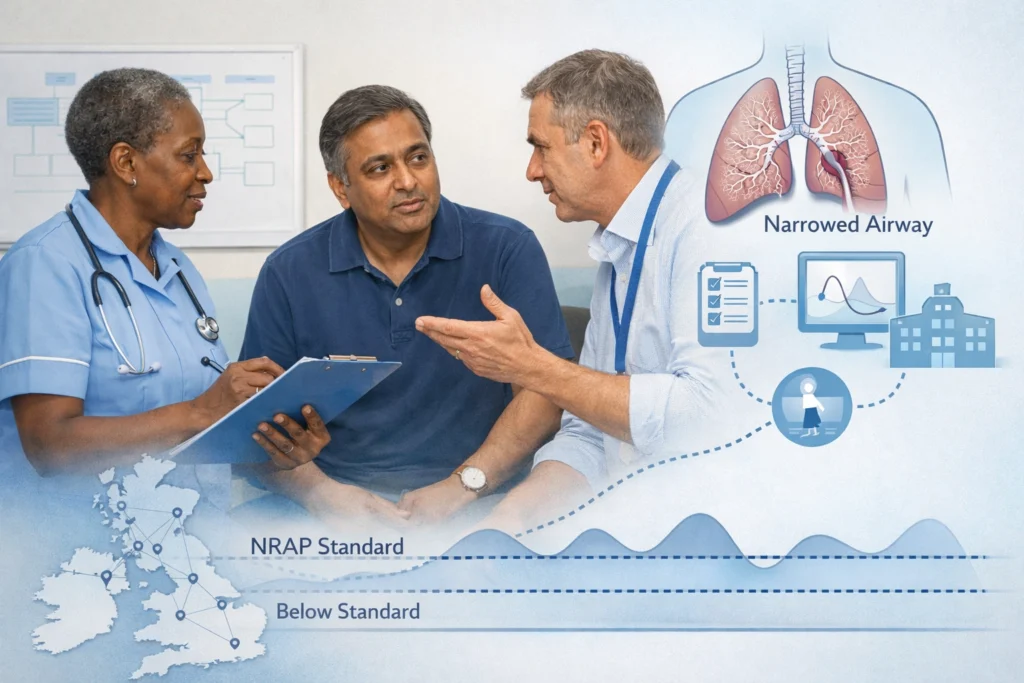
The NRAP has set ambitious targets for 2026, calling for 100% service participation and a minimum of 50% case ascertainment. A common mistake is assuming that a "good" result in an audit represents the entire patient population. If a service only records the data for 20% of its patients, the findings are likely skewed toward those with the most straightforward (or the most complex) pathways.
Without high case ascertainment, we cannot see the full picture of health inequalities or service gaps. To truly understand a respiratory pathway, we must ensure that the data captured is representative of the diverse demographic the service serves.
3. Disconnecting Data from Lived Experience
Data tells us what is happening, but it rarely tells us why. What patients and clinicians often describe is a disconnect between the "perfect" data on a spreadsheet and the messy reality of living with a chronic respiratory condition.
For example, an audit might show that 90% of patients received a self-management plan. However, through the lens of lived experience, we might discover that many of those patients did not feel confident in following the plan or that the language used was not accessible. Mistakes happen when we stop asking patients if the data matches their reality. True pathway excellence requires triangulating clinical audit data with qualitative feedback from those using the services.
4. The Diagnostic "Data Black Hole"
A recurring issue highlighted in recent national reports is the failure to record basic diagnostic markers within required timeframes. For instance, data often shows a low percentage of patients receiving peak flow measurements within an hour of hospital arrival or undergoing timely spirometry testing in primary care.
The mistake here is treating these omissions as minor administrative slips. In reality, these are "diagnostic "black holes" that delay appropriate care. In practice, when diagnostic data is missing, the entire subsequent pathway, from secondary care back to the Primary Care Network (PCN), is compromised. We must use audit data to identify exactly where these diagnostic bottlenecks occur and address the infrastructure or workforce gaps causing them.

5. Misinterpreting the "Referral Gap" in Pulmonary Rehabilitation
One of the most startling statistics in respiratory care remains the low rate of referral to pulmonary rehabilitation upon discharge, often cited as low as 4% for certain cohorts. A common mistake made by leadership is assuming this is a lack of clinical will.
When we look closer at the data, we often find that the "mistake" is a lack of integrated systems. If the referral process is cumbersome or if the community services are at capacity, clinicians may feel that the referral is a "dead end." Audit data should not just measure the number of referrals, but the accessibility and capacity of the services those referrals are directed toward.
6. Failing to Bridge the Gap Between Primary and Secondary Care
Respiratory care is a journey that crosses many borders. However, audit data is often collected in silos. Secondary care audits (hospital-based) and primary care data (GP-based) frequently fail to speak to each other.
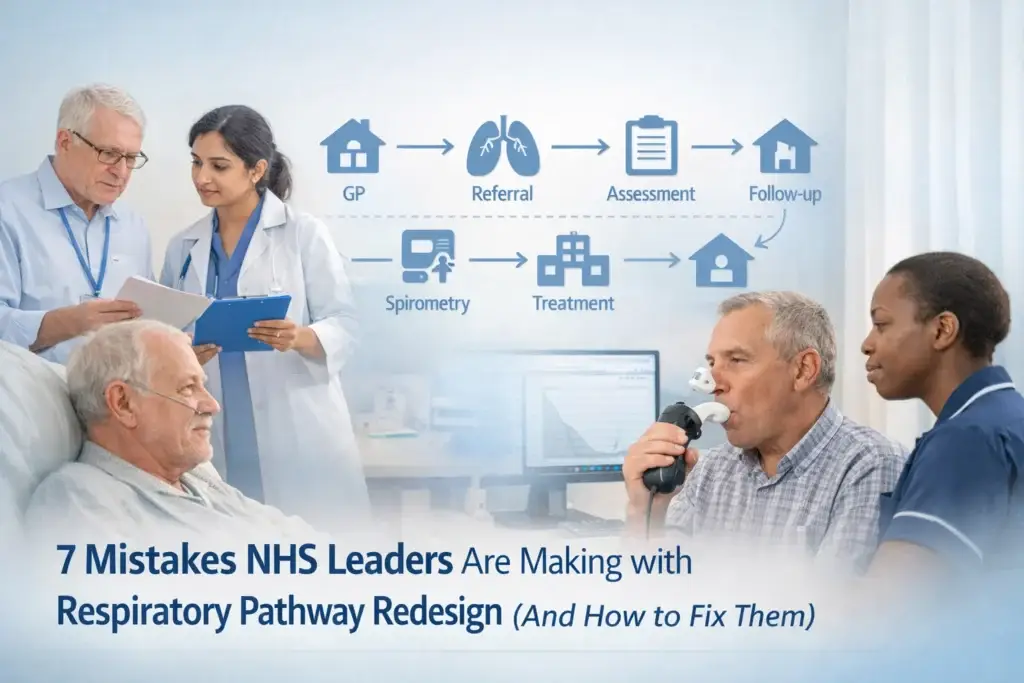
The mistake is managing the respiratory pathway as a series of disconnected events. What is needed is an integrated approach where data follows the patient. For Life Sciences directors and NHS clinical leads, this means looking at data through the lens of the Integrated Care System (ICS). We must ask: "Does the data from the hospital discharge inform the treatment plan in the community?" If the answer is no, the audit is only telling half the story.
7. Using Data as a Shield, Not a Mirror
Finally, the most subtle mistake is using data to justify the status quo. It is easy to find one metric that looks positive and use it to overshadow several others that suggest a need for radical change.
Credible leadership involves using audit data as a mirror. It requires looking at the "uncomfortable" data: the areas where health inequalities are widening or where compliance is dropping: and using it as a starting point for a conversation. This is where The Respiratory Network plays a vital role, providing a space where these conversations can happen safely and productively between all stakeholders.
Moving Toward Pathway Excellence
Correcting these mistakes requires a shift in culture. It means moving away from a culture of "reporting" toward a culture of "understanding." When we use data to highlight the pressures on the workforce, the gaps in diagnostics, and the reality of the patient experience, we move closer to creating a sustainable and effective respiratory service.
At The Respiratory Network, we believe that the future of breath lies in collaboration. By bringing together NHS leaders, patient advocates, and industry experts, we can ensure that data is used not just to count, but to make every breath count.
Join the Conversation
If you are passionate about transforming respiratory care and want to engage with others who are navigating these same data challenges, we invite you to join our community.
- Become a Member: Connect with peers and access exclusive insights at The Respiratory Network Members Page.
- Join the Discussion: Participate in our Public Forum to share your experiences and solutions.
- Follow Us: Stay updated with the latest news and event announcements by following us on our social media channels.
- Attend Our Next Event: We would love to see you at our upcoming Round Table 2026 at The King's Fund.
Together, we can turn data into action and improve the respiratory pathway for everyone.
Medical Disclaimer: The information provided in this blog post is for informational and educational purposes only and does not constitute medical advice, diagnosis, or treatment. Always seek the advice of a qualified healthcare professional with any questions regarding a medical condition.
For more information on our mission and future events, visit our homepage.

Responses