

The Hidden Impact of Air Quality on UK Respiratory Outcomes


Note: This blog post provides information for educational purposes and is not a substitute for professional medical advice, diagnosis, or treatment. Always seek the advice of your physician or other qualified health provider with any questions you may have regarding a medical condition.
When we discuss respiratory health in the UK, the conversation often centers on clinical pathways, diagnostic waiting times, and the pressure on secondary care. These are vital components of the system, yet they often represent the "end of the pipe." To truly understand why one in five people in the UK: over 12 million individuals: lives with a respiratory condition, we must look at the environments in which they live, work, and breathe.
Air quality is frequently framed as an environmental or "green" issue, but for the NHS and the life sciences sector, it is a fundamental clinical and economic driver. The data suggests that by 2025, air pollution could contribute to approximately 30,000 deaths across the country, with a projected economic cost exceeding £27 billion annually.
In practice, this means that until we address the quality of the air our population breathes, we are constantly managing symptoms of a systemic environmental failure.
The Scope of the Challenge: Beyond the Lungs
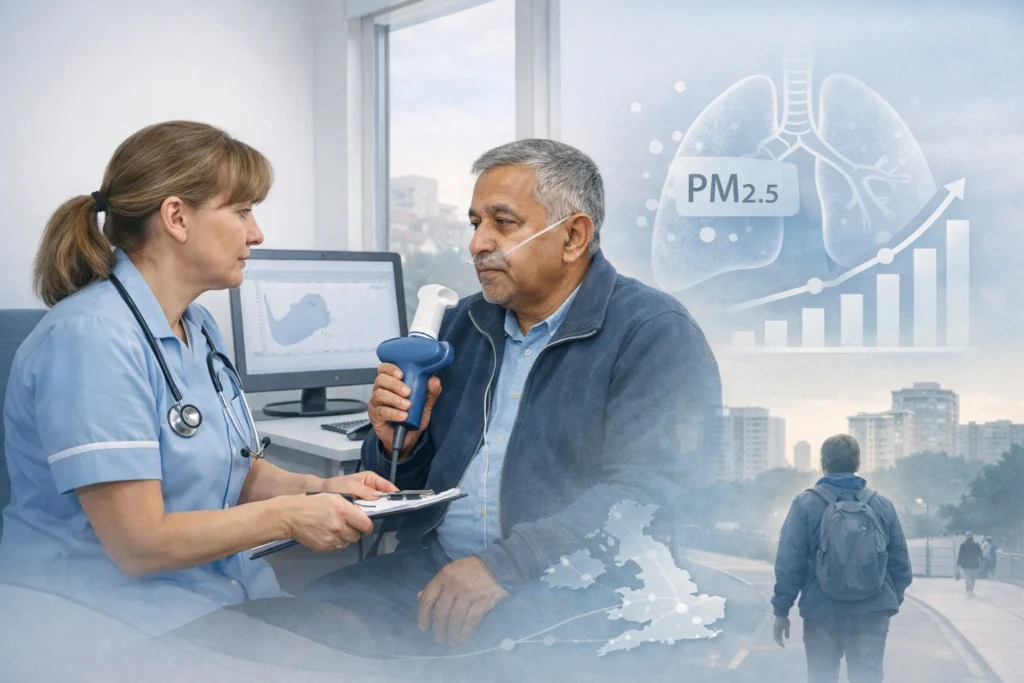
While 84% of British adults correctly associate poor air quality with asthma, there is a significant gap in public and professional awareness regarding the systemic nature of pollution. Data indicates that only 17% of the population is aware of the link between air quality and cognitive decline, such as dementia. Research has shown that for every 10 μg/m³ increase in particulate matter (PM2.5), the risk of dementia increases by 17%.
For the respiratory community, this highlights a critical point: poor air quality does not just aggravate existing conditions; it fundamentally alters the trajectory of human health from the womb through to old age. Exposure to nitrogen dioxide (NO₂) and nitrogen oxides (NOₓ) has been consistently associated with reduced lung function in children.
What patients and clinicians often describe on the ground is a feeling of inevitability: that the air in their postcode is a silent contributor to their daily struggle for breath. This is particularly evident in urban centers where traffic density remains high, and the lag between environmental policy and health outcomes is most pronounced.

The Indoor Frontier: A Neglected Priority
While much of the policy focus remains on outdoor emissions and transport, the reality for the majority of the UK population is that approximately 90% of their time is spent indoors. Indoor air quality is a significant, yet often neglected, factor in health inequalities.
The tragic case of two-year-old Awaab Ishak, whose death was linked to prolonged mould exposure in social housing, served as a stark reminder of the intersection between housing policy and respiratory health. Mould, damp, open fires, and inadequate ventilation in aging housing stock create a "perfect storm" for respiratory deterioration.
In practice, a clinician can provide the best possible support, but if a patient returns to a home that is damp or poorly ventilated, the clinical outcome is undermined. This is why sustainability in care must extend beyond the hospital walls and into the homes of the most vulnerable.
The Developmental Burden on the Next Generation
The impact of air quality on children is perhaps the most concerning aspect of current data. Children living in high-pollution areas are developing smaller lung capacities. This is not a temporary inflammatory response; it is a permanent deficit in organ development.
Chronic exposure: specifically from traffic-related pollutants: reduces the growth of lung function during the crucial years of childhood development. These deficits predispose individuals to chronic respiratory challenges later in life, creating a long-term demand for NHS services that could have been mitigated through earlier environmental intervention.
Even in areas where Low Emission Zones have been implemented, such as London, the health improvements are not instantaneous. While pollution levels have dropped in these zones, studies of primary school children have shown that the biological impact of years of exposure takes a long time to reverse. This suggests that while transport policy is moving in the right direction, the respiratory community must prepare for a "long tail" of health needs resulting from past exposures.
Cross-Sector Collaboration: Moving Beyond Silos
The solution to the UK’s air quality crisis cannot be found within the NHS alone. It requires a radical shift toward cross-sector collaboration between health, housing, transport, and local government.
- Housing and Health: We need a standardized approach to assessing indoor air quality in social and private rentals. Respiratory health should be a primary metric in housing quality standards.
- Transport and Urban Planning: Creating "clean air corridors" around schools and hospitals is not just an environmental goal; it is a public health necessity to protect those most at risk.
- Life Sciences and Data: The integration of localized air quality data with patient outcomes could provide a more granular understanding of "hotspots," allowing for proactive community-based management rather than reactive emergency care.
What we see on the ground is that where Integrated Care Systems (ICS) successfully bridge these gaps, outcomes improve. For example, when local authorities work with clinical leads to identify homes with high damp/mould risks and fast-track repairs for residents with existing respiratory conditions, the reduction in winter bed occupancy is measurable.
The Economic Argument for Clean Air
For those leading NHS strategy and life sciences, the argument for aggressive air quality improvement is as much economic as it is clinical. The £27 billion annual cost to the economy isn't just a figure on a spreadsheet; it represents lost productivity, increased social care needs, and the immense strain on the primary care workforce.
When air quality is poor, we see an immediate spike in GP appointments and A&E attendances for breathlessness. This "surge" demand is difficult to plan for and often displaces routine care, further lengthening backlogs. By treating air quality as a primary health intervention, we can move toward a more sustainable and predictable healthcare model.
Conclusion: Preparing for Better Conversations
Understanding the impact of air quality allows us to have better conversations: not just about how we treat disease, but about how we prevent it. It acknowledges that a patient’s environment is just as influential as their clinical pathway.
The Respiratory Network is committed to fostering these conversations. We believe that by bringing together the lived experience of patients, the expertise of clinicians, and the innovation of the life sciences sector, we can advocate for a system that prioritizes the very air we breathe.
We invite you to join this discussion. Whether you are a clinician seeing the impact of pollution in your clinic every day, a patient advocate with lived experience, or an industry leader looking for ways to support sustainable health outcomes, your voice is essential.
Join the Movement for Change
The complexities of air quality and respiratory health require a collective response. Here is how you can get involved:
- Become a Member: Join our community to access the latest data insights and connect with peers across the respiratory landscape.
- Join the Discussion: Share your observations and experiences on our Public Forum.
- Attend Our Round Table: We are hosting a major discussion on the future of respiratory care at The King’s Fund on April 29th. Be part of the room where strategy is shaped. Find out more here.
By looking at the air we breathe as a clinical priority, we can start to move the needle on UK respiratory outcomes. It is time to treat the environment as the vital sign it truly is.
Categories: Health Inequalities; Sustainability in Care; NHS Strategy & Leadership
Tags: Air Quality; Health Inequalities; Housing; NHS Strategy; Respiratory Health UK; Workforce; ICS; Lived Experience
Responses