

The Oestrogen Factor: Unpacking New Insights into Asthma Severity in Women

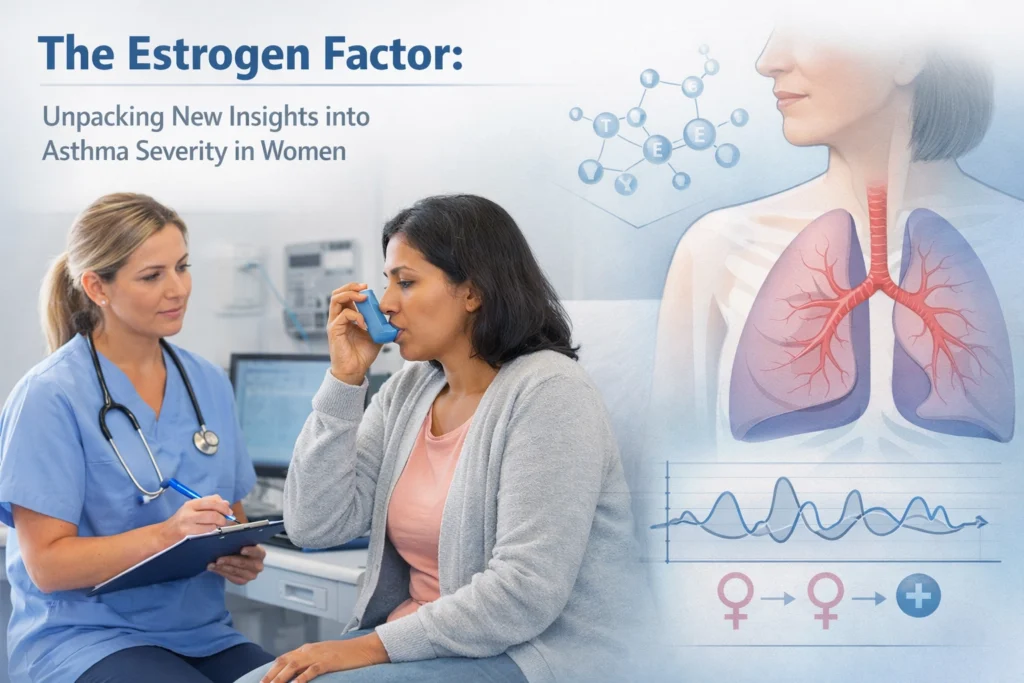
For decades, clinicians and patients alike have observed a curious and often frustrating trend in respiratory health: asthma affects men and women differently. While boys are more likely to have asthma than girls in childhood, this trend flips following puberty. In adulthood, women not only experience higher rates of asthma but also report more frequent symptoms, higher rates of hospitalisation, and a generally greater impact on their quality of life.
Despite these clear observational differences, asthma management in the UK has largely remained a "one-size-fits-all" model. However, recent research from Imperial College London is beginning to shed light on the biological mechanisms behind these disparities, specifically focusing on the role of oestrogen and the Epidermal Growth Factor Receptor (EGFR) pathway.
Disclaimer: This blog post is for informational purposes only and does not constitute medical advice. The Respiratory Network provides information and networking opportunities; we are not a medical body. For any concerns regarding your health, symptoms, or medication, please consult a qualified healthcare professional or your GP.
The Imperial College Discovery: Oestrogen and the EGFR Pathway
A significant hurdle in achieving true pathway excellence in asthma care has been the lack of understanding regarding why women experience more severe allergic lung inflammation. Recent findings from researchers at Imperial College London have provided a potential missing link.
The study indicates that oestrogen interacts with the EGFR pathway: a signaling system that controls how cells grow and react to their environment: to ramp up inflammation in the lungs. In practical terms, this means that the presence of oestrogen can essentially "prime" the airways to react more aggressively to allergens.
In practice, this research helps explain why women might find their asthma more difficult to control even when they are adhering to standard protocols. By identifying a specific immune pathway influenced by female sex hormones, the scientific community is moving closer to a model of personalised care that accounts for biological sex as a key variable in respiratory health.

What This Looks Like on the Ground: The Perimenstrual Experience
What patients and clinicians often describe in clinical settings is a phenomenon known as perimenstrual asthma (PMA). Research suggests that between 30% and 40% of women of reproductive age experience a significant worsening of their asthma symptoms just before or during their menstrual cycle.
During this period, the rapid fluctuation of oestrogen and progesterone can lead to increased airway hyper-responsiveness. This isn't just a minor inconvenience; for many, it represents a predictable, monthly dip in asthma control that can lead to increased reliance on rescue inhalers and, in some cases, emergency department visits.
Within the current framework of asthma care UK, these cyclical changes are frequently overlooked. Standard reviews often take a "snapshot" of a patient’s health on a specific day, failing to account for the variability introduced by the menstrual cycle. Improving patient engagement healthcare UK means listening to these lived experiences and acknowledging that for a significant portion of the population, asthma is a moving target influenced by hormonal health.
The Hormone Paradox: Puberty, Pregnancy, and Menopause
The influence of oestrogen isn't limited to the monthly cycle; it spans the entire female life course. The shifts in asthma prevalence during puberty: where girls begin to overtake boys in diagnosis rates: suggest that the onset of reproductive hormones is a primary driver of airway inflammation.
Pregnancy presents another complex chapter. The "rule of thirds" is often cited by clinicians: one-third of women see their asthma improve, one-third stay the same, and one-third experience worsening symptoms. These shifts are directly tied to the massive hormonal changes occurring in the body, yet predicting which "third" a patient will fall into remains a challenge for the NHS.

As women transition into menopause, the landscape changes again. While it might be assumed that a drop in oestrogen would lead to improved asthma control, the reality is more complex. Interestingly, data has shown that the introduction of Hormone Replacement Therapy (HRT) can actually increase the risk of new-onset asthma. One major study of over 379,000 women found a significantly higher hazard ratio for asthma in those receiving HRT, with the risk increasing in a dose-dependent manner with oestrogen use.
Implications for Personalized Care and NHS Strategy
The insights provided by the Imperial College study and broader hormonal research have profound implications for how NHS leadership and Life Sciences professionals approach respiratory pathways. If we accept that a woman’s hormonal status is a key determinant of her respiratory health, then our diagnostic and treatment pathways must adapt.
- Data-Driven Reviews: Moving toward a model where asthma reviews include questions about hormonal cycles or life stages (such as menopause). This allows for a more accurate assessment of a patient's true "baseline" control.
- Integrated Care: Encouraging closer collaboration between respiratory specialists and primary care providers who manage hormonal health. A holistic approach is essential for achieving pathway innovation.
- Patient Education: Empowering patients to track their symptoms alongside their menstrual cycles. When a patient understands the "why" behind their symptom flares, they are better equipped to engage in shared decision-making.
For those working in the Life Sciences & Innovation sector, these findings highlight the need for clinical trials that are stratified by sex and hormonal status. Historically, many clinical trials have under-represented women or failed to account for hormonal variability, leading to a gap in our understanding of how different treatments perform across the population.
Bridging the Gap Through Collaboration
At The Respiratory Network, we believe that the best way to transform care is by bringing everyone to the table: NHS leaders, Life Sciences directors, and, most importantly, those with lived experience. The "Oestrogen Factor" is a prime example of why we cannot work in silos.
What patients describe as a monthly struggle is now being validated by high-level molecular research. The challenge now is to translate that insight into observational practice on the ground. By acknowledging the biological differences in how asthma manifests, we can move away from generic care and toward a system that respects the individual needs of every patient.
If you are a clinical lead, a researcher, or a patient advocate interested in how we can improve asthma care UK, we invite you to join the conversation. Our upcoming events and forums are designed to tackle these complex issues, ensuring that the latest scientific insights lead to real-world improvements in patient outcomes.
Join the Network
To stay updated on the latest clinical insights and to connect with professionals across the respiratory landscape, consider becoming a member of The Respiratory Network.
- Become a Member: Register here to join our growing community of respiratory professionals and advocates.
- Join the Discussion: Visit our Public Forum to share your thoughts on personalized care and the future of asthma management.
- Attend Our Round Table: Don't miss the Respiratory Network Round Table 2026, where we will discuss the future of NHS respiratory services and pathway innovation.
By working together, we can ensure that insights like the Oestrogen-EGFR connection don't just stay in the lab, but lead to a more responsive, personalized, and effective healthcare system for everyone.





Responses