

The Adherence Myth: Why Real-World Support Trumps ‘Patient Compliance’


For decades, the word "compliance" has echoed through the corridors of the NHS. It’s a term that carries a subtle, often unintended weight. When we talk about a patient being "non-compliant," there is an underlying suggestion of a broken promise or a failure of willpower. It frames the patient as a passive recipient of instructions, someone who either follows orders or doesn't.
But in the world of respiratory care, where managing a condition is a marathon, not a sprint, this language is increasingly out of step with reality. At The Respiratory Network, we’ve been listening to the conversations happening between clinicians, Life Sciences leaders, and patients. What is becoming clear is that "compliance" is a myth. The reality is much more complex, and it’s time we shifted the focus from patient failure to system support.
Disclaimer: The following content is for informational and networking purposes only. It does not constitute medical advice. Please consult a healthcare professional for clinical concerns.
Moving Beyond the Language of Blame
The distinction between "compliance" and "adherence" isn't just semantics; it’s a fundamental shift in how we approach care. Compliance implies a hierarchy: the doctor speaks, and the patient obeys. Adherence, on the other hand, suggests a collaborative agreement. It’s an active choice made by a patient who understands their condition and agrees with the treatment plan.
In practice, however, even "adherence" can feel like a high bar. Research shows that across chronic diseases, medication adherence levels often hover around 50%. In respiratory care, specifically with inhaler therapy, the numbers are often more startling. When you factor in the 70–90% of patients who struggle with correct inhaler technique, you realise that "non-adherence" is rarely a choice.
It is often a result of a system that provides the medication but forgets to provide the ongoing, real-world support needed to use it effectively.
When we use labels like "non-compliant," we close the door on understanding. Why did the patient stop? Was it the side effects? Was the device too fiddly for arthritic hands? Did they simply run out of money for the bus to the pharmacy? By moving toward a support-based model, we stop asking "Why won't they do what they're told?" and start asking "What is getting in the way?"

The Reality of "Real Life"
What patients and clinicians often describe on the ground is a massive "reality gap." A treatment plan might look perfect on a computer screen in a GP surgery, but it looks very different in a cold flat or a busy household.
Consider the "intentional" versus "unintentional" non-adherence. Unintentional non-adherence is often about forgetfulness or physical barriers: like dexterity issues with a specific inhaler device. Intentional non-adherence, however, is often a logical response to a patient's circumstances. If a patient feels that their medication makes them shaky or doesn't provide the immediate relief they expect, they may decide to skip doses to feel "normal" for a day.
This isn't patient failure; it’s a patient trying to regain autonomy. If the healthcare system doesn't provide a space for these honest conversations, patients will continue to make these adjustments in private, and clinicians will continue to wonder why the data isn't improving.
The Pharmacist: The Frontline of Adherence
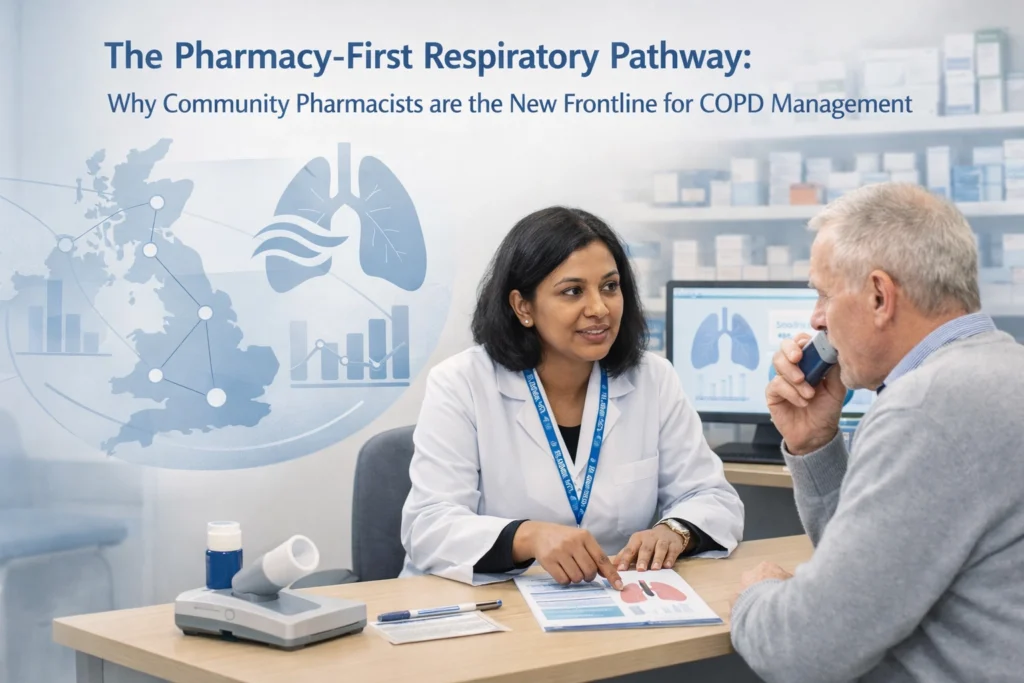
If we want to fix the adherence gap, we need to look at who has the most frequent contact with patients. While a respiratory consultant might see a patient once a year, and a GP might see them every few months, a community pharmacist often sees them every few weeks.
Pharmacists are the unsung heroes of respiratory pathways. They are perfectly positioned to spot the early warning signs of a struggle. Are prescriptions being picked up late? Is the patient asking for more "reliever" medication than they should need?
By integrating pharmacists more deeply into the respiratory pathway, we move the adherence check from a stressful clinical audit to a casual, supportive conversation. Pharmacists have the time and the specific expertise to re-check inhaler technique and discuss the "real-life" barriers that might not come up in a formal consultation. This is where patient engagement healthcare UK really happens: not in a boardroom, but at the pharmacy counter.
Digital Tools: From Monitoring to Empowerment
There is a growing role for technology in bridging the adherence gap. We often hear about "smart inhalers" and remote monitoring, but for these tools to work, they must be more than just "digital naggers."
Digital respiratory tools offer a unique opportunity to move from subjective "How are you getting on?" questions to objective data. If a clinician can see that a patient is consistently missing their morning dose, it opens up a specific, non-judgmental conversation. Is it because the morning routine is too chaotic? Could the dose be moved to a different time?
When data is shared transparently between the patient and the clinical team, it builds trust. It takes the pressure off the patient to "remember" every detail of their month and allows the clinician to provide tailored support. This type of life sciences engagement UK is crucial. Industry partners aren't just providing a drug; they are providing the digital ecosystem that allows that drug to work in the real world.
The Role of Life Sciences in Supporting the Pathway
For Life Sciences organizations, the shift from "product" to "pathway" is essential. It’s no longer enough to bring a high-quality treatment to market. If that treatment isn't being used correctly, or if patients are dropping off the pathway because of a lack of support, then the innovation has failed.
Life Sciences engagement in the UK is increasingly focused on how to support the NHS in creating sustainable, patient-centric pathways. This means investing in education that isn't just about the medication, but about the "One Airway" approach, the psychology of chronic disease, and the environmental factors like fuel poverty that drive exacerbations.
When Industry, the NHS, and patients collaborate, we can move toward a system where support is "baked in" from the start. This might mean co-producing patient materials that use plain English instead of clinical jargon, or supporting pilots for digital monitoring that actually integrate with NHS records.
A Systems-Level Challenge
Adherence is not an individual problem; it’s a systems-level challenge. We cannot expect patients to succeed in a system that is fragmented. If the respiratory nurse is stretched, the GP surgery is overbooked, and the diagnostic wait times are months long, the patient is left to navigate their condition largely alone.
We need to treat adherence as a clinical intervention in its own right. This means properly funding pulmonary rehab, ensuring every patient has a personalised asthma or COPD action plan, and making sure that technique checks are a mandatory part of every interaction, not an afterthought.
As we look toward the future of respiratory care in the UK, the goal should be to create a "safety net" around the patient. This net is woven from pharmacists, digital tools, specialist nurses, and well-designed pathways that acknowledge the messiness of real life.
Join the Conversation
The gap between policy and practice is where the real work happens. We know what the guidelines say, but we also know what it looks like on the ground when a clinic is understaffed and a patient is overwhelmed.
At The Respiratory Network, we believe that the only way to close this gap is through honest, multi-stakeholder dialogue. We don't need heroes or villains; we need a community that is willing to look at the data, listen to lived experience, and redesign pathways that actually work for everyone.
What does pathway transformation look like in your area? Are you seeing success with digital tools or pharmacist-led clinics? We’d love to hear your thoughts.
- Join the discussion: Head over to our Public Forum to share your experiences with adherence support.
- Attend our next event: We are hosting a Round Table on the future of respiratory care on the 29th of April at The King’s Fund. It’s a chance to sit down with NHS leaders and Life Sciences directors to tackle these challenges head-on. Find out more here.
- Stay updated: Follow us on our social channels to keep up with the latest Clinical Updates and pathway innovations.
Adherence isn't a myth we need to bust; it’s a partnership we need to build. By moving away from the language of "compliance" and toward the reality of real-world support, we can finally start to see the outcomes our patients deserve.

Responses