

The Forgotten ‘I’: Why Interstitial Lung Disease (ILD) needs to move out of the shadows of Asthma and COPD.


In the landscape of respiratory health UK, two acronyms tend to dominate the conversation: Asthma and COPD. They are the giants of the respiratory pathway, accounting for the vast majority of primary care appointments, emergency admissions, and public health campaigns. However, there is a third category of conditions that often sits quietly in the background, despite having a profound impact on mortality and quality of life.
Interstitial Lung Disease (ILD) is not a single condition but an umbrella term for over 200 different disorders that affect the lung parenchyma. While Asthma and COPD are obstructive, meaning they affect the ability to move air out of the lungs, ILD is restrictive. It involves damage to the tissue surrounding the air sacs, making it increasingly difficult for the lungs to expand fully.
Despite the clinical severity of these conditions, ILD frequently finds itself in the "shadows" of its more familiar counterparts. To improve NHS respiratory services, it is worth looking more closely at why this gap exists and what could help ILD patients receive the same level of diagnostic attention and integrated care as those with more common conditions.
The Challenge of Delayed Recognition
One of the most significant hurdles within the current respiratory pathway is the time it takes to reach an accurate diagnosis for ILD. In practice, the initial symptoms of ILD, persistent cough and breathlessness, are often very similar to those seen in asthma care UK or COPD care UK pathways.
What this looks like on the ground is a "diagnostic maze." A patient may visit their GP several times before ILD is even considered. Because ILD is relatively rare compared to the millions living with asthma, it often is not the first thought for a busy clinician. Research suggests these delays are more than frustrating; they can affect what happens next in the pathway. Many types of ILD are progressive, and by the time a patient is referred to a specialist centre, significant and irreversible scarring may already have occurred.
Moving Beyond Obstructive Thinking
The dominance of "obstructive" thinking in respiratory care uk has shaped everything from how we train our workforce to how we allocate funding. Spirometry, for example, is central to many respiratory pathways, yet it can sometimes be less helpful in early ILD cases if restrictive patterns are not being actively considered.
For NHS respiratory leadership, the challenge is how to integrate ILD-specific protocols into the wider system. There is a case for a shift in respiratory health UK strategy that moves away from a "one-size-fits-all" approach to breathlessness. If a patient’s symptoms do not fit the usual obstructive disease pattern, the pathway may need to prompt earlier investigation for interstitial changes.
The Research and Data Gap
When we look at life sciences engagement UK, there is a noticeable disparity in the volume of research and data available for ILD compared to the "Big Two." While asthma and COPD benefit from decades of large-scale clinical research, ILD has historically been hampered by its complexity. With over 200 variants, creating a unified research strategy is difficult.
However, the picture is beginning to shift. We are seeing increased interest from the life sciences sector in identifying specific biomarkers that can help predict disease progression. For life sciences engagement UK, the opportunity lies in helping the NHS move toward "precision respiratory medicine." By better categorising the different types of ILD, it may be possible to move away from broad-brush approaches and toward more tailored management strategies.
Addressing Health Inequalities in ILD
Data reveals a sobering reality: ILD mortality rates are often higher in more deprived populations. This highlights a significant concern for health inequalities within the UK. Factors such as occupational exposure to dust or chemicals, poor housing quality, and delayed access to secondary care all play a role in how ILD manifests in different communities.
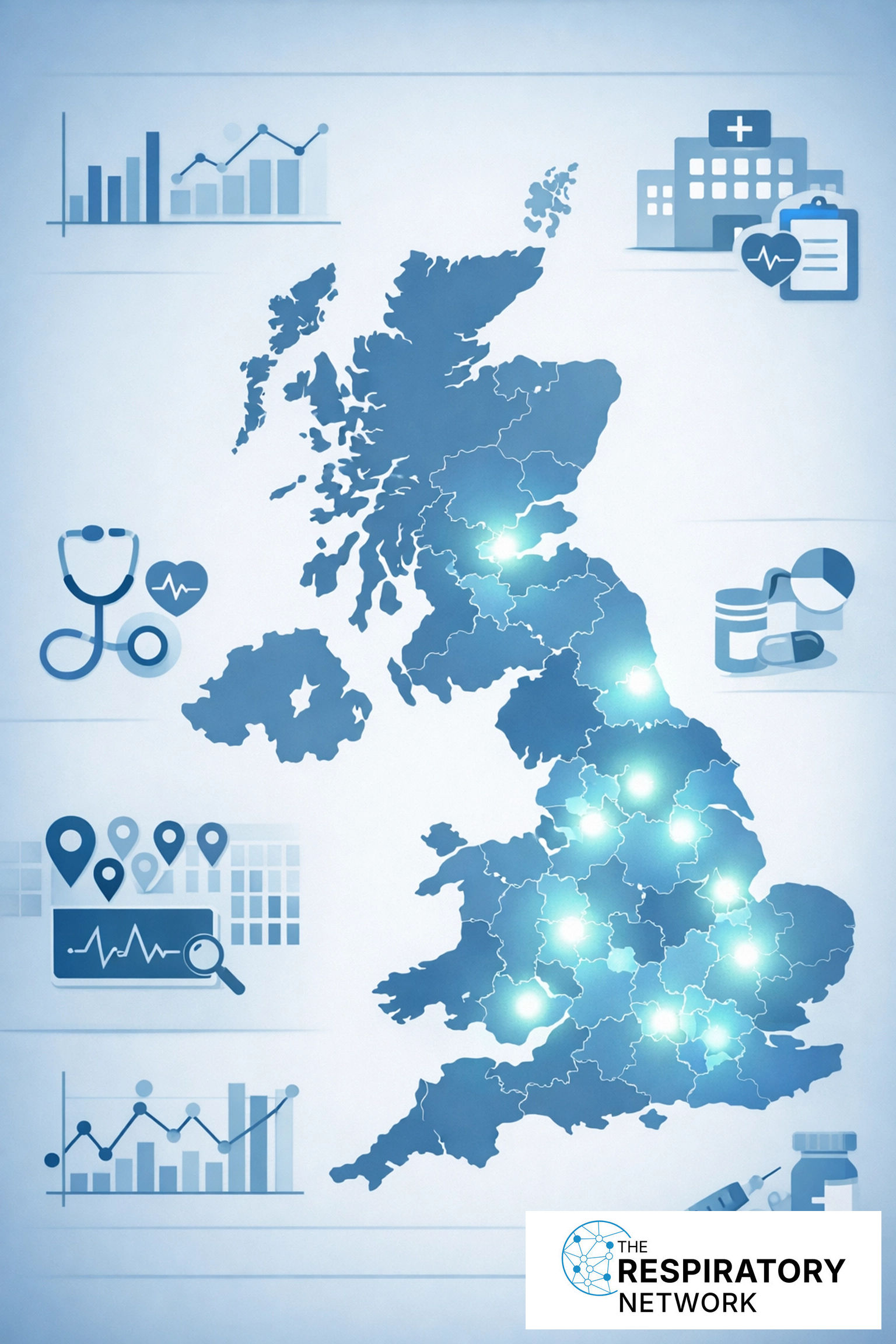
To improve patient engagement healthcare UK, we must ensure that those in underserved areas have the same access to specialist ILD clinics as those in affluent urban centres. This is where healthcare networking UK becomes vital. By connecting regional leads and sharing best practices, we can begin to close the gap in outcomes.
The Role of Integrated Care Systems (ICS)
The evolution of Integrated Care Systems (ICS) provides a unique opportunity to redesign the ILD journey. In the past, ILD care was often siloed in tertiary "centre of excellence" hospitals, far removed from the patient’s local community.
What patients and clinicians often describe is a need for a "hub and spoke" model. While the complex diagnosis and management decisions may remain with specialists, day-to-day monitoring and supportive care are often better integrated into local NHS respiratory services. This requires a workforce that is not only trained in COPD care UK and asthma care UK but also understands the specific needs of people living with ILD.
Conclusion: A Call for Visibility
Bringing ILD out of the shadows is not about de-prioritising asthma or COPD. It is about recognising that the "Respiratory" in The Respiratory Network needs to include the full range of lung conditions.
The "Forgotten I" deserves more visibility in the conversation. Whether that comes through improved diagnostic tools, increased life sciences investment, or stronger NHS policy, the aim is to make sure a diagnosis of ILD does not lead to a pathway that feels like an afterthought.
The future of respiratory care UK depends on our ability to see the whole lung, the whole patient, and the whole pathway.
Join the Conversation
Are you a clinical lead, a life sciences professional, or a patient advocate with experience in ILD care? We would like to hear your perspective on how the UK respiratory pathway can work better.
- Connect with Peers: Join the discussion in our Forums to share experiences and practical insight.
- Attend Our Next Event: You can find details for our round table here, including the next event on June 24th.
- Register with The Respiratory Network: Find out more and sign up at The Respiratory Network.
Category: Pathway Excellence
Tags: ILD, Respiratory Pathway, NHS Respiratory Services, Respiratory Health UK, Healthcare Networking UK, Life Sciences Engagement UK, NHS Leadership, Patient Engagement UK.

Responses