
Equity in Every Breath: Tackling the Hidden Disparities in UK Respiratory Care

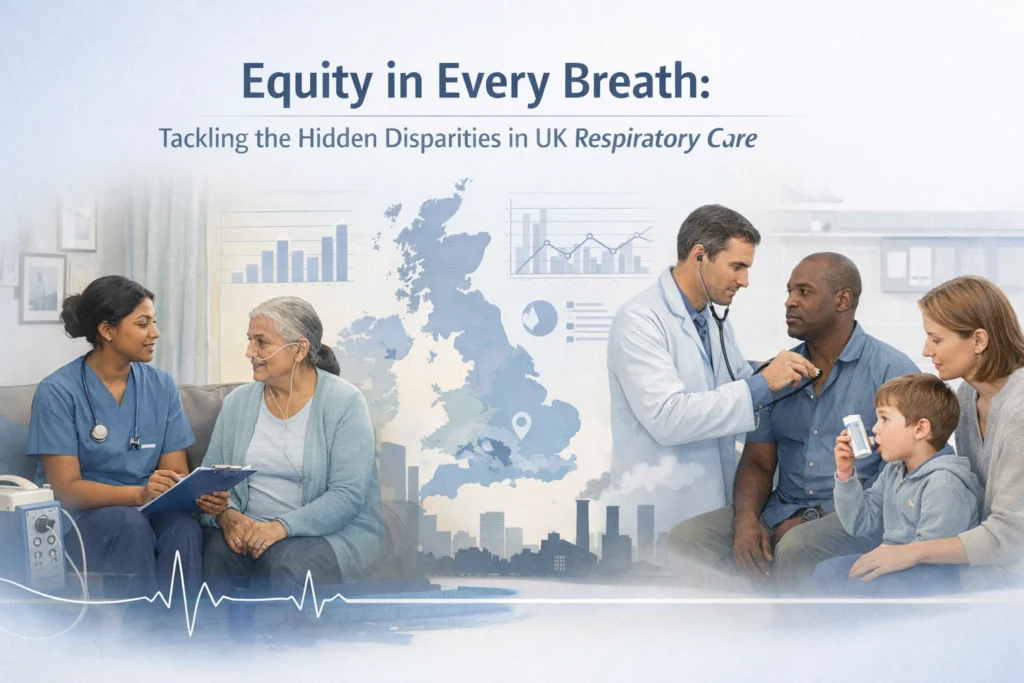
When we talk about respiratory health in the UK, we're not all breathing the same air: and we're certainly not all receiving the same care.
Chronic respiratory diseases represent the third largest contributor to mortality in the UK. But here's what the national statistics don't always show: if you live in an area of high deprivation, you're two to three times more likely to die prematurely from a respiratory condition than someone living in the least deprived areas.
That gap isn't clinical. It's structural.
The Weight of Where You Live
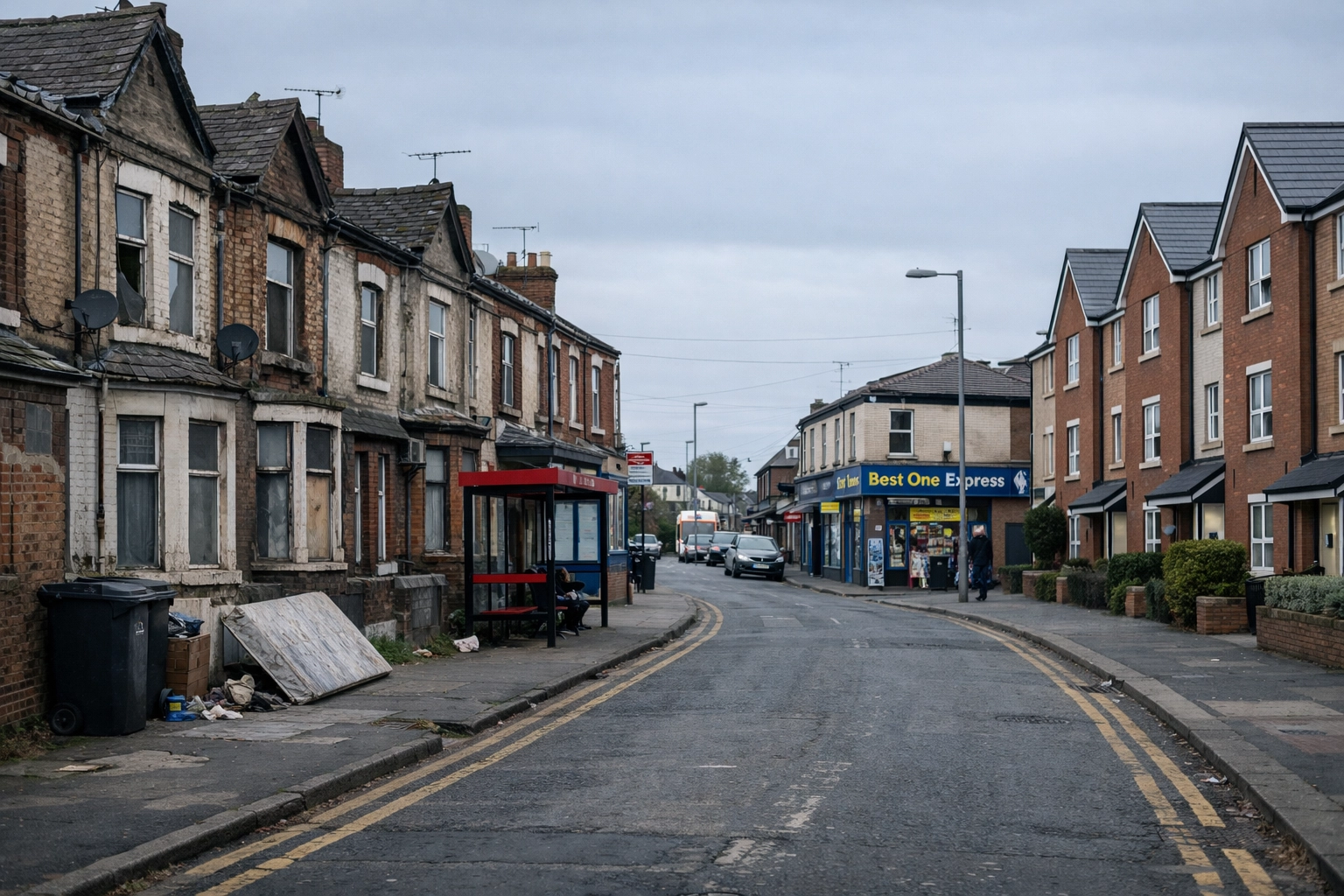
Respiratory health inequalities are driven by a cluster of interconnected factors: air pollution (ambient, indoor, and occupational), tobacco dependency, housing quality, and access to timely, appropriate care. All of these are closely tied to social deprivation.
Smoking alone is responsible for half the difference in life expectancy between advantaged and disadvantaged populations. It remains the single largest driver of health inequalities in England. But smoking doesn't exist in a vacuum: it's embedded in environments shaped by stress, limited access to cessation support, and cultural norms that vary by community and geography.
In 2023, hospital admissions for respiratory disease in the most deprived areas were more than double those of the least deprived areas. This wasn't because people in those areas had fundamentally different biology. It was because the conditions in which they lived, worked, and sought care were fundamentally different.
The Real Barriers to Care
The NHS has standardised care pathways. We have the Quality and Outcomes Framework for asthma and COPD. We have evidence-based guidelines. Yet significant variation persists: not because the pathways don't work, but because not everyone can access them equally.
In practice, barriers to equitable respiratory care include:
Financial obstacles. Patients who can't afford inhalers, peak flow meters, or transport to pulmonary rehabilitation services. The cost of parking at a hospital. The loss of wages for an afternoon clinic appointment.
Language and literacy challenges. Written information that doesn't account for health literacy. Consent forms and care plans that assume fluency in both English and medical terminology.
Cognitive, sensory, and physical impairments. Care pathways designed for patients who can read small print, hear clearly, and navigate multi-step treatment regimens independently.
Cultural factors. Stigma surrounding respiratory conditions in certain communities. Misunderstanding or distrust of diagnosis. Gendered expectations about who seeks help and when.
Geographic exclusion and transport poverty. Rural and semi-rural populations with limited public transport. Urban estates poorly served by services concentrated in city centres.
These aren't edge cases. They're the daily reality for a significant proportion of the population living with respiratory disease.
The Pulmonary Rehabilitation Gap
Pulmonary rehabilitation is one of the most effective interventions for people with COPD. It improves quality of life, reduces hospital admissions, and supports long-term self-management. And yet, people with COPD in socioeconomically deprived areas are significantly less likely to complete rehabilitation programmes compared to those in affluent areas: despite comparable clinical outcomes for those who do complete.
What's more, attendees in UK pulmonary rehabilitation programmes remain predominantly White-British. This suggests not just socioeconomic exclusion, but ethnic underrepresentation as well.
The issue isn't the intervention. It's the delivery model: and the assumptions baked into it.
What Good Engagement Looks Like
Addressing respiratory health inequalities requires more than policy statements. It requires intentional, practical change at every level of the system.
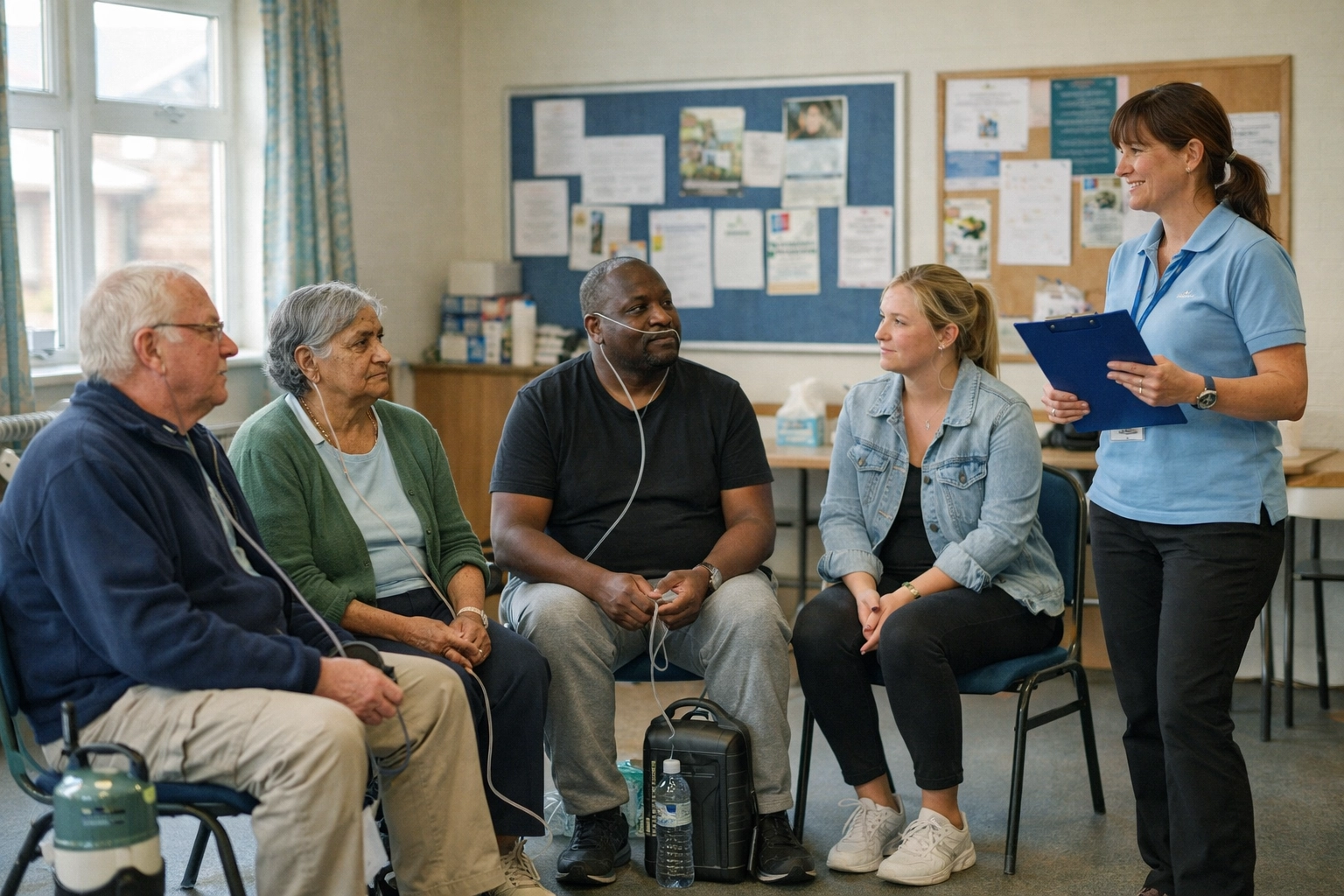
Co-design with communities, not for them. Lived experience isn't a nice-to-have. It's essential intelligence. Programmes like the Equal Breath Project: a UK-wide initiative led by the MRC Black in Biomedical Research Advisory Group and Asthma + Lung UK: bring together people with lived experience, carers, and healthcare practitioners to identify unanswered research questions and shape future policy. This is what meaningful engagement looks like.
Flexible delivery that meets people where they are. Virtual appointments, community-based clinics, rehabilitation programmes delivered in non-clinical settings. If a service is only accessible to people with time, transport, and digital literacy, it's not universally accessible.
Cultural competence embedded, not added on. Training that goes beyond awareness to genuine understanding. Materials available in relevant languages. Conversations that account for different health beliefs and care expectations.
Data that reflects disparity, not just averages. National outcomes are useful. But they can mask profound local variation. Good engagement means disaggregating data by deprivation, ethnicity, geography: and acting on what it reveals.
Integration across sectors. Respiratory health doesn't sit neatly within the NHS. It touches housing, social care, employment, education, air quality policy. Integrated care systems have the potential to connect these dots: but only if respiratory health is prioritised within them.

Moving from Intention to Action
The British Thoracic Society's Position Statement on Health Inequalities emphasises that integrated respiratory care: ensuring the right care reaches the right patient through the right professional at the right time: provides a valuable model for targeting support to underserved populations.
Prevention, earlier diagnosis, and ensuring specialist care when needed remain critical priorities. But without deliberate attention to who can access that care, and under what conditions, national ambitions will continue to leave the most vulnerable behind.
Respiratory conditions account for 13.7% of the life expectancy gap between the most and least deprived male populations in England. Closing that gap won't happen through clinical excellence alone. It will happen when the system is designed: intentionally, practically: to serve everyone equally.
Join the Conversation
If you're working to reduce respiratory health inequalities: whether as a clinician, a patient advocate, or a Life Sciences partner: you're not alone. The Respiratory Network exists to connect those conversations, share what's working, and support collaboration across the system.
Register to become a member, follow us for updates, or join us at our next round table event to continue this vital discussion.
Because equity in respiratory care isn't just a policy goal. It's a practical, achievable priority; and it starts with listening, learning, and acting together.

Responses