

Beyond Inhalers: Why Pulmonary Rehabilitation is the Most Undervalued Intervention in the NHS

Medical Disclaimer: This article provides general information about respiratory care and is not a substitute for professional medical advice. If you are experiencing severe breathlessness, chest tightness, or symptoms that are not relieved by your usual treatment, seek urgent medical attention. For questions about your care, treatment or inhaler use, please contact your GP, asthma nurse, or healthcare provider.
When most people think about managing chronic lung disease, they picture inhalers. Blue ones for relief. Brown ones for prevention. Perhaps a spacer device. Maybe a nebuliser at home.
What they rarely picture is a twice-weekly exercise and education programme in a community hall or hospital gym. Yet that programme: pulmonary rehabilitation: may deliver more measurable benefit than any single inhaler adjustment.
The evidence is clear. Ninety per cent of patients who complete pulmonary rehabilitation report improved quality of life and higher activity levels. It reduces acute and emergency admissions. It lowers primary care appointments. The benefits last well beyond twelve months.
So why, in 2026, are we still talking about expanding access to something this effective?
What Pulmonary Rehabilitation Actually Is
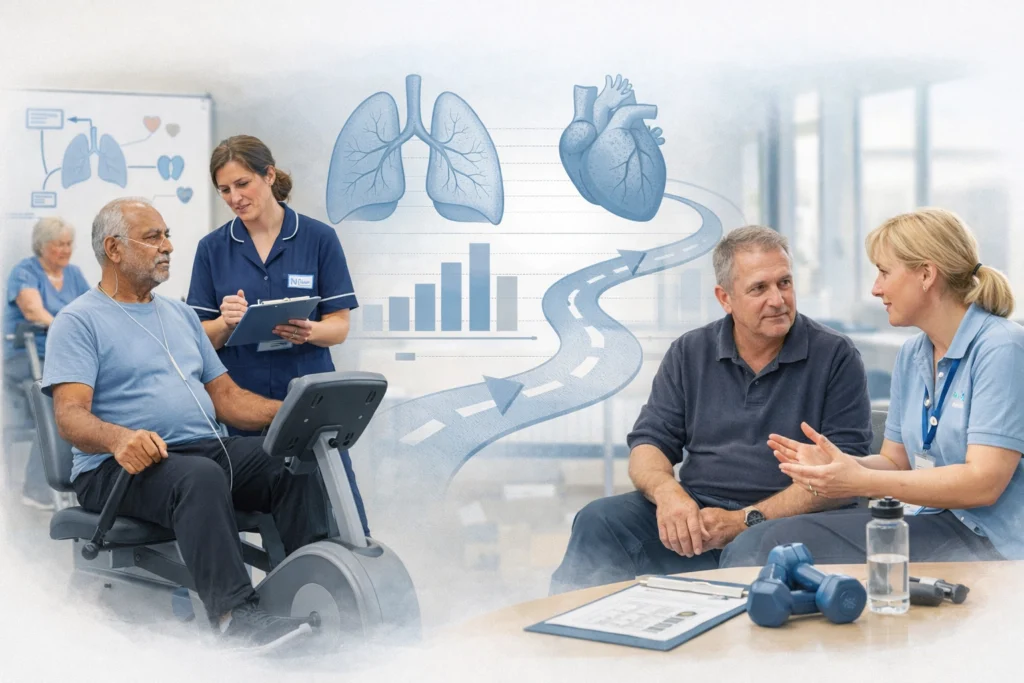
Pulmonary rehabilitation is an exercise and education programme designed for people with chronic lung diseases who experience breathlessness. It typically runs for six to eight weeks and includes supervised physical training, breathing techniques, self-management education and peer support.
It is not physiotherapy. It is not a gym membership. It is a structured clinical intervention with measurable outcomes across physical function, mental health and healthcare utilisation.
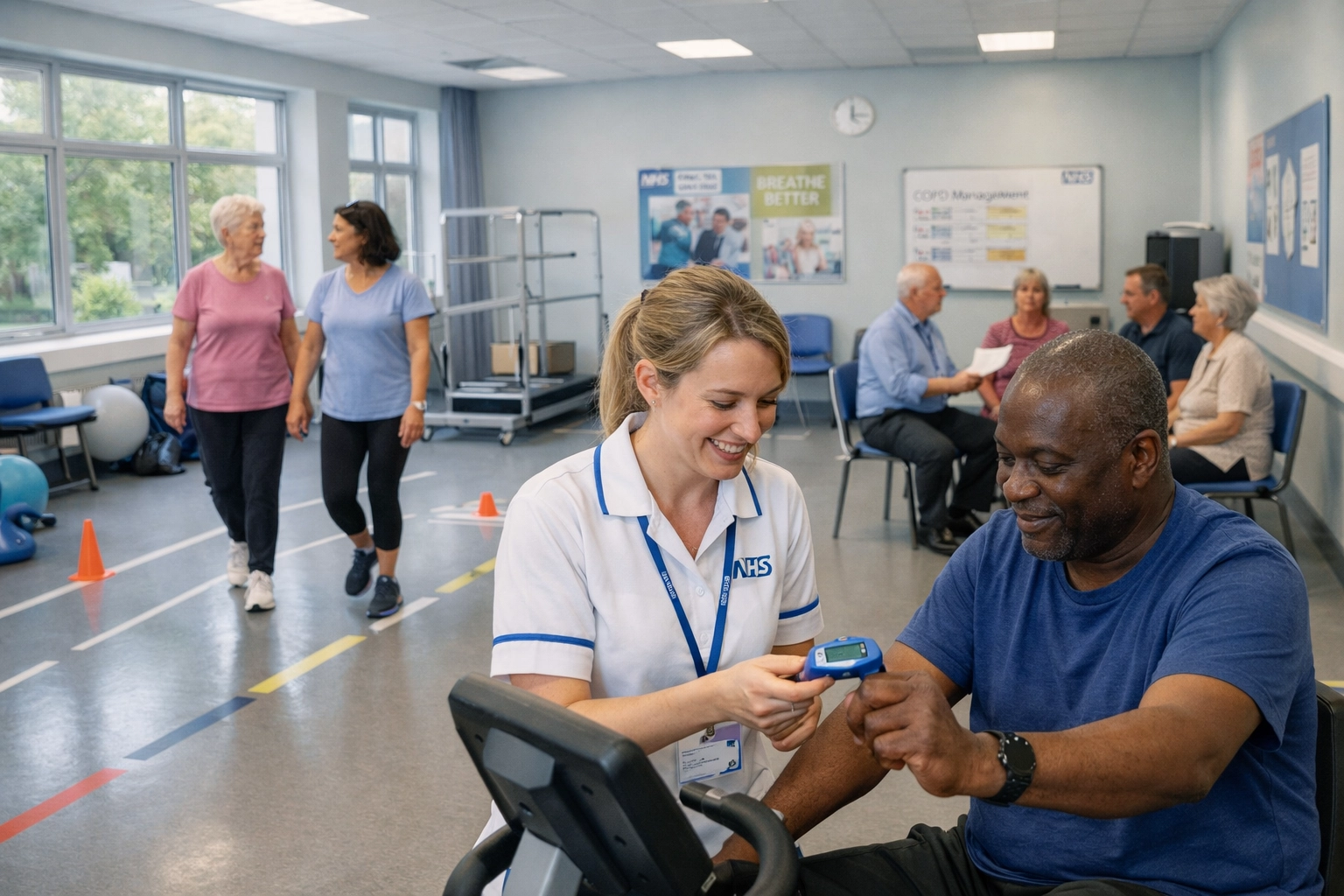
In practice, it looks like this: a small group of people with COPD, interstitial lung disease or bronchiectasis meet twice a week. They work through progressive aerobic and resistance exercises tailored to their baseline capacity. They learn pacing strategies. They talk about managing flare-ups, nutrition, medication adherence and what to do when panic sets in during breathlessness.
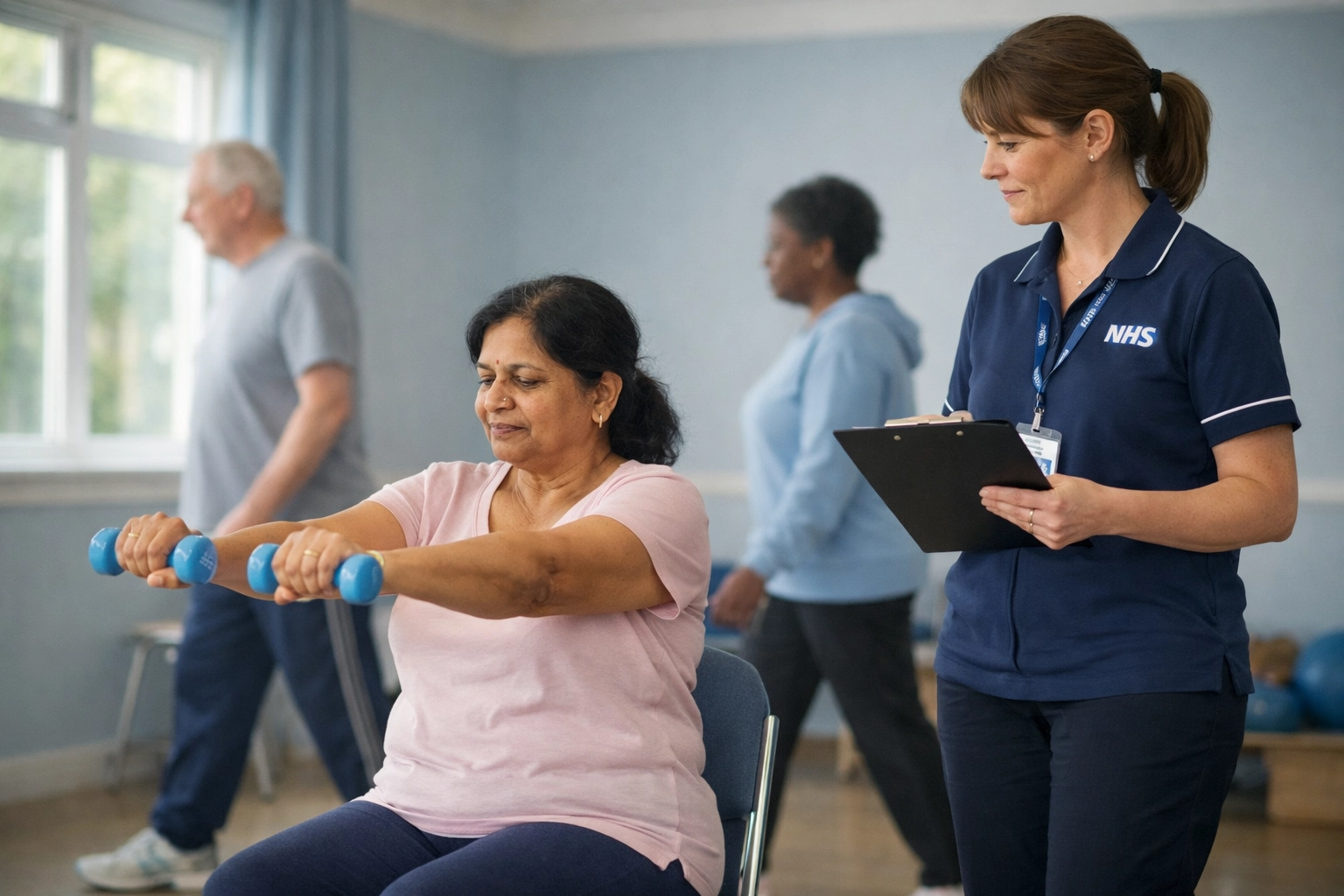
What patients and clinicians often describe is not just improved lung function: which may not change at all: but improved confidence. The ability to walk to the shops. To shower without needing to sit down afterwards. To stop catastrophising every breathless moment.
The Evidence Base Is Not the Problem
The clinical benefits of pulmonary rehabilitation are well established. Evidence shows improved exercise tolerance, reduced breathlessness during daily activities, lower levels of anxiety and depression, and reduced risk of hospital admission and mortality.
These are not marginal gains. They are clinically significant, patient-reported improvements that reduce demand on emergency services and improve long-term outcomes.
NHS England has identified respiratory disease as a national clinical priority and made pulmonary rehabilitation expansion a key commitment of the NHS Long Term Plan. That commitment exists because the gap between evidence and provision has been impossible to ignore.
As of 2017, there were only 195 separate pulmonary rehabilitation services across England, delivered by 158 different provider organisations. For a condition as prevalent as COPD alone: affecting over a million people in the UK: that is not adequate coverage.
So Why the Gap?
The reasons pulmonary rehabilitation remains underutilised are systemic, not scientific.
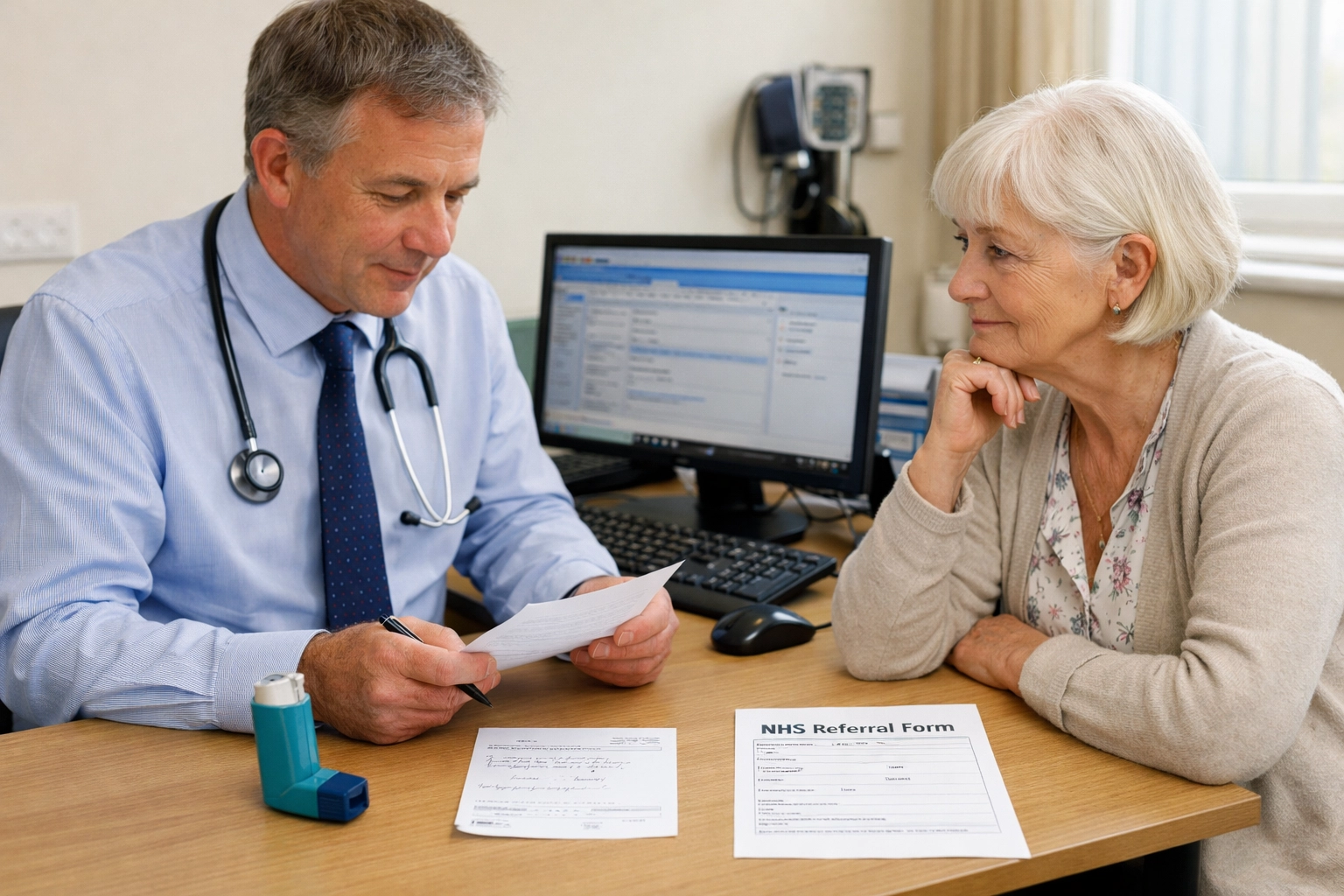
Referral pathways are inconsistent. In some areas, a respiratory consultant or specialist nurse can refer directly. In others, referral requires a GP review, a spirometry test, or a hospital discharge trigger. Patients who would benefit may never be offered the option.
Completion rates are a challenge. Not everyone who is referred attends. Not everyone who attends completes the programme. Transport, work commitments, caring responsibilities, anxiety about group settings: all of these affect uptake. Services report completion rates as low as 50 per cent in some cohorts.
Capacity is patchy. Some Integrated Care Systems have invested in multiple sites with flexible timings. Others run a single programme with a six-month waiting list. Rural areas face additional challenges with travel and staffing.
It is not always visible. Pulmonary rehabilitation does not generate the same headlines as a new biologic therapy or AI diagnostic tool. It is not a one-time intervention. It requires sustained delivery, workforce training and local commitment.
What this looks like on the ground is someone leaving a hospital admission with a prescription for two new inhalers and a follow-up chest X-ray: but no mention of pulmonary rehabilitation, despite meeting every criterion for referral.
What Patients and Clinicians Often Say
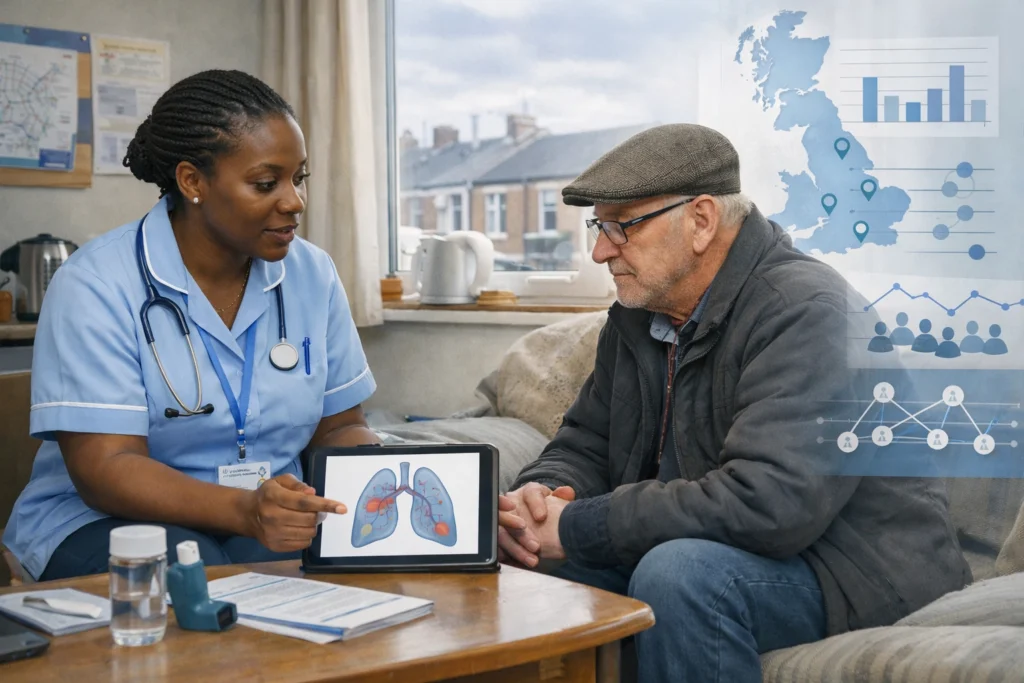
From the patient perspective, pulmonary rehabilitation is often described as transformative. Not because it cures the disease, but because it changes the relationship someone has with their breathlessness.
One recurring theme is control. Before pulmonary rehabilitation, many people describe feeling at the mercy of their condition. Breathlessness dictates their day. They avoid stairs, decline social invitations, stop leaving the house. After completing a programme, they still have breathlessness: but they understand it. They know how to pace, when to use their inhaler, what panic feels like versus true deterioration.
Clinicians see the difference too. Fewer emergency department attendances. Better adherence to treatment plans. Patients who can articulate what is happening during a flare-up and what they have already tried.
The peer support element is also significant. Many people with chronic lung disease feel isolated. Pulmonary rehabilitation offers shared experience in a way that a ten-minute GP appointment cannot replicate.
But what pulmonary rehabilitation does: when it is accessible: is give people the tools to manage their condition more confidently.
The Economic Case Is Strong
Prevention language can feel abstract in a healthcare system under pressure. But the economic case for pulmonary rehabilitation is straightforward.
Hospital admissions for COPD exacerbations are expensive. Emergency department attendances are expensive. Repeated primary care consultations for unmanaged breathlessness are expensive.
Pulmonary rehabilitation is not. It is delivered largely in community settings by physiotherapists, respiratory nurses and exercise professionals. The cost per patient is modest compared to a single emergency admission.
The return on investment comes from reduced acute care usage and improved self-management. Patients who complete pulmonary rehabilitation are less likely to be admitted in the twelve months that follow. They use fewer unscheduled care resources. They are more likely to remain in work or maintain independence at home.
For Integrated Care Systems focused on demand management and population health, pulmonary rehabilitation should be a strategic priority. It reduces pressure on hospitals while delivering measurable patient benefit.
Yet investment remains inconsistent. Some ICSs have ring-fenced budgets and embedded pathways. Others rely on short-term project funding or voluntary sector delivery.
What Needs to Change
Expanding access to pulmonary rehabilitation is not a complex problem. The intervention works. The workforce exists or can be trained. The settings are available.
What is missing is consistent prioritisation.
NHS England is working to increase referrals, particularly among groups who are less likely to access the service: including people from disadvantaged communities and those with multiple long-term conditions. That is the right focus. But it requires local systems to commit resource, not just policy intent.
Integrated Care Systems need to embed pulmonary rehabilitation into respiratory pathways as a standard, not optional, intervention. Referral criteria should be clear, consistent and automated where possible. Waiting times should be monitored and minimised.
Life Sciences has a role too. Pharmaceutical and device companies invest heavily in inhaler innovation and biologic therapies. Supporting non-pharmacological interventions like pulmonary rehabilitation: through education, service design collaboration or workforce training: would demonstrate genuine system partnership.
Patients need better awareness. Many people with COPD do not know pulmonary rehabilitation exists or assume it is only for severe disease. Clear communication at the point of diagnosis or hospital discharge would improve referral rates and completion.
A Grounded Close
Pulmonary rehabilitation will not solve the NHS respiratory crisis alone. But it is one of the few interventions where evidence, patient experience and economic benefit align so clearly.
The challenge is not scientific. It is operational and cultural. We need to normalise pulmonary rehabilitation as part of routine respiratory care: not a niche service for motivated patients or well-resourced areas.
That will require leadership, resource and collaboration between NHS teams, primary care, Life Sciences and patient advocates.
If you work in respiratory care and want to be part of that conversation, The Respiratory Network exists to connect people across those boundaries. Register here to join the discussion, or join us at our next Round Table event where we bring together the people making this work happen.
Because better respiratory care is not just about better inhalers. It is about better pathways. And pulmonary rehabilitation belongs at the centre of that.
Full Medical Disclaimer:
This article is intended for general informational and educational purposes only and does not constitute medical advice, diagnosis, or treatment. The content provided is based on current clinical guidelines and evidence available at the time of writing, but individual circumstances vary significantly.
Do not use this article to self-diagnose or change your treatment without consulting a qualified healthcare professional. Respiratory conditions are serious and require personalised medical assessment and ongoing monitoring by a GP, asthma nurse, respiratory specialist, or other qualified healthcare provider.
If you are experiencing any of the following, seek urgent medical attention immediately:
- Severe breathlessness or difficulty speaking in full sentences
- Blue lips or fingernails
- Feeling exhausted or unable to manage symptoms
- No improvement after using your reliever inhaler
- Symptoms rapidly worsening
For non-urgent concerns about your treatment, inhaler technique, or medication use, please contact your GP surgery, asthma nurse, or NHS 111 for advice.
The Respiratory Network does not provide clinical services or individual medical advice. Always follow the specific treatment plan provided by your healthcare team.
Responses