

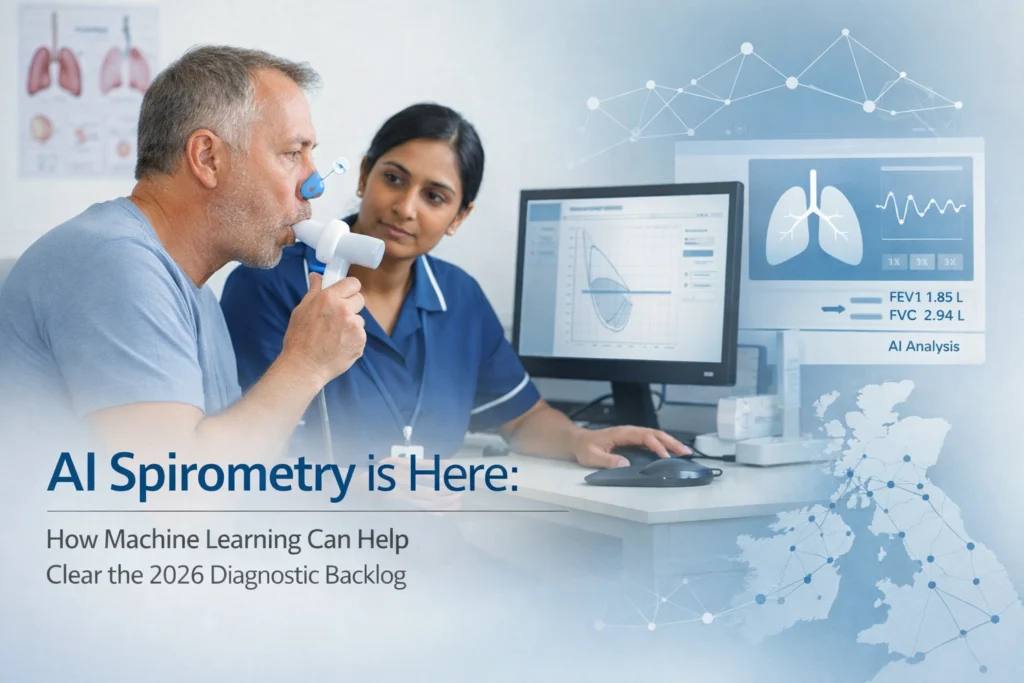
AI Spirometry is Here: How Machine Learning Can Help Clear the 2026 Diagnostic Backlog

Medical Disclaimer: This article provides general information about respiratory care and is not a substitute for professional medical advice. If you are experiencing severe breathlessness, chest tightness, or symptoms that are not relieved by your usual treatment, seek urgent medical attention. For questions about your care, treatment or inhaler use, please contact your GP, asthma nurse, or healthcare provider.
The spirometry waiting list is not a new problem. What's changed is that we now have tools that could genuinely help address it.
Across the UK, respiratory diagnostic capacity has been strained for years. Time-poor clinicians, inconsistent quality assurance, and limited access to specialist interpretation mean that spirometry: one of the most valuable tools for diagnosing conditions like asthma and COPD: is either delayed, underused, or misinterpreted.
Machine learning is entering this space not as a replacement for clinical judgement, but as a practical support system. It automates some of the most time-consuming aspects of spirometry analysis, improves diagnostic accuracy, and makes high-quality testing more accessible beyond specialist centres.
This isn't about innovation for its own sake. It's about what happens when technology is applied to a real and well-documented gap in care.
The Current State of Spirometry in the NHS
Spirometry should be a routine part of respiratory assessment. In practice, it often isn't.
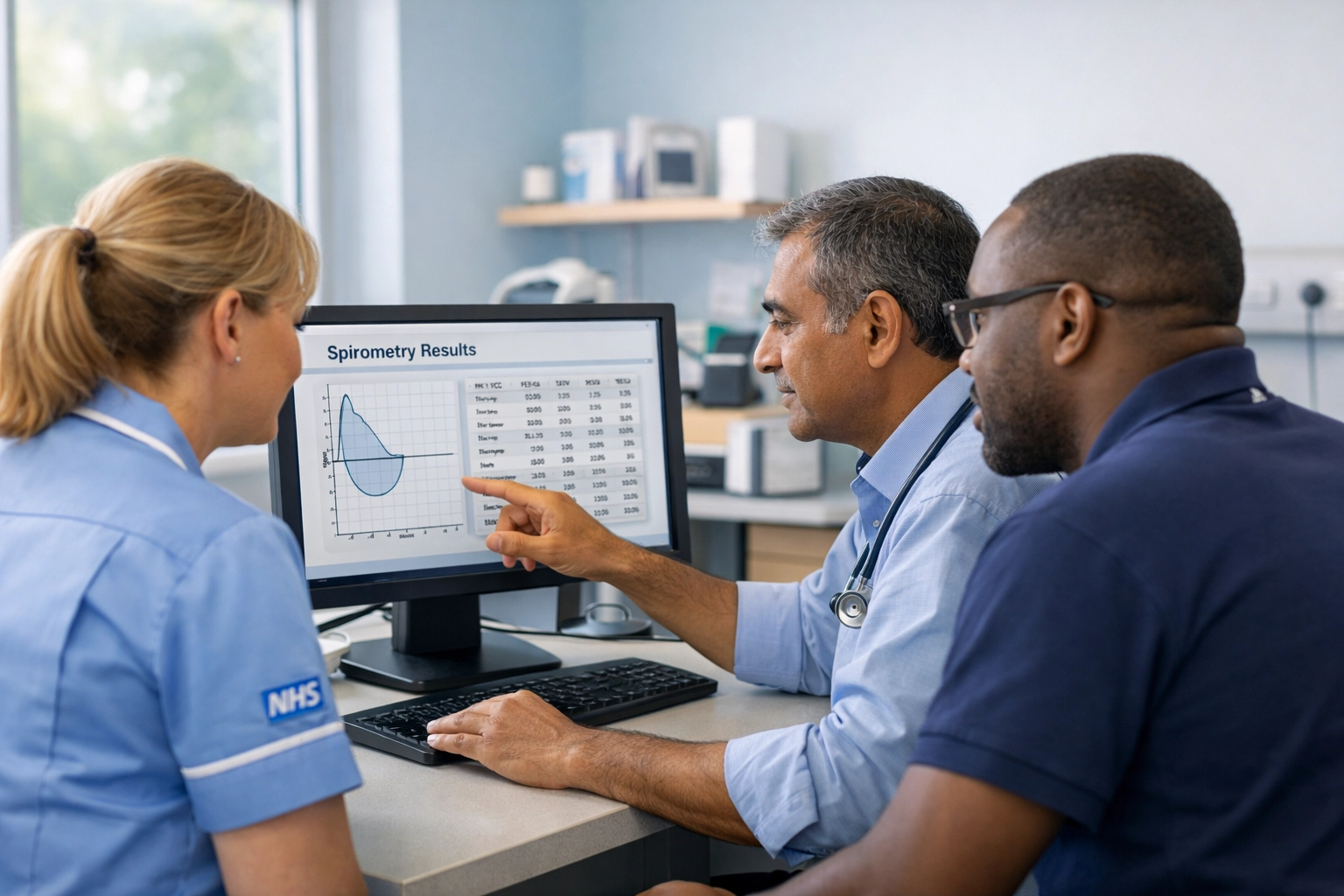
Time constraints are a major factor. Interpreting spirometry results takes experience and attention. In busy GP practices and community clinics, that time is scarce. As a result, tests are either not done at all, or results sit unreviewed while patients wait for specialist input.
Quality is another barrier. Spirometry is highly dependent on technique: both from the person conducting the test and the patient performing it. Poor-quality tests produce unreliable data, which undermines confidence in the result and leads to repeat appointments or missed diagnoses.
Access is uneven. High-quality spirometry is more readily available in well-resourced hospital settings than in community care or underserved areas. Patients in remote or deprived communities often face longer waits, or travel further, to access the same standard of diagnostic care.
These are not new issues. But they have compounded over time, and the diagnostic backlog across respiratory services reflects that.
What Machine Learning Brings to the Table
Automated quality assurance is one of the most immediate applications. Machine learning systems can assess spirometry results in real time, flagging technical errors or inconsistencies as they happen. This allows technicians to repeat tests on the spot, rather than discovering issues later when the patient has already left.
A collaboration between UCSF and UC Berkeley is developing exactly this kind of system: designed to provide instant feedback at the point of care. The goal is to expand access to specialist-level spirometry in non-specialty settings, where quality control has historically been a limiting factor.
Clinical decision support is the next layer. Once a test is completed, machine learning can screen results and identify patterns that warrant clinical attention. This doesn't replace the clinician's role: it focuses their attention on the cases that need it most.
In practice, this looks like an alert system integrated into Electronic Medical Records. High-risk results are flagged automatically, allowing respiratory specialists to prioritise their time more effectively. Clinicians using AI-supported systems have been shown to achieve better diagnostic accuracy than those working without them: not because the AI is making the diagnosis, but because it's helping clinicians see what matters.
Diagnostic Accuracy and Early Detection
Machine learning models trained on spirometry data, combined with demographic and clinical information, can distinguish between conditions like asthma and COPD with high sensitivity. This is particularly useful in primary care, where diagnostic uncertainty often leads to delayed referrals or empirical treatment without confirmation.
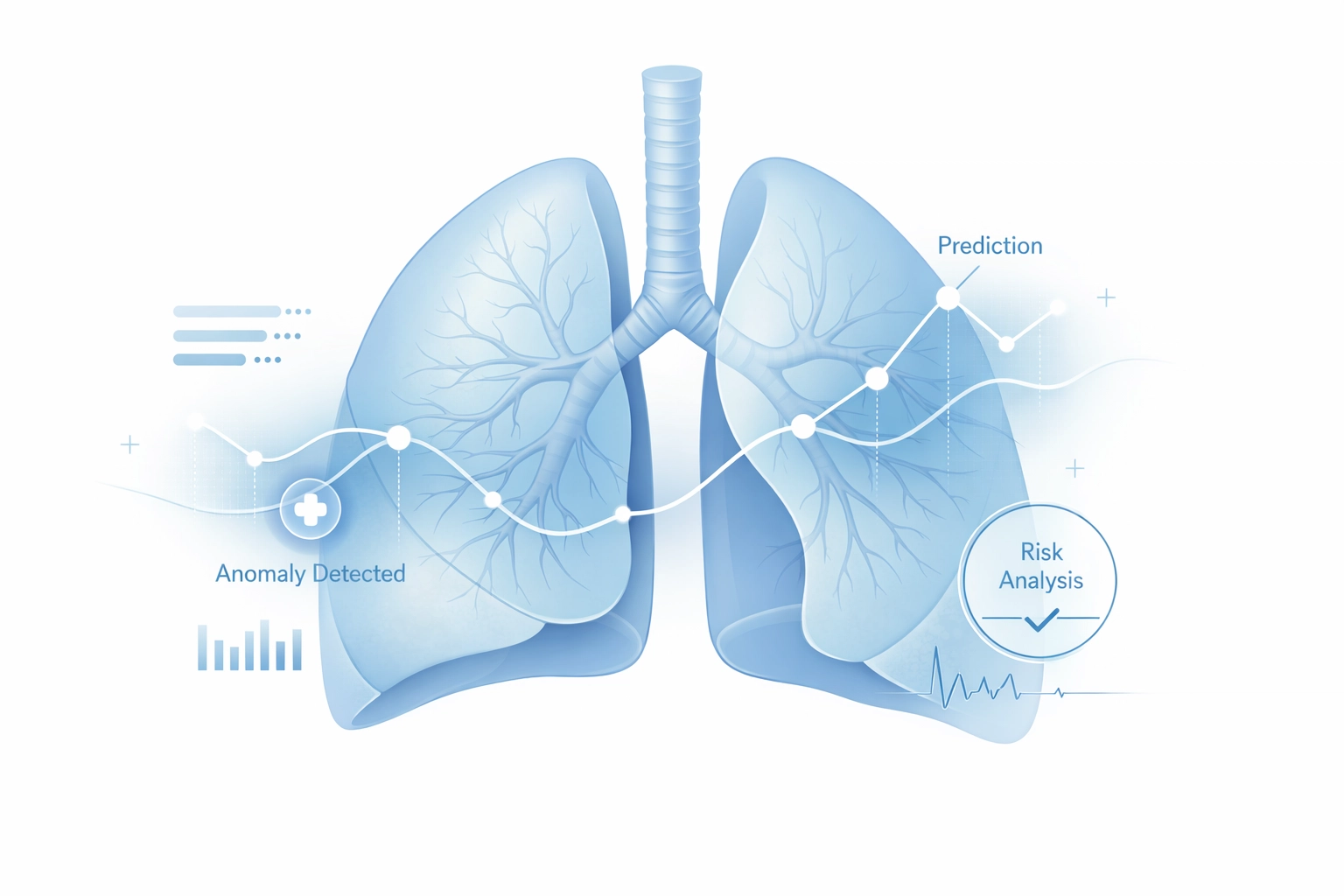
Beyond classification, machine learning can detect early signs of disease progression before symptoms become obvious. Conditions like interstitial lung disease (ILD) can be picked up earlier when AI systems analyse subtle trends in lung function that might not yet trigger clinical concern.
This matters because early intervention improves outcomes. The earlier a condition is identified, the more options are available to slow progression, manage symptoms, and maintain quality of life.
What patients and clinicians often describe is a frustration with late diagnosis: by the time someone is symptomatic enough to be referred, disease may already be advanced. Machine learning won't solve every case, but it creates an opportunity to catch more people earlier.
What This Looks Like on the Ground
In a community respiratory clinic, a patient completes a spirometry test. The machine learning system reviews the quality of the test in real time. If the effort was insufficient or the technique was inconsistent, the technician is alerted immediately and can guide the patient through another attempt.
Once a valid test is recorded, the results are uploaded to the patient's EMR. The AI scans the data and compares it against known patterns. If the lung function profile suggests undiagnosed COPD or early restrictive disease, the system flags the case for clinical review.
The GP or respiratory nurse sees the flag during their next session. They have the context they need to make an informed decision: whether that's starting treatment, arranging a follow-up, or referring to secondary care.
The specialist receives a referral with clean, quality-assured spirometry data and AI-generated insights. Their time is spent on clinical judgement, not deciphering poor-quality tests or chasing missing information.
This is not a futuristic scenario. Systems like this are already in development and piloting across the UK and internationally.
Trust, Transparency and Clinical Adoption
For machine learning to be adopted in clinical practice, it has to be explainable. Clinicians need to understand why the system has flagged a result, not just accept a black-box recommendation.
Explainable artificial intelligence (XAI) is the term used to describe systems that show their working. Instead of simply outputting a risk score, these models highlight which aspects of the spirometry data or patient profile contributed to the decision. This transparency builds trust and allows clinicians to validate the AI's reasoning against their own expertise.
Validation on larger, more diverse patient groups is also essential. Many machine learning models are trained on datasets that don't reflect the full diversity of the UK population. Before widespread implementation, these systems need to be tested across different demographics, geographies, and clinical settings to ensure they perform consistently.
This is where collaboration between the NHS, academia, and Life Sciences becomes critical. Real-world testing, feedback loops, and iterative improvement are what turn a promising pilot into a reliable tool.
Addressing the Backlog Without Adding Burden
The diagnostic backlog won't be cleared by working faster. It will be cleared by working smarter: using the tools and capacity we have more effectively.
Machine learning in spirometry doesn't ask clinicians to do more. It automates the parts of the process that don't require clinical judgement: quality checks, pattern recognition, triage: so that clinical time can be focused where it's actually needed.
For patients, this means shorter waits, more accurate diagnoses, and earlier access to treatment. For the NHS, it means better use of existing resources and a pathway to expand diagnostic capacity without proportionally increasing workforce demand.
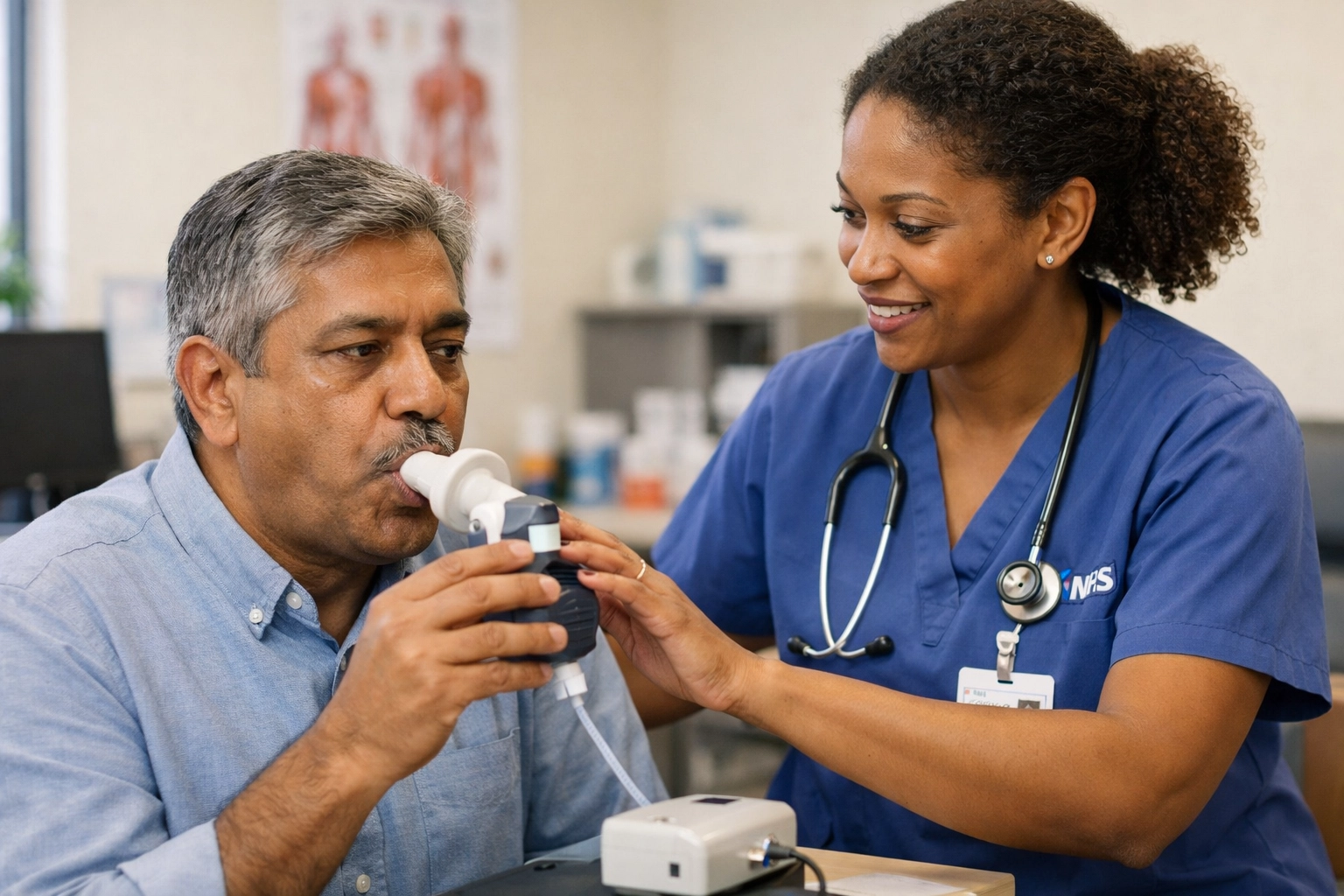
It also means more equitable access. If AI-supported spirometry can deliver specialist-level quality in primary and community care, then geography and resource availability become less of a barrier to good respiratory care.
What Happens Next
This technology exists. The question now is how quickly and how thoughtfully it can be integrated into routine care.
That requires investment, certainly. But it also requires the kind of cross-sector collaboration that The Respiratory Network exists to support: bringing together NHS leaders, clinicians, patients, and Life Sciences in conversations that are grounded in real-world practice.
If you're working on respiratory pathway redesign, diagnostic innovation, or AI implementation in your ICS or Trust, these are the conversations worth having now.
The Respiratory Network connects NHS respiratory leaders, patients, and Life Sciences to improve care across the UK. Join the network, follow our updates, or join us at our next Round Table event to be part of the conversation shaping the future of respiratory diagnostics.
Full Medical Disclaimer:
This article is intended for general informational and educational purposes only and does not constitute medical advice, diagnosis, or treatment. The content provided is based on current clinical guidelines and evidence available at the time of writing, but individual circumstances vary significantly.
Do not use this article to self-diagnose or change your treatment without consulting a qualified healthcare professional. Respiratory conditions are serious and require personalised medical assessment and ongoing monitoring by a GP, asthma nurse, respiratory specialist, or other qualified healthcare provider.
If you are experiencing any of the following, seek urgent medical attention immediately:
- Severe breathlessness or difficulty speaking in full sentences
- Blue lips or fingernails
- Feeling exhausted or unable to manage symptoms
- No improvement after using your reliever inhaler
- Symptoms rapidly worsening
For non-urgent concerns about your treatment, inhaler technique, or medication use, please contact your GP surgery, asthma nurse, or NHS 111 for advice.
The Respiratory Network does not provide clinical services or individual medical advice. Always follow the specific treatment plan provided by your healthcare team.
Responses