

The Economic Case for Prevention: Why Respiratory Care is the Key to Reducing Total NHS Waiting Lists

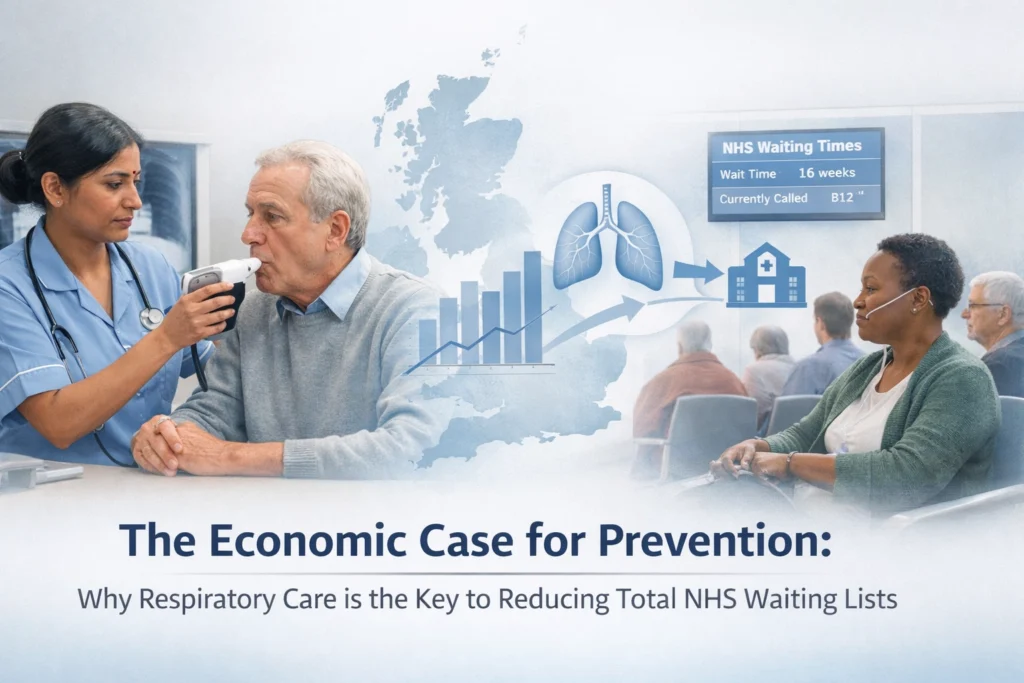
When NHS leaders talk about reducing waiting lists, the conversation usually focuses on surgical throughput, diagnostic capacity, or theatre efficiency. Respiratory care rarely makes the headline.
But here's what the data quietly shows: respiratory conditions account for one in five emergency admissions, cost the NHS over £11 billion annually, and create cascading demand across almost every part of the system, from A&E to cardiology, from mental health services to social care.
And most of it is preventable.
This isn't about shifting blame or oversimplifying a complex problem. It's about recognising that if the NHS wants to reduce total waiting lists sustainably, it needs to address the diseases that keep filling the front door.
The Hidden Weight of Respiratory Disease
Asthma affects over 5 million people in the UK. COPD affects around 1.2 million diagnosed patients, with an estimated further 2 million undiagnosed. Interstitial lung disease, pulmonary hypertension, bronchiectasis, the list goes on.
These are not niche conditions. They touch every demographic, every region, and every part of the care system.

What patients and clinicians often describe is a pattern: a chest infection escalates, an inhaler runs out, symptoms are ignored until they can't be, and what could have been managed in primary care becomes an emergency admission. That admission delays an elective procedure. The patient's recovery is complicated by deconditioning. Their next exacerbation arrives sooner. The cycle repeats.
In practice, every unmanaged exacerbation creates system demand far beyond the respiratory ward. Patients wait longer for diagnostics. Cardiology services inherit breathless patients who haven't had basic lung function tests. Frailty services see older adults whose mobility collapsed after a hospital stay that could have been avoided.
Prevention doesn't just reduce respiratory demand. It reduces total demand.
What Prevention Actually Looks Like
Prevention in respiratory care isn't theoretical. It's case-finding in primary care. It's ensuring patients know how to use their inhalers correctly. It's smoking cessation support that actually reaches people. It's pulmonary rehabilitation that keeps patients out of hospital. It's winter planning that doesn't leave vulnerable people without a plan until December.
What this looks like on the ground is Integrated Care Systems identifying high-risk patients before they become high-cost patients. It's pharmacy teams reviewing repeat prescriptions and flagging overuse of reliever inhalers. It's respiratory nurses working in PCNs to manage exacerbations in the community.

None of this is glamorous. None of it makes for a good press release. But the economic impact is significant.
A patient with well-controlled asthma costs the NHS around £200 per year. A patient with uncontrolled asthma can cost £2,000 or more, often far more if hospital admissions are involved. That's a tenfold difference, driven almost entirely by whether basic preventative care is in place.
For COPD, the numbers are even starker. Preventing one hospital admission saves the NHS approximately £2,500. Pulmonary rehabilitation, consistently shown to reduce admissions, costs around £600 per patient to deliver. The return on investment is obvious, yet access remains patchy at best.
Important note: This blog provides information about respiratory care pathways and is not a substitute for medical advice. If you or someone you care for has concerns about respiratory symptoms or treatment, please contact your GP or healthcare provider. In an emergency, always call 999.
The Workforce Equation
There's another economic factor that doesn't get enough attention: workforce sustainability.
Respiratory care, when delivered reactively, is exhausting. Emergency admissions dominate. Clinics are full of patients who should have been seen months ago. Staff burn out. Waiting lists grow.
Prevention, by contrast, creates capacity. When exacerbations reduce, outpatient slots free up. When hospital admissions drop, acute respiratory teams have time to focus on complex cases. When patients are better supported in the community, respiratory nurses can spend time on proactive care instead of crisis management.
This isn't about asking clinical teams to do more with less. It's about recognising that prevention is the only way to make respiratory care sustainable in the long term.
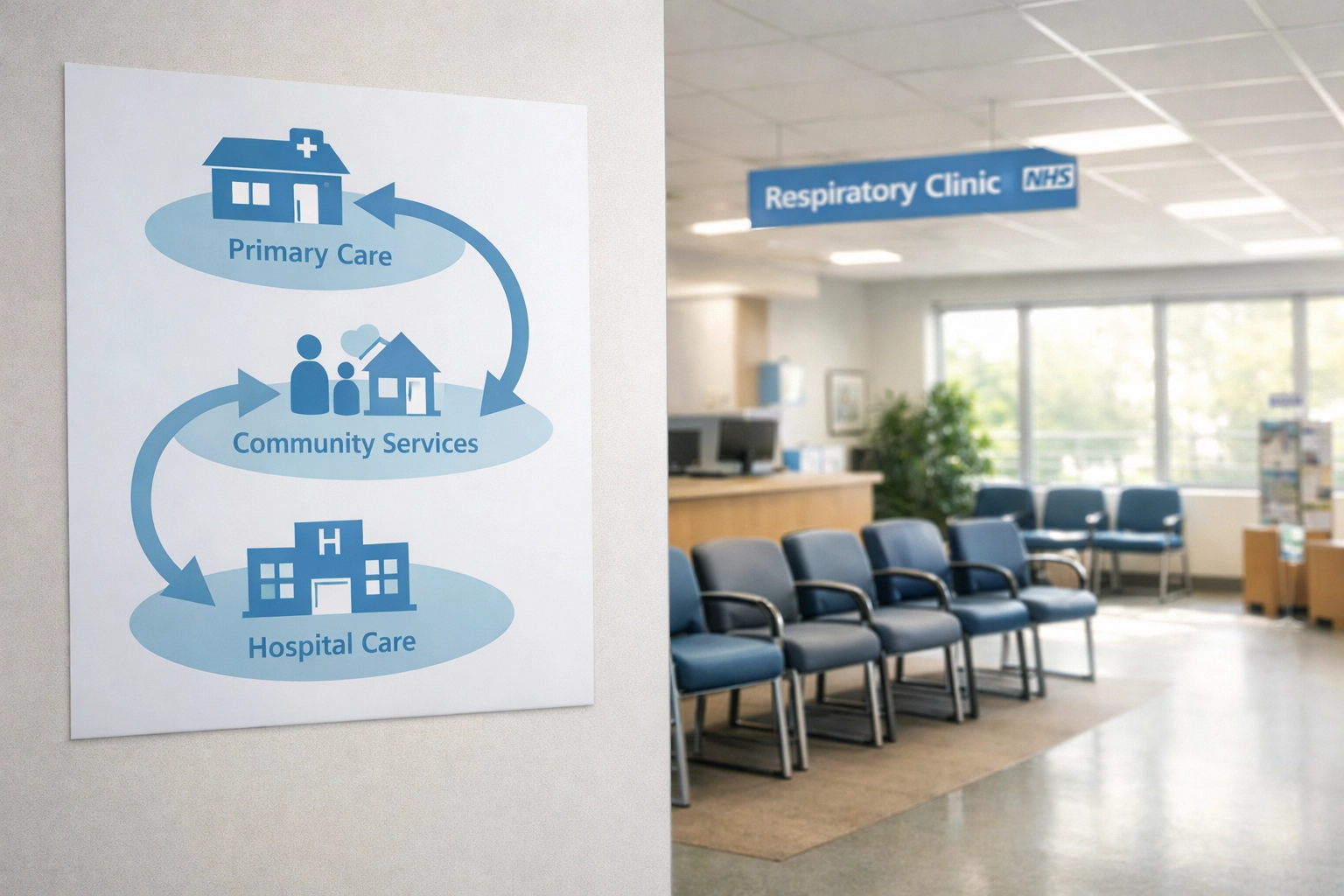
Integrated Care Systems that have invested in respiratory prevention: through case-finding programmes, community diagnostic hubs, and structured follow-up: report not just improved outcomes, but improved staff morale. Clinicians describe finally having time to do the work they trained for, instead of reacting to crises that could have been avoided.
Why Life Sciences Matters Here
Life Sciences organisations often find themselves positioned on the periphery of prevention conversations. But in practice, industry is already part of the solution: whether through diagnostic innovation, inhaler technology that improves adherence, or digital tools that help patients manage their condition at home.
The economic case for prevention isn't just an NHS problem. It's a shared opportunity.
When pharmaceutical and MedTech companies engage with ICSs and PCNs on preventative pathways: not as suppliers, but as solutions partners: the results are measurable. Better diagnostics mean earlier intervention. Better devices mean fewer exacerbations. Better data means better planning.
What clinicians and industry colleagues often describe is a shift from transactional relationships to collaborative ones. Prevention requires that shift. It requires conversations that go beyond product features and into pathway design, patient support, and long-term outcomes.

The Respiratory Network exists precisely for these conversations: to bring together NHS leaders, clinicians, patients, and Life Sciences in the same room, with the same goal: making respiratory care work better for everyone.
The Political and Strategic Context
The NHS Long Term Plan, the Elective Recovery Programme, the Core20PLUS5 framework: all of them recognise that demand reduction is as important as capacity expansion. Respiratory disease sits at the intersection of nearly every priority: health inequalities, prevention, elective recovery, workforce sustainability, and winter pressures.
Yet respiratory care still doesn't command the strategic attention it deserves.
Part of the challenge is visibility. Unlike cancer or cardiac pathways, respiratory disease doesn't always have a clear moment of diagnosis or intervention. Patients live with symptoms for years. By the time they reach secondary care, the damage is often done.
But the opportunity is huge. If even a modest proportion of preventable respiratory admissions were avoided, the impact on total waiting lists would be measurable within a year. Emergency department pressure would ease. Elective capacity would increase. Workforce retention would improve.
Prevention isn't a luxury. It's the most cost-effective intervention the NHS has.
What This Means for You
If you're an NHS leader, the question is: does your ICS have a respiratory prevention strategy that's funded, staffed, and embedded across primary and community care?
If you're a clinician, the question is: are your patients receiving the proactive support they need to stay out of hospital, or are you managing exacerbations that should never have happened?
If you're working in Life Sciences, the question is: are you engaging with the NHS as a solutions partner in prevention, or are you still focused on volume and market share?
And if you're a patient or advocate, the question is: are you being heard in the conversations that shape respiratory care: or are pathways still being designed without your voice?
Join the Conversation
The Respiratory Network brings together everyone who has a stake in getting respiratory care right: patients, clinicians, NHS leaders, and Life Sciences partners. Our Round Tables are where these conversations happen: where prevention moves from theory to practice, and where collaboration becomes action.
If you're serious about reducing waiting lists, improving outcomes, and building a sustainable respiratory care system, we'd like you to be part of it.
Become a member, follow us on social media, or join us at our next event. Because prevention works: but only if we work together.
The Respiratory Network exists to connect, inform, and empower everyone working to improve respiratory care across the UK. From NHS strategy to patient voice, we create the space for better conversations.


Responses