

The Silent Asthma Attack: 5 Signs You Shouldn’t Ignore (and What Mimics Them)

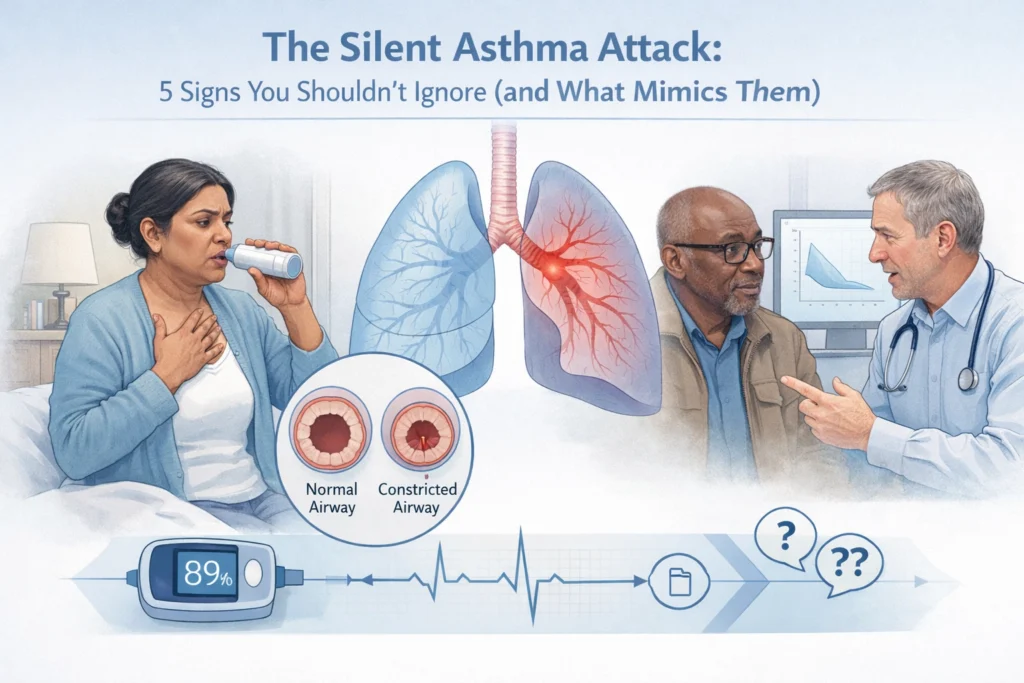
In the collective imagination, an asthma attack is often defined by a high-pitched wheeze or a violent, audible struggle for air. This stereotype, while rooted in common clinical presentations, can be a dangerous simplification. In practice, many individuals experience what is frequently termed a "silent asthma attack", a state where the airways are narrowing, but the hallmark sounds of respiratory distress are absent.
For the NHS clinical lead, the challenge lies in ensuring patients recognize these subtle shifts before they escalate into an emergency. For those in Life Sciences, understanding these nuanced patient experiences is vital for developing engagement strategies that reflect reality rather than textbook generalisations.
What is a Silent Asthma Attack?
To understand how a silent asthma attack occurs, we must look at the mechanics of the respiratory system. A wheeze is produced when air is forced through narrowed airways. However, during a severe or "silent" episode, the airways may become so constricted that air movement is insufficient to produce any sound at all.
What patients and clinicians often describe in these moments is not a noisy struggle, but a quiet, exhausting effort to move any air at all. This lack of wheezing can lead to a false sense of security, delaying the decision to seek medical intervention. In a healthcare system currently under significant pressure, early identification of these silent symptoms is essential for effective respiratory health in the UK.
5 Signs That May Identify an Asthma Attack
When the typical wheeze is missing, we must look for other clinical markers. Research into patient engagement and respiratory health suggests that these five signs are often the most reliable indicators that a silent attack is underway.
1. Shortness of Breath During Routine Activities
It is common for individuals to dismiss breathlessness as a sign of being "unfit" or simply "having a bad day." However, if simple tasks, such as climbing a flight of stairs or walking to the letterbox, suddenly feel like a physical marathon, it may indicate underlying airway inflammation.
In a clinical context, this is often the first sign of deteriorating control. According to the British Thoracic Society (BTS) guidelines, a change in exercise tolerance is a primary indicator that the asthma management plan needs review.
2. Chest Tightness or Persistent Pressure
Instead of a sharp pain, silent asthma often presents as a dull, heavy pressure on the chest. Patients frequently describe this as if a "heavy weight" is sitting on their sternum or as though their chest is being squeezed by a tight band.
This sensation is often more pronounced in cold air or late at night. Because this symptom overlaps with other medical issues, it is frequently overlooked, yet it remains one of the most consistent signs of bronchial constriction without wheezing.
3. Unexplained Fatigue and Lethargy
Breathing is a process that usually requires very little conscious effort or energy. During an asthma flare-up, the body must work significantly harder to maintain oxygen levels. This metabolic demand leads to profound exhaustion.
What this looks like on the ground is a patient who feels "wiped out" despite having done very little. This fatigue is not just sleepiness; it is the physical exhaustion of a body struggling for every breath. Studies published in journals like The Lancet Respiratory Medicine have highlighted the correlation between asthma severity and the systemic impact of respiratory effort on patient energy levels.

4. The "Sentence Test": Difficulty Speaking
One of the most immediate ways to identify an asthma attack is the inability to complete a full sentence without pausing for breath. In clinical practice, this is a red-flag symptom. If a person finds they must take a breath in the middle of a short phrase, it indicates that their peak flow and lung capacity have dropped to a level that requires urgent attention.
5. Persistent, Dry Nighttime Cough
While many associate asthma with a "wet" or productive cough, silent asthma often manifests as a dry, hacking cough that worsens when lying down. This is frequently mistaken for a lingering cold or post-nasal drip. However, a cough that consistently interrupts sleep is a clinical hallmark of poorly managed asthma and can be the primary sign of a silent attack in both children and adults.
What Mimics Asthma?
Differential diagnosis is a cornerstone of effective respiratory care. In the UK, several conditions frequently mimic asthma, leading to potential misdiagnosis or inappropriate treatment pathways.
Anxiety and Panic Attacks
The physical sensations of a panic attack, shortness of breath, chest tightness, and a sense of "air hunger", can be indistinguishable from an asthma attack to the person experiencing them. However, a panic attack is typically not associated with the physiological airway narrowing found in asthma.
Deconditioning (Poor Physical Fitness)
As noted previously, many patients attribute their respiratory struggles to being "out of shape." While poor fitness causes breathlessness, it does not typically cause the chest tightness or nighttime coughing associated with asthma.
Vocal Cord Dysfunction (VCD)
VCD occurs when the vocal cords close when they should open during inhalation. This creates a sound similar to a wheeze and a feeling of suffocation. Unlike asthma, VCD does not respond to traditional respiratory treatments that target the lower airways, making accurate diagnosis critical for patient outcomes.
Cardiac Issues
In older populations or those with specific risk factors, breathlessness and chest pressure may be related to heart function rather than lung function. This is why a comprehensive clinical evaluation is necessary to ensure the correct care pathway is followed.
The Clinical Perspective: Patient Engagement in the UK
From the perspective of The Respiratory Network, bridging the gap between clinical guidelines and lived experience is essential. When patients are better informed about the subtle signs of their condition, they are more likely to engage with their primary care teams before an emergency occurs.
For Life Sciences directors, these "silent" symptoms represent a significant area of unmet need in patient education. Traditional marketing and education materials often over-emphasize the wheeze, leaving a large portion of the patient population feeling as though their symptoms "aren't serious enough" to report.
Please note: The information provided in this blog is for educational and informational purposes only and is intended to foster better conversations between patients and their healthcare providers. It is not a substitute for professional medical advice, diagnosis, or treatment.
If you or someone you care for is experiencing symptoms of respiratory distress, such as severe difficulty breathing, blue-tinged lips, or an inability to speak, please seek emergency medical assistance immediately. Always consult with a qualified healthcare professional, such as your GP or respiratory consultant, regarding any medical condition or treatment plan. This post does not constitute legal or medical advice.
Moving Toward Better Respiratory Conversations
The goal of identifying a silent asthma attack is not to cause alarm, but to empower. By moving away from a "one-size-fits-all" definition of what respiratory distress looks like, we can improve the safety and quality of life for those living with asthma across the UK.
In practice, this means listening more closely to the "quiet" symptoms. Whether you are a clinician looking to refine your patient's management plan or a patient advocate seeking to share lived experiences, recognizing the silent signs is a vital step in modern asthma care.
Join the Conversation
The Respiratory Network is dedicated to bringing together the best minds in the NHS, Life Sciences, and the patient community to solve the challenges of respiratory health.
- Become a Member: Join our growing community to access exclusive insights and networking opportunities at therespiratorynetwork.co.uk.
- Share Your Experience: Visit our Public Forum to discuss how you or your patients manage subtle asthma symptoms.
- Stay Informed: Follow our latest news for updates on UK respiratory policy and clinical advancements.
- Collaborate: Join us at our next Round Table event to help shape the future of integrated respiratory care.
By working together, we can ensure that no asthma attack: silent or otherwise( goes unnoticed.)


Responses