Mind the Gap: When Grand Respiratory Policy Meets the Reality of a Stretched Frontline

If you’ve spent any time on the London Underground, the phrase “Mind the Gap” is probably burned into your brain. It’s a polite but firm warning that what you’re standing on isn’t quite aligned with where you need to go. In the world of UK respiratory care, that gap has become a bit of a canyon.
On one side, we have grand national policies. These are the ambitious, well-intentioned strategies: the NHS Long Term Plan, NICE guidelines, and regional Integrated Care Board (ICB) blueprints: that paint a picture of a gold-standard respiratory pathway. They envision early diagnosis, seamless integrated care, and proactive management that keeps patients out of hospital.
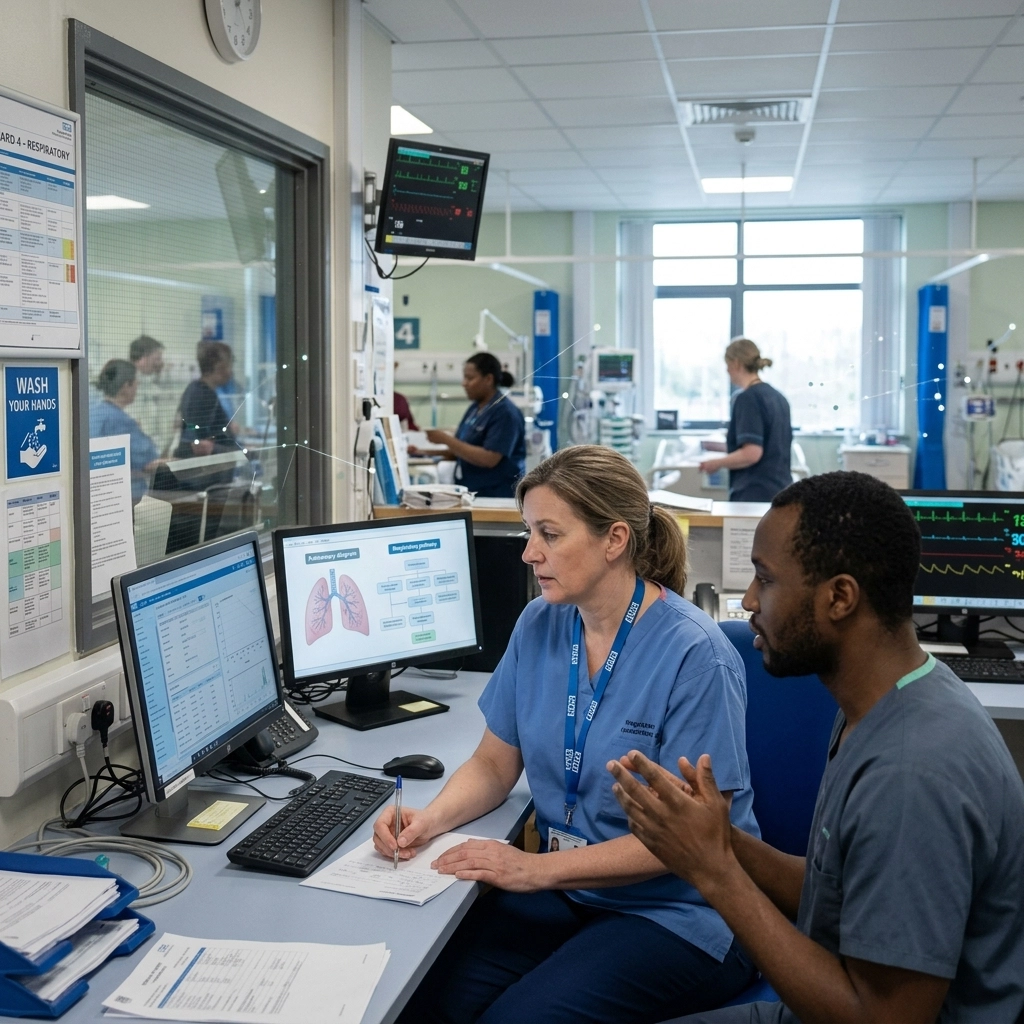
On the other side, we have the Tuesday morning clinic. We have the primary care nurse who is double-booked, the spirometry machine that’s been out of action for three weeks, and the patient who has been “cheery-bye’d” through a five-minute review because there are twenty more people in the waiting room.
In the current landscape, we see these two worlds constantly trying to shake hands and missing. We need to talk about why the policy-practice gap exists and, more importantly, what it actually looks like for the people working within the NHS respiratory services today.
The View from the Top: A Perfect Pathway
On paper, the future of respiratory health in the UK is bright. The policy focus has shifted toward “Core20PLUS5” to tackle health inequalities and toward “Diagnostic Hubs” to speed up the time it takes to get a definitive answer for breathlessness.
The vision is clear:
- Early Diagnosis: No more waiting years for a COPD diagnosis.
- Integration: Primary and secondary care talking to each other in real-time.
- Personalised Care: Patients having the time to discuss their goals and preferences.
It’s a beautiful model. If we followed it to the letter, we’d see a massive drop in emergency admissions and a huge spike in quality of life. But as any clinician will tell you, a model is only as good as the hands available to build it.
The Reality: A System Under Pressure
When we move from the boardroom to the frontline, the “gap” becomes visible in three very specific ways: capacity, workforce, and the “diagnostic bottleneck.”
1. The Diagnostic Bottleneck
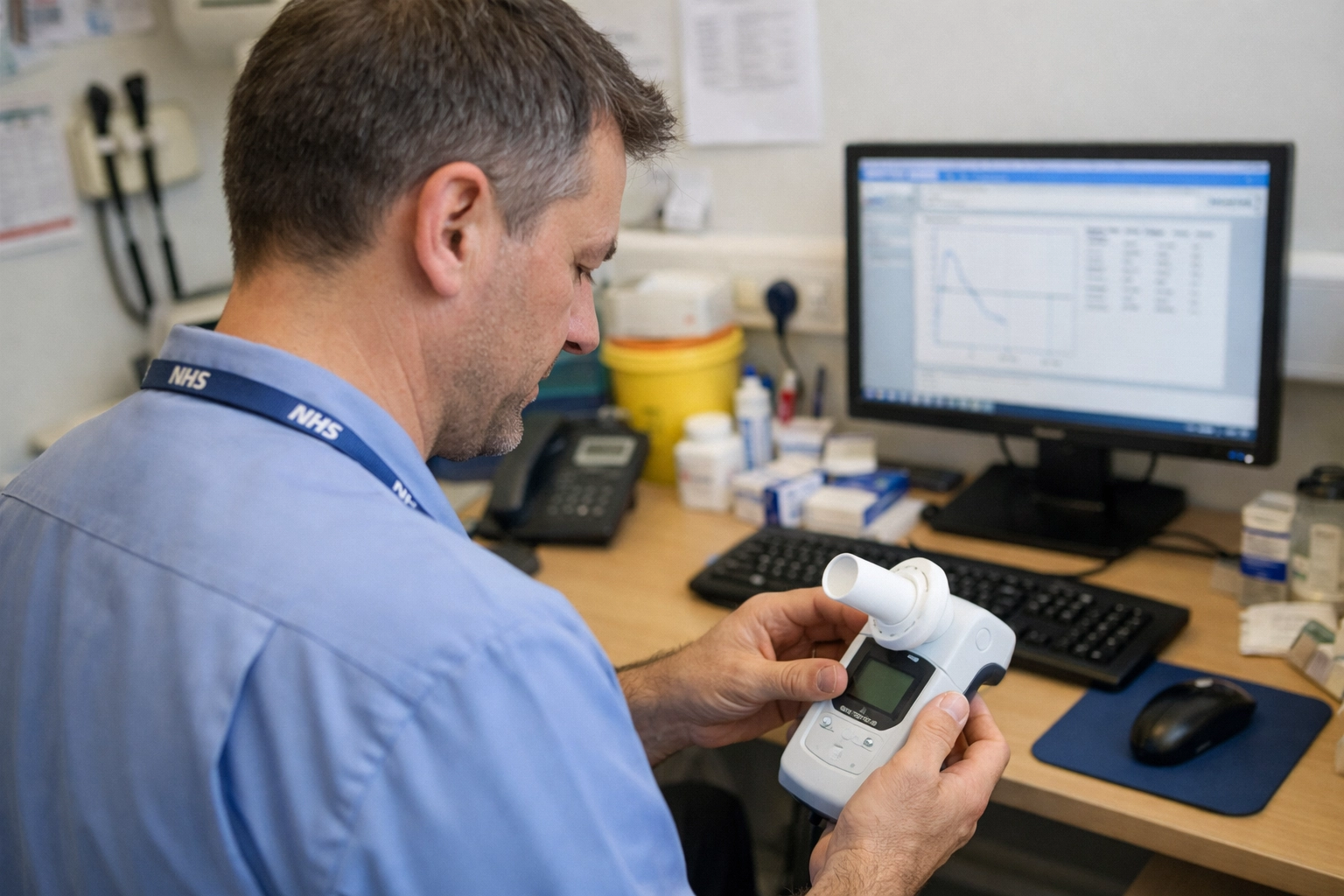
We often talk about the respiratory pathway as a highway, but currently, it feels more like a single-track road with a permanent set of roadworks. To diagnose conditions like Asthma or COPD correctly, you need objective testing: specifically spirometry and FeNO testing.
During the pandemic, spirometry essentially stopped. We are still feeling the aftershocks of that. In many areas, access to diagnostic testing in primary care hasn’t fully recovered. When a GP or nurse is under pressure, and the local diagnostic hub has a six-month waiting list, the temptation is to treat the symptoms based on “clinical suspicion” rather than objective data.
In practice, this leads to misdiagnosis. We see patients treated for asthma who actually have heart failure, or smokers whose breathlessness is dismissed as “just part of getting older” because the diagnostic tools aren’t readily available.
2. The Stretched Workforce
You can have the best policy in the world, but it won’t implement itself. Our NHS respiratory services are powered by specialist nurses, physiotherapists, and pharmacists. Currently, these groups are stretched to a breaking point.
When a policy mandates a “holistic annual review,” it assumes the clinician has 30 to 40 minutes to sit down with a patient. In reality, many respiratory nurses are managing caseloads that make a 15-minute slot feel like a luxury. When you’re rushing, the first things to go are the “extras”: the inhaler technique checks, the smoking cessation advice, and the conversations about mental health.
3. The “Guideline Overload”
There is a fascinating bit of research that suggests if a GP followed every single guideline for every chronic condition a multi-morbid patient had, they would need about 27 hours in a single day.
Our clinicians are facing “guideline fatigue.” Every few months, a new policy or a transition to “green inhalers” is rolled out. While these are clinically and environmentally sound, they add another layer of complexity to an already overflowing “to-do” list.
What This Looks Like on the Ground
I recently spoke with a respiratory lead who described the “Gap” perfectly. She said, “The policy tells me I should be doing complex pulmonary rehab and biologics. My reality is trying to find a room with a working sink and enough staff to run a basic clinic.”
This isn’t a failure of will. It’s a failure of resource alignment. When we design pathways in a vacuum, we forget that the person implementing that pathway might also be dealing with a broken IT system, a shortage of basic consumables, and three staff members off with burnout.
Bridging the Gap: Where Do We Go From Here?
It’s easy to point out the problems, but how do we actually start to bridge this gap? It requires a shift in how we think about pathway transformation.
1. Move from “Top-Down” to “Co-Produced”
Policies shouldn’t be written by people who haven’t stepped into a clinic in five years. We need to involve frontline clinicians and patients in the design phase. If a proposed change to a respiratory pathway adds five minutes to a consultation, we need to ask where those five minutes are coming from.
2. Focus on “The Basics Done Well”
Sometimes we get distracted by the “shiny” new innovations and forget that the biggest gains in respiratory health come from the basics: accurate diagnosis, the right inhaler for the right patient, and basic education. If we focused our policy efforts on clearing the diagnostic backlog, everything else would follow more naturally.
3. Integrated Care Systems (ICS) as the Connector
The move toward ICS is a huge opportunity. By looking at a population’s health rather than just individual hospital targets, we can start to move resources to where the “gap” is widest. This might mean funding community-based diagnostic vans or creating cross-practice respiratory “super-hubs” to take the pressure off individual GPs.
4. Ethical Life Sciences Engagement
Industry has a role to play here too. It’s not just about providing medication; it’s about supporting the system. Whether that’s through providing educational resources, supporting data audits, or helping to streamline the respiratory pathway, Life Sciences can be a partner in bridging the gap: provided it’s done ethically and transparently.
A Note on Medical Advice
Important Disclaimer: The content of this blog is for informational and networking purposes only. It is not intended to be a substitute for professional medical advice, diagnosis, or treatment. Always seek the advice of your physician or other qualified health provider with any questions you may have regarding a medical condition.
The Bottom Line
The gap between policy and practice isn’t going to close overnight. As long as the NHS is under pressure, there will always be a tension between what we want to do and what we can do.
However, by acknowledging the reality of the frontline, we can start to create policies that are more “resilient.” We need pathways that don’t break the moment a staff member goes on leave. We need strategies that account for the “messiness” of real-world healthcare.
At The Respiratory Network, this is exactly what we’re trying to facilitate. We want to bring the policy-makers, the frontline clinicians, and the industry partners into the same room to have honest, casual, and sometimes difficult conversations about how we make things better.
Join the Conversation
Are you feeling the gap in your daily work? Whether you’re an NHS lead trying to implement a new strategy or a clinician feeling the weight of the “frontline reality,” we want to hear from you.
- Become a Member: Join our community to access exclusive documents, forums, and networking opportunities. Register here.
- Join our Public Forum: Share your “on the ground” experiences with peers across the UK. Visit the Forum.
- Attend our Next Event: We regularly hold Round Table discussions to tackle these exact issues. Our next major session is on the 24th of June at The King’s Fund.
Let’s stop just “minding” the gap and start filling it.


Responses