

The High Street Hero: Why the community pharmacist is the missing link in the UK respiratory pathway.

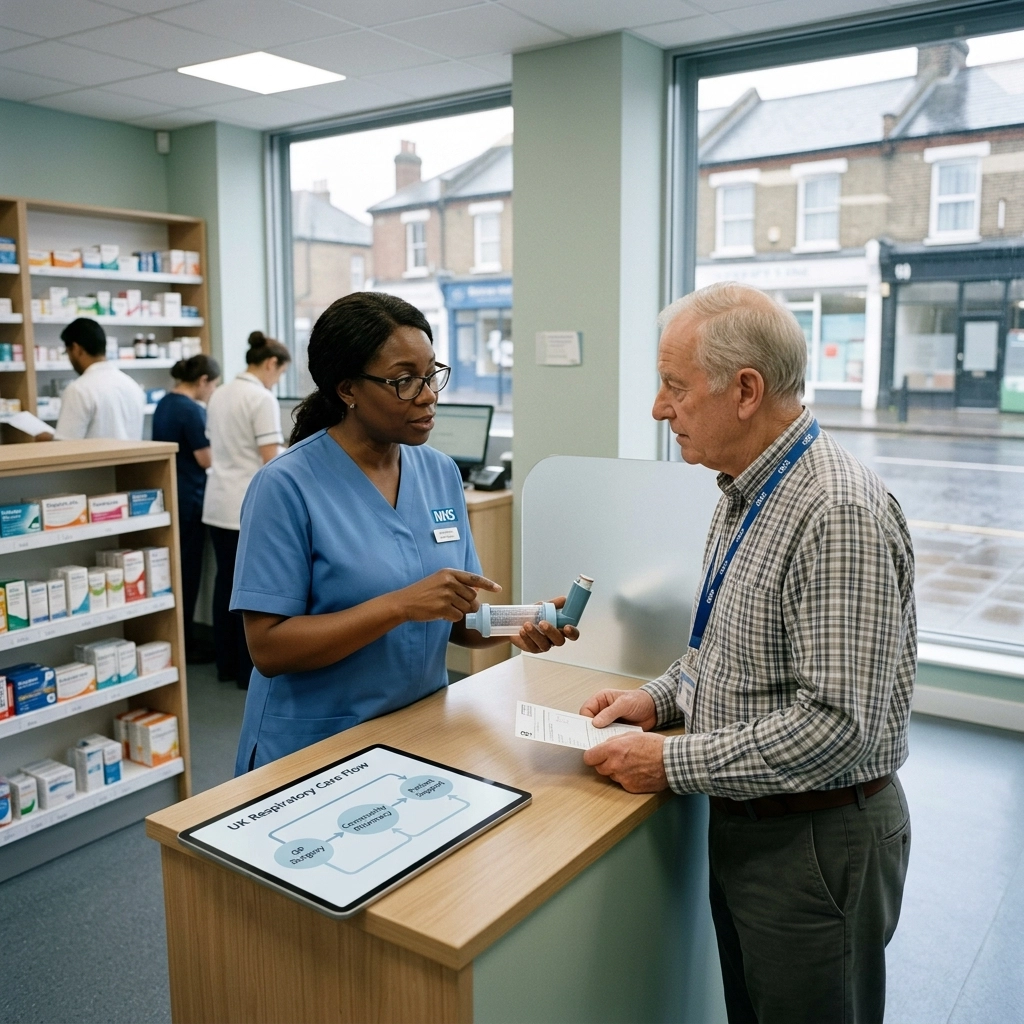
In the wider respiratory pathway, there is one part of the system that is easy to see but still not always fully used. While specialist care and general practice often get most of the attention in NHS respiratory leadership, community pharmacy plays an important and often overlooked part. As we look to the future of respiratory health UK, the shift from a dispensing-focused model to a more clinical role matters for the day-to-day reality of care and for the sustainability of the system.
The Paradox of Accessibility
The statistics surrounding community pharmacy access are as striking as they are vital for addressing health inequalities. Approximately 1.6 million people visit a community pharmacy every single day in England. Perhaps more significantly for NHS respiratory services, 99% of residents in the most deprived communities live within a 20-minute walking distance of a pharmacy.
In the context of respiratory care UK, this accessibility can help address the widening gap in health outcomes. We know that conditions such as asthma and COPD are disproportionately prevalent in areas of high deprivation. By placing clinical expertise in these hubs, some of the usual barriers, such as travel costs and waiting times for appointments, can be reduced. The community pharmacist is often the first and most frequent point of contact for patients, which makes pharmacy an important setting for patient engagement healthcare UK.

Bridging the Gap in the Respiratory Pathway
The current pressure on the respiratory pathway is well-documented. With diagnostics backlogs and general practice at capacity, patients can often feel adrift between their annual reviews. This 'dead time' in the patient journey is where exacerbations often occur, and where asthma care UK and COPD care UK can falter.
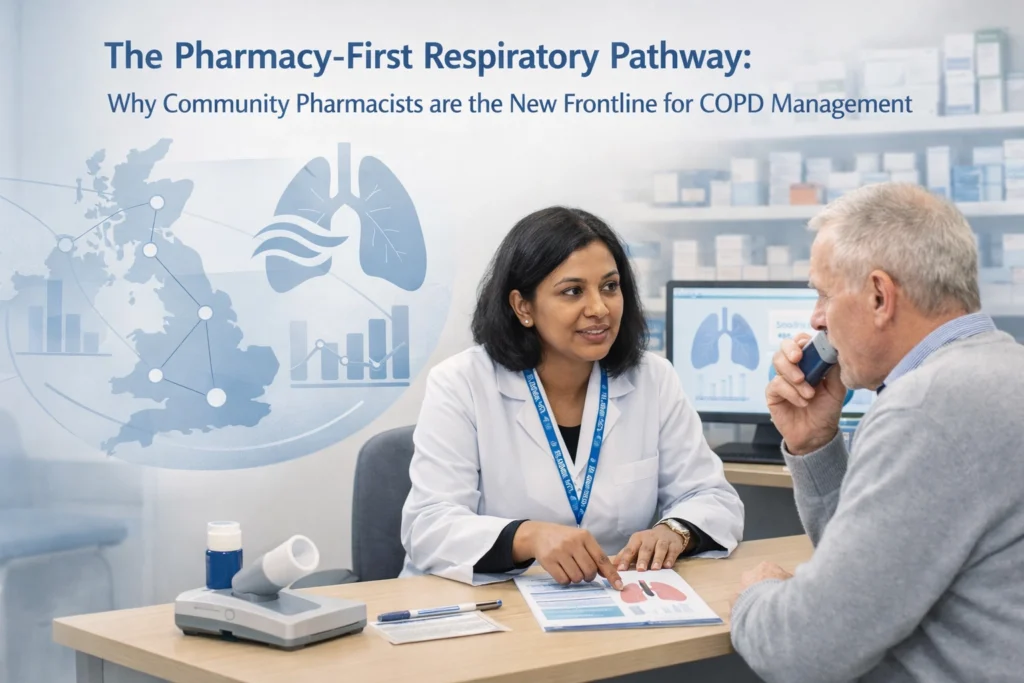
Community pharmacists are well placed to help bridge this gap. Rather than seeing the pharmacy only as a collection point for prescriptions, it is more useful to see it as a place for regular support and practical conversations. This includes:
- Inhaler Technique Support: Research indicates that 55% of people using inhalers without a dose counter are uncertain about how much medication remains. Incorrect technique is also a common reason why treatment does not work as intended. Pharmacy teams can offer a practical, face-to-face opportunity to check that the device is being used effectively.
- Preventive Monitoring: The integration of clinical services into the high street allows for regular monitoring that doesn't always require a formal GP appointment. From checking peak flow to spotting patterns that may suggest someone needs a wider review, pharmacists can be an early point of concern for the wider NHS.
- Smoking Cessation: With direct links between tobacco use and respiratory decline, the pharmacy’s role in delivering national smoking cessation services remains an important part of respiratory health uk.
Integrating Life Sciences into the High Street
The role of the pharmacist is also evolving through life sciences engagement UK. We are seeing a shift where the community pharmacy becomes a site for innovation, not just for dispensing. This is particularly evident in the adoption of digital health tools and smart technology.
For example, the introduction of smart technology that tracks inhaler usage can give pharmacists a clearer picture of how support might be used in practice. When someone comes into the pharmacy, that information may help highlight patterns that suggest they would benefit from a wider conversation with their care team. This type of pathway innovation can support a more proactive rather than reactive approach to care. It also helps shift the interaction from a simple transaction to a more informed conversation.
For those interested in how these data points are shaping the future, our topics page explores the intersection of technology and clinical practice in detail.
The Environmental and Economic Impact
Sustainability is a key driver in the modern NHS. Inhalers contribute approximately 3% of the total NHS carbon footprint. Much of this impact is exacerbated by improper use, leading to clinical waste and poor patient outcomes which, in turn, result in emergency admissions.
When community pharmacists are supported to provide inhaler reviews, the environmental benefit can be twofold. Firstly, improved technique may reduce waste. Secondly, pharmacists can help people understand more sustainable options within the context of their wider care, while keeping individual need and safety at the centre of the conversation. This kind of NHS respiratory leadership at local level matters if national Net Zero goals are going to mean anything in practice.
Challenges to Integration
Despite the clear benefits, integrating the community pharmacist fully into the respiratory pathway is not without its hurdles. Workforce pressures and the historical separation of pharmacy data from general practice records have created silos. To achieve true healthcare networking UK, we need seamless data sharing.
When a pharmacist performs a clinical review, that information must be visible to the GP and the specialist consultant. Conversely, the pharmacist needs insight into the patient’s overall management plan. Breaking down these digital walls is a priority for NHS respiratory services as they move towards an Integrated Care System (ICS) model.
Lived Experience and the Human Element
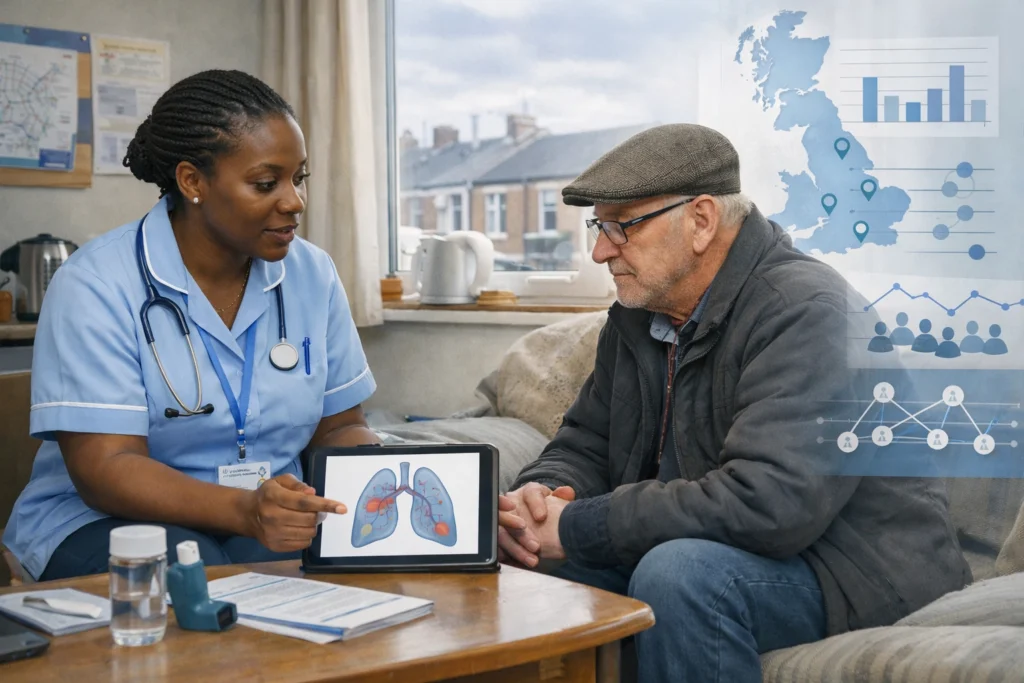
Beyond the data and the strategy, there is the patient. For many living with chronic lung conditions, the pharmacist is a familiar face: a source of reassurance in a fragmented system. Patient engagement healthcare UK thrives on trust, and the community pharmacist has that in spades.
In our forums, we often hear from individuals who feel that their pharmacist is the only person who truly has the time to explain how their condition works. By elevating the clinical status of the pharmacist, we are not just adding another step to the pathway; we are strengthening the human connection at the heart of care.
A Call for Collaborative Leadership
The "High Street Hero" is not working alone. For community pharmacy to play its full part, it needs support across the system. Life sciences engagement UK should include pharmacists in conversations about new diagnostics and service design. NHS leaders need funding models that support clinical services as well as dispensing. And patients should feel able to see their pharmacist as one part of their wider care team.
This collaborative approach is what we aim to support at The Respiratory Network. By bringing together the NHS, life sciences, and people with lived experience, we can make the pathway work better in practice.
Conclusion: The Future is Local
The community pharmacist may be one of the most practical links in a more joined-up respiratory pathway. Their accessibility, clinical role, and the trust they often build within communities all matter when we think about health inequalities and the future of respiratory health UK.
We invite you to be part of this conversation. Our upcoming events and discussions focus on these intersections of care and community.
- Join the Discussion: Share your views on the role of pharmacy in our forums.
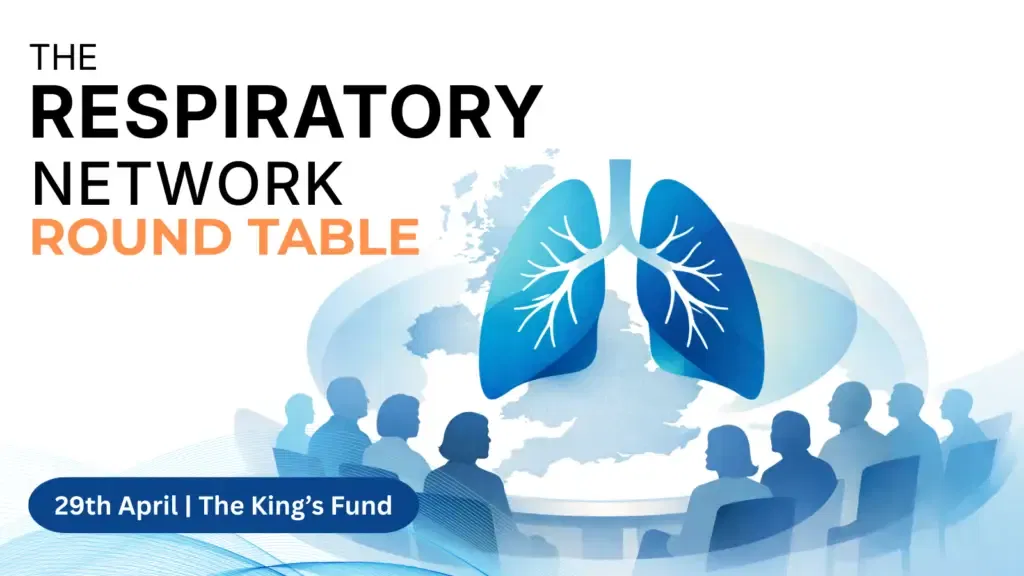
- Attend Our Round Table: We are hosting a focused session on pathway innovation on June 24th. Find more details on our Round Table 2026 page.
- Register: You can register your interest and stay connected via The Respiratory Network.
Together, we can ensure that every part of the system: from the specialist clinic to the high street pharmacy: is working in harmony for the benefit of every breath.
Responses