

Rehab in Your Living Room: Is virtual pulmonary rehab the answer to the NHS backlog?

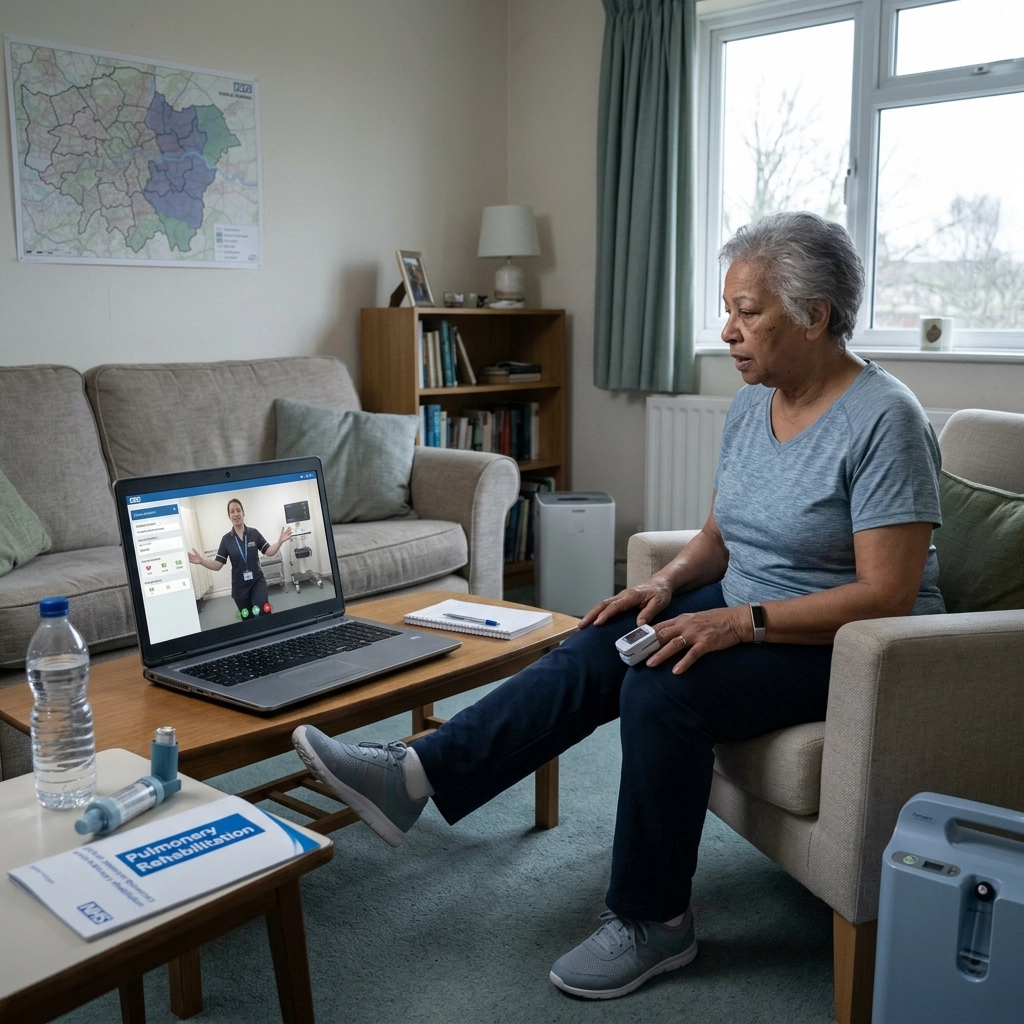
The landscape of respiratory care in the UK has changed significantly over the last few years. As we move further into 2026, pressure on NHS respiratory services is still a central talking point for clinicians, commissioners, and patients alike. At the heart of this discussion is the backlog, a persistent challenge that has pushed the system to look at digital alternatives to traditional care pathways.
One of the most discussed interventions in this space is pulmonary rehabilitation (PR). Historically, PR has been a well-established approach for managing chronic breathlessness, particularly within the context of COPD care UK and asthma care UK. However, with waitlists stretching into months, and in some regions, years, the question is no longer just about whether PR works, but how we deliver it. Is the "virtual" living room part of the answer the NHS needs, or does it create new pressure points in the respiratory pathway?
The Reality of the Backlog
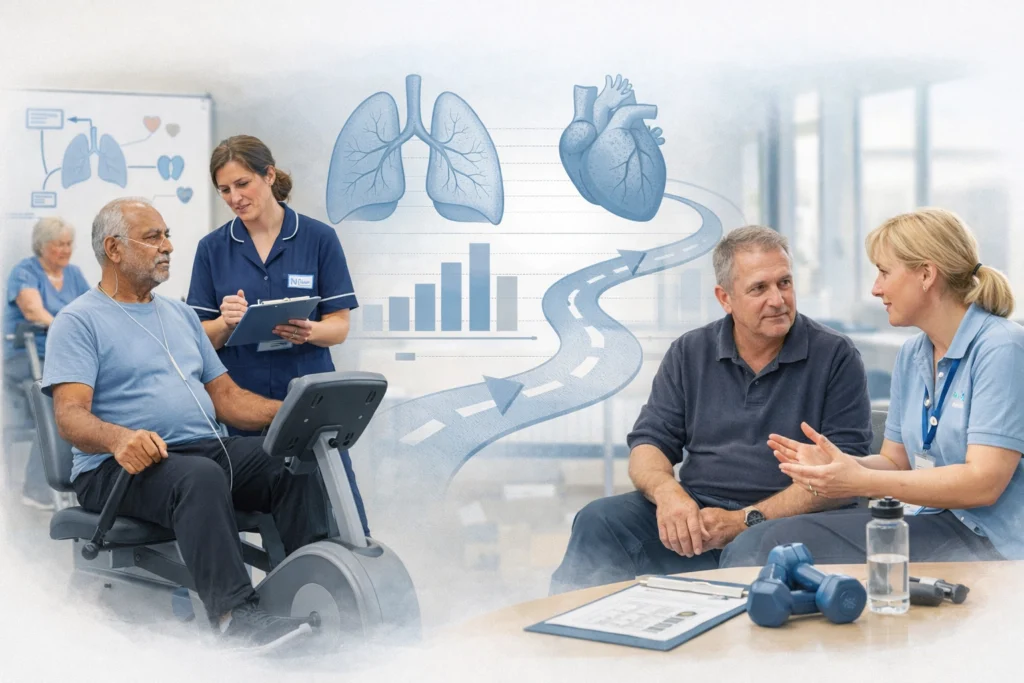
The scale of the challenge facing NHS respiratory leadership is hard to ignore. Pulmonary rehabilitation is a multidisciplinary programme of exercise and education designed for people with chronic lung disease who experience breathlessness. When delivered well, it can reduce hospital admissions and improve quality of life. Yet, despite its established value, access has long been a postcode lottery.
Before the shifts of the early 2020s, capacity for face-to-face services was already struggling to meet demand. The subsequent pause in services during the pandemic created a bottleneck that the system is still working through today. For someone living with a chronic condition, a six-month wait for rehabilitation is not just a delay; it can mean a period of decline, increased social isolation, and a higher risk of emergency admission.
The Rise of Virtual Pulmonary Rehab
In response to these pressures, virtual pulmonary rehab emerged as a necessity. By leveraging video conferencing, mobile apps, and digital platforms, services attempted to bring the gym and the classroom into the patient’s home. For some, this was a revelation. It removed the barriers of transport, parking costs, and the physical exhaustion of travelling to a hospital or community centre while breathless.
From the perspective of healthcare networking UK, virtual delivery seemed to offer a way to scale services more quickly. If we could remove the physical constraints of a hall or a gym, could we support more people at once?
However, as we look at the data and observed practice, the answer is more nuanced than a simple 'yes'.

The Digital Divide and the Patient Voice
What this looks like on the ground is often a tale of two patient groups. On one hand, we have patients who are digitally literate, have high-speed internet, and feel confident exercising in their own space. On the other, we have a significant portion of the respiratory population who are at risk of being left behind.
Insight from recent years suggests that approximately 40% to 50% of patients referred to pulmonary rehabilitation are either unable or unwilling to engage with online services. This digital exclusion often maps directly onto existing health inequalities. If we lean too heavily toward virtual-first models, we risk widening the gap in respiratory health UK.
Patient engagement healthcare uk requires us to listen to those with lived experience. Many patients describe the social aspect of PR as one of its most valuable components. The opportunity to meet others who "get it", to share the experience of breathlessness in a safe, peer-supported environment, is difficult to replicate over a screen. For an already isolated population, the move to a virtual living room can sometimes feel like another layer of distance from the community.
Clinical Oversight and Safety
In practice, the shift to virtual rehab raises important questions about supervision. Traditional face-to-face PR allows for real-time monitoring of how someone is coping and, importantly, their physical technique during exercise.
In a face-to-face setting, a physiotherapist or respiratory nurse can step in quickly if someone looks distressed or is performing an exercise incorrectly. In a virtual setting, particularly if the session is pre-recorded or if the clinician is monitoring multiple screens at once, that immediate oversight is reduced.
The "Swindon Model" vs. Digital Quick Fixes
There is a temptation within NHS strategy to see digital health as a quick fix for capacity issues. However, evidence suggests that the most effective way to clear a backlog is often through traditional capacity expansion rather than digital substitution.
For instance, looking at successful interventions in regional centres like Swindon, the reduction in waiting times, from two years down to twelve weeks, was achieved not by moving everyone to an app, but by doubling face-to-face capacity, increasing staffing levels, and expanding the use of community venues.
This highlights an important point for life sciences engagement UK and NHS leaders: technology should support the respiratory pathway, not stand in for workforce capacity.

Where Virtual PR Fits
So, if virtual PR isn't the primary answer to the backlog, does it have a place? Absolutely.
Virtual pulmonary rehab should be viewed as a useful tool for choice and accessibility. It can be a good option for:
- Patients who are still in employment and cannot attend mid-day sessions.
- Those living in extremely rural areas with poor transport links.
- Patients who may feel safer at home.
- Patients who have completed a face-to-face course and want digital tools for maintenance.
What patients and clinicians often describe as the "ideal" is a hybrid model. A system where the initial assessment and the first few sessions are face-to-face to build confidence and safety, with the option to transition to virtual delivery once the patient is stable and comfortable with their routine.
The Role of Life Sciences and Innovation
For those in life sciences and innovation, the challenge is to develop tools that bridge the gap between virtual and physical care. We need remote monitoring technology that is simple to use and gives clinicians timely, useful information. We also need platforms that prioritise social connectivity, making the virtual experience feel less like a solo workout and more like a group effort.
Innovation in this space must be co-produced with both the clinicians who are under pressure and the patients who will use the technology. This is where The Respiratory Network plays a crucial role, facilitating the conversations that ensure technology serves the pathway, rather than the pathway being forced to fit the technology.
Conclusion: A Measured Path Forward
Is virtual pulmonary rehab the answer to the NHS backlog? On its own, no. The backlog is a complex issue rooted in workforce shortages, space constraints, and high patient demand. Simply moving a face-to-face service onto a screen does not solve the underlying capacity problem, nor does it suit every patient.
However, as part of a flexible, modern respiratory pathway, virtual PR clearly has a place. It offers a level of patient choice that was previously much harder to deliver. The goal for NHS respiratory leadership in the coming years should be to build a system that is "digital-ready" but "human-first."
We must ensure that as we innovate, we do not lose the essence of what makes pulmonary rehab so life-changing: the human connection, the expert supervision, and the collective confidence that comes from breathing together.
Join the Conversation
At The Respiratory Network, we believe the future of respiratory care in the UK depends on honest, grounded dialogue between all stakeholders. Whether you are an NHS lead looking to redesign your pathway, a Life Sciences director developing digital tools, or a patient advocate making sure lived experience is heard, there is value in being part of the conversation.
If you would like to stay connected, join the discussion in our Forums, take a look at our Round Table event on June 24th, or register here.
Let’s shape the future of breath, together.
Please note: The information in this blog is for educational and networking purposes only. It is not intended to be a substitute for professional medical advice, diagnosis, or treatment. Always seek the advice of your physician or other qualified health provider with any questions you may have regarding a medical condition.
Category: NHS Strategy & Leadership
Tags: Pulmonary Rehabilitation, NHS Respiratory Services, Respiratory Pathway, COPD Care UK, Digital Health, NHS Leadership, Patient Engagement UK, Healthcare Networking UK.

Responses