

The NHS Respiratory Strategy 2026 Playbook: Your Quick-Start Guide to ICS Implementation

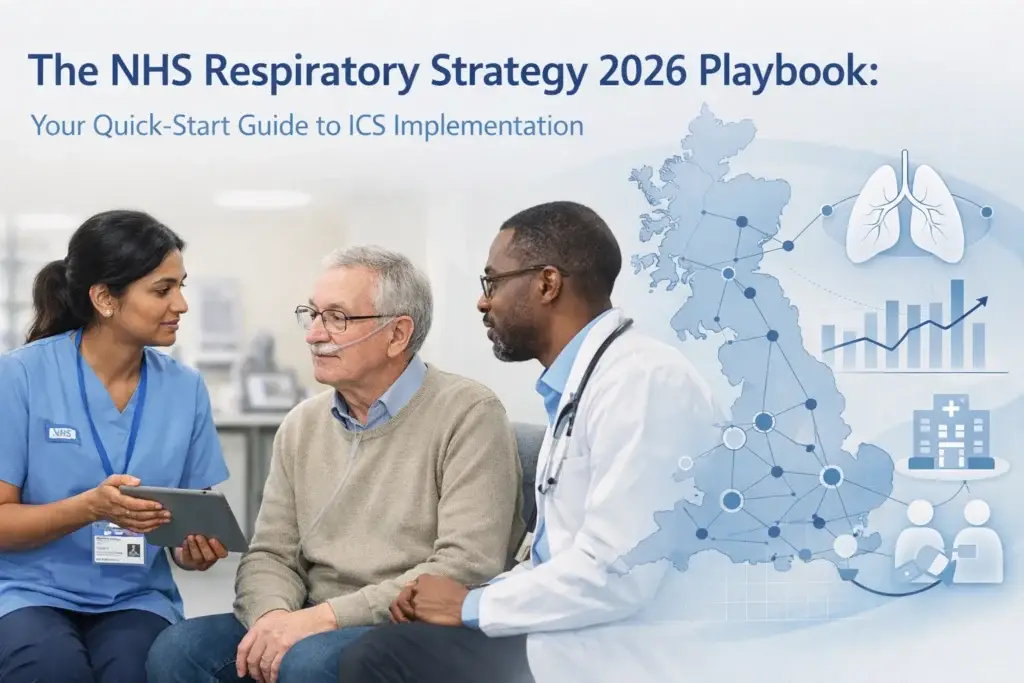
If you’re an ICS lead, respiratory clinical director, or someone in Life Sciences trying to make sense of how respiratory transformation actually translates into delivery, you’ve probably noticed something: there isn’t one definitive “playbook” document sitting on NHS England’s website.
What exists instead is a collection of frameworks, action plans, and digital toolkits scattered across different organizations, Respiratory Futures, the British Thoracic Society, regional networks, and individual ICS initiatives. This isn’t a criticism. It reflects the reality that Integrated Care Systems are meant to be locally shaped, not centrally dictated.
But that leaves many people asking the same question: where do we actually start?
This guide synthesizes what’s currently available into practical steps. It won’t give you a template to copy-paste, but it will help you navigate the landscape with more confidence.
What ICS Respiratory Implementation Actually Looks Like
Let’s be clear about what we’re talking about. ICS implementation for respiratory care isn’t a single project with a start and end date. It’s an approach to redesigning how patients access diagnostics, treatment, and ongoing support across primary, community, and secondary care.
In practice, that means:
- Expanding diagnostic capacity beyond hospital respiratory departments into community settings
- Embedding patient engagement into pathway design, not as consultation after decisions are made
- Addressing health inequalities through targeted interventions in areas with poor outcomes
- Building workforce capability to deliver care closer to home
- Using digital tools to monitor, triage, and support self-management

What patients and clinicians often describe is a system where none of these elements currently connect well. Spirometry might be available in GP surgeries, but results aren’t always reviewed by someone with respiratory expertise. Digital monitoring devices exist, but there’s no agreed protocol for who responds when readings flag a concern. Community respiratory teams are stretched, and patients end up back at the hospital because earlier intervention wasn’t available.
ICS implementation is about connecting these pieces.
The Core Priorities: Where to Focus First
Scotland’s Respiratory Care Action Plan (2021-2026) offers one of the clearest frameworks, and it maps closely to what successful ICSs in England are prioritizing.[^1] It’s built around five areas:
1. Prevention
This isn’t just smoking cessation, though that remains critical. It includes air quality monitoring, occupational health screening, and early identification of at-risk groups: particularly in areas with high levels of deprivation or industrial exposure.
What this looks like on the ground: ICSs working with local authorities on housing quality, pollution data, and targeted outreach in communities with high COPD prevalence.
2. Diagnosis and Early Management
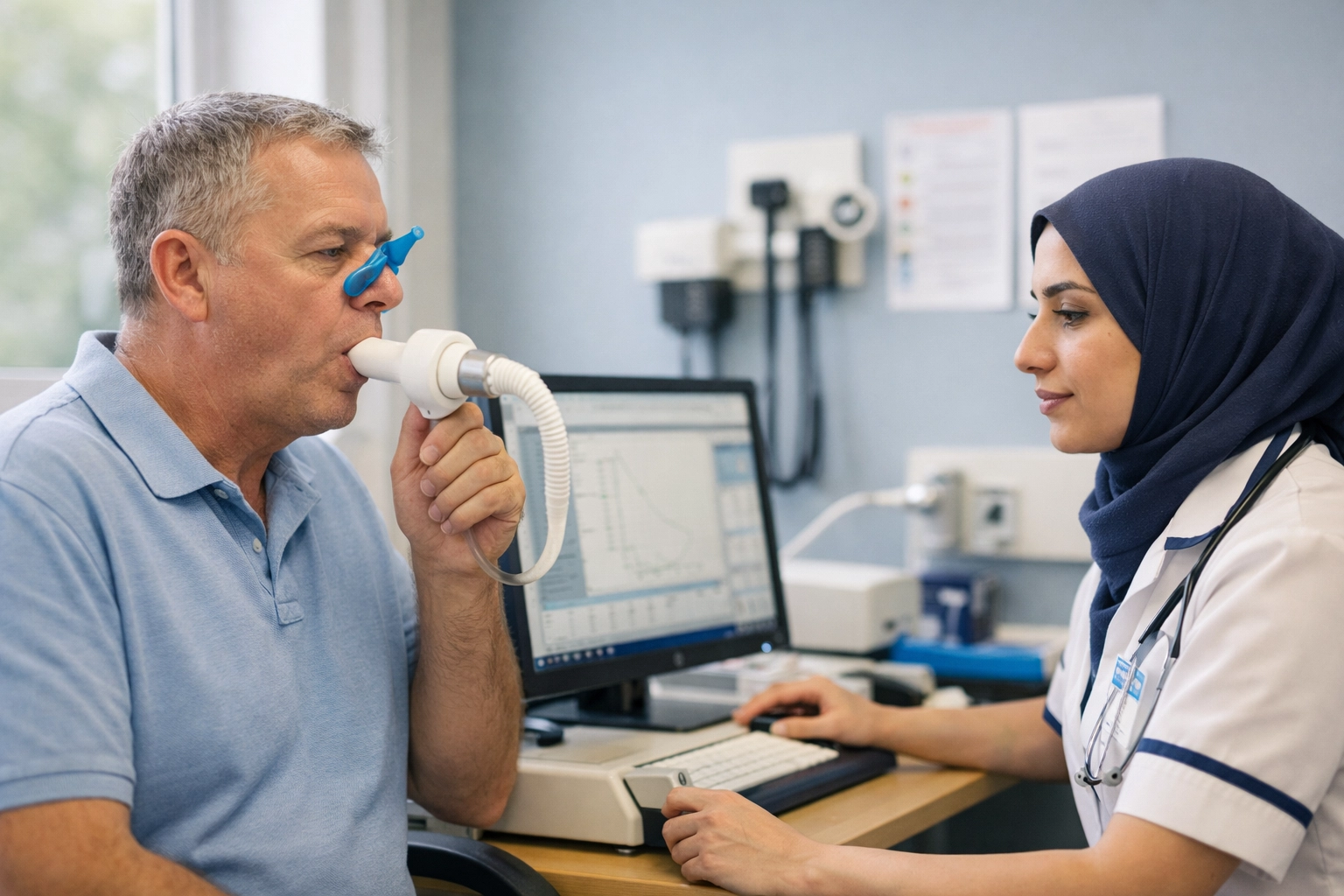
The diagnostic backlog is real. Spirometry referrals surged post-pandemic, and many areas still haven’t cleared the waiting lists.[^2] But simply adding capacity isn’t enough if patients can’t access it, or if results don’t lead to timely clinical action.
What this looks like on the ground: Community diagnostic hubs offering same-week spirometry and FeNO testing, with results reviewed by a respiratory specialist within 48 hours and care plans initiated in primary care.
3. Supporting Self-Management
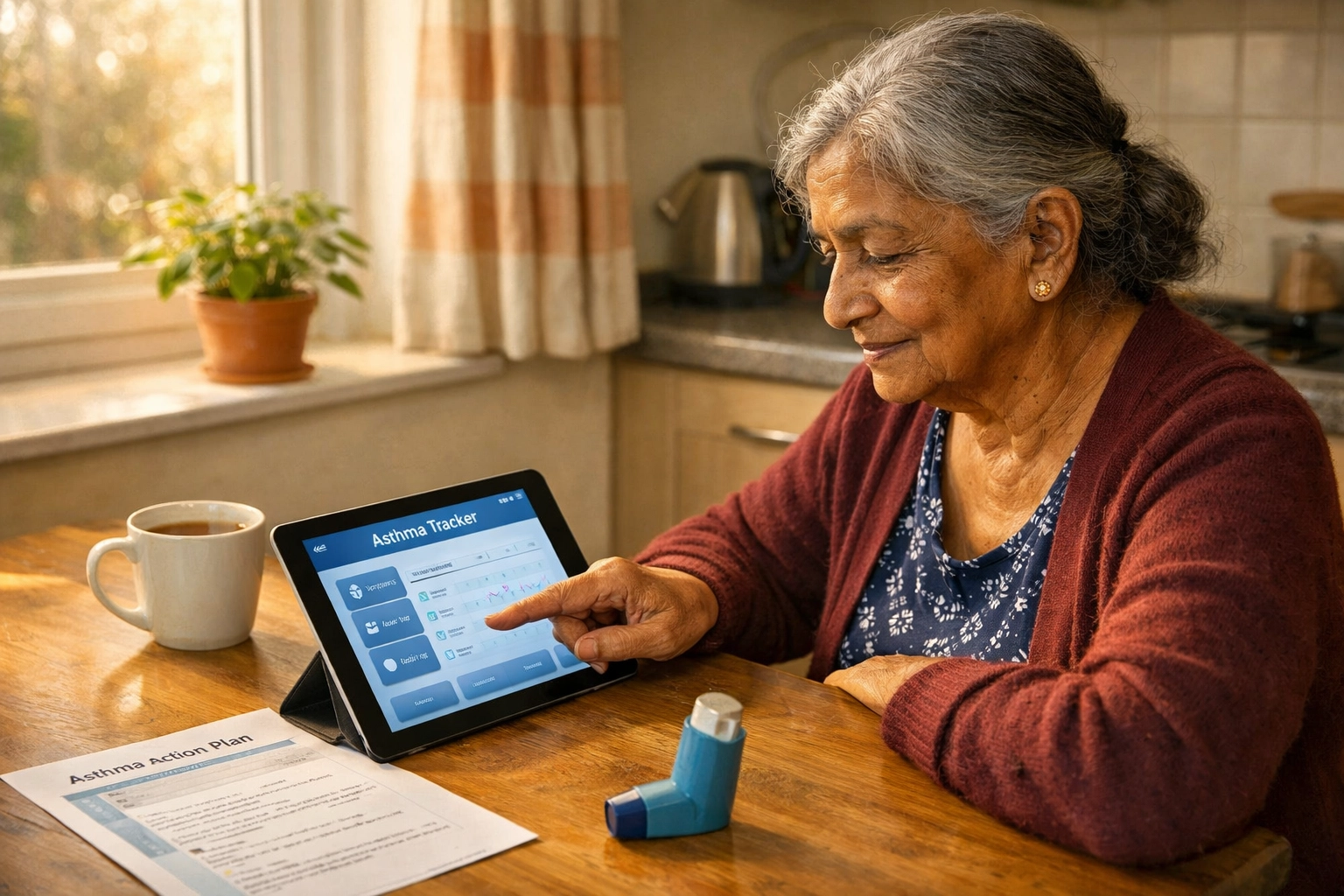
Self-management isn’t about leaving patients to fend for themselves. It’s about giving people the tools, knowledge, and confidence to recognize when their condition is stable and when they need clinical input.
What this looks like on the ground: Structured education programs, digital symptom tracking, and clear written action plans that patients and carers actually understand and use.
4. Consistent Access Across the ICS Footprint
Postcode lotteries persist because not all PCNs or boroughs have the same level of respiratory expertise or service provision. Some areas have dedicated community respiratory teams; others rely entirely on secondary care.
What this looks like on the ground: Workforce mapping exercises, hub-and-spoke models where specialist respiratory nurses support multiple PCNs, and shared care protocols so patients don’t fall through gaps when they move between services.
5. Workforce Development
You can’t deliver care without people, and respiratory workforce pressures are acute. GPs report low confidence in managing complex COPD. Practice nurses may have spirometry equipment but limited training. Specialist respiratory physiotherapists and occupational therapists are in short supply.
What this looks like on the ground: Protected training time, competency frameworks, and cross-sector learning: including Life Sciences providing clinical education that’s genuinely educational, not promotional.
Getting Started: A Practical Sequence
If you’re beginning ICS respiratory transformation, this sequence reflects what ICSs who are further along the journey consistently describe as useful:
Step 1: Map What You Already Have
Before designing anything new, understand your current state. Where are diagnostics delivered? Who holds respiratory expertise? What pathways technically exist on paper versus what actually happens? Where are your health inequality hotspots?
This isn’t glamorous work, but it’s essential. You can’t redesign a pathway you don’t understand.
Step 2: Listen to Patients and Clinicians
Not a tick-box consultation. Structured conversations with people who use services and people who deliver them. What’s working? What consistently doesn’t? Where do patients get stuck?
Respiratory Futures’ digital playbooks include tools for this kind of co-design work.[^3] The goal is insight, not validation of pre-determined plans.
Step 3: Prioritize Based on Impact and Feasibility
You won’t fix everything at once. Choose 2-3 areas where change is both needed and achievable in the next 12 months. Early wins matter: not for PR purposes, but because they build confidence and buy-in for harder changes later.
Step 4: Test, Learn, Adjust
Pilot schemes in one or two PCNs before scaling. Build in evaluation from the start. Be honest about what’s working and what isn’t. Adjust accordingly.
Step 5: Build the Infrastructure for Sustainability
This includes workforce development, data systems that talk to each other, agreed clinical protocols, and governance structures that support joint working across organizational boundaries.
It also includes honest conversations with Life Sciences about what partnership looks like in an ICS context: less about promotional activity, more about supporting service transformation through education, data insights, and aligned goals around patient outcomes.
Common Challenges (and What Helps)
Challenge: Lack of Protected Time
Clinicians are expected to transform services while maintaining current workload. Transformation work happens in evenings or not at all.
What helps: ICSs ring-fencing capacity: whether that’s backfill funding, dedicated project roles, or clear expectations that transformation is part of core work, not an add-on.
Challenge: Data That Doesn’t Connect
Primary care, community services, and hospitals often use different IT systems. Pulling together a coherent picture of respiratory care across the pathway is manually intensive.
What helps: Investing in interoperability, even if it’s not perfect. Shared care records, agreed minimum datasets, and accepting that some manual work is unavoidable in the short term.
Challenge: Uneven Engagement Across the Footprint
Some PCNs are enthusiastic early adopters. Others are overwhelmed and disengaged. Some Trusts see ICS work as strategic priority; others see it as bureaucracy.
What helps: Relationship-building, not mandates. Clear communication about what’s in it for each part of the system. And recognizing that pace will vary.

Where to Get Support
You don’t need to invent everything from scratch. Resources that ICS leads consistently find useful include:
- Respiratory Futures’ NHS Digital Playbook: Practical tools for pathway redesign and system change[^3]
- British Thoracic Society guidance: Clinical standards and quality improvement resources[^4]
- Your regional respiratory network: Most regions have clinical networks connecting respiratory leads across ICSs
- Peer learning: Other ICSs tackling the same challenges
And increasingly, forums like The Respiratory Network’s round tables where NHS leaders, patients with lived experience, and Life Sciences can have strategic conversations outside the usual transactional relationships.
What This All Leads To
Done well, ICS respiratory implementation doesn’t just mean better KPIs on a dashboard. It means patients getting diagnosed earlier, managing their condition with confidence, and accessing care when they need it without unnecessary hospital admissions.
It means clinicians working in roles where they can use their expertise effectively, with the right support and infrastructure around them.
And it means health inequalities in respiratory care: which remain stark across the UK: starting to narrow.
It’s significant work. But it’s also necessary work, and the frameworks to guide it exist. What’s needed now is the space, resource, and cross-system commitment to do it properly.
Want to be part of these conversations? The Respiratory Network brings together NHS leaders, people with lived experience of respiratory conditions, and Life Sciences professionals working on implementation challenges like these. Join us at our next round table or become a member to access insights and connect with others navigating the same landscape.
[^1]: Scottish Government (2021). Respiratory Care Action Plan for Scotland 2021-2026. Available at: https://www.gov.scot/publications/respiratory-care-action-plan-scotland-2021-2026/
[^2]: NHS England (2023). Diagnostic Waiting Times and Activity Data. Available at: https://www.england.nhs.uk/statistics/statistical-work-areas/diagnostics-waiting-times-and-activity/
[^3]: Respiratory Futures (2024). NHS Digital Playbook. Available at: https://respiratory-futures.org.uk/
[^4]: British Thoracic Society. Quality Improvement Resources. Available at: https://www.brit-thoracic.org.uk/quality-improvement/


Responses