

Virtual Wards or Digital Decorations? Making Remote COPD Care Actually Work

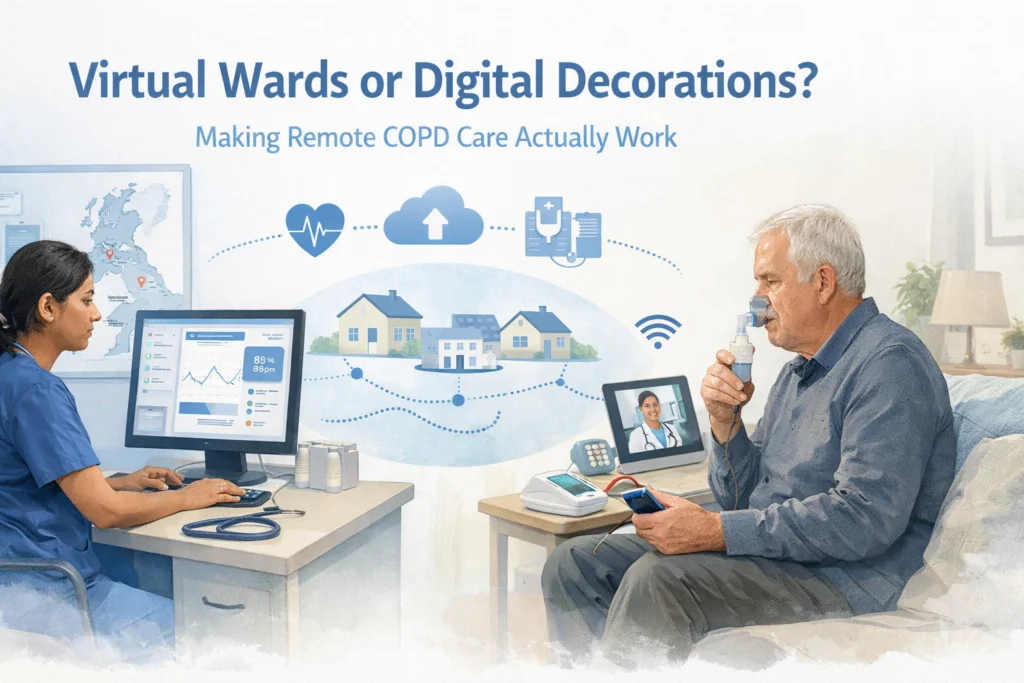
Virtual wards are everywhere in NHS strategic plans right now. Remote monitoring for COPD patients sounds brilliant on paper: reduce readmissions, cut bed pressures, keep people safe at home. But if you’re a respiratory lead staring at another dashboard that nobody checks, or a patient whose oximeter readings disappear into the void, you’ll know the gap between promise and practice can feel uncomfortably wide.
So let’s get practical. What’s actually working? Where are virtual wards genuinely changing outcomes, and where are they just adding to the digital noise?
What Good Looks Like
When virtual wards work well, the results are hard to argue with. The CARE Virtual Ward in Donegal provides a useful benchmark: a 20% reduction in COPD admissions and a 50% drop in readmissions compared to historical rates. Over the evaluation period, the service avoided 934 hospital bed days while patients received daily clinical review via Bluetooth-enabled devices tracking respiratory rate, oxygen saturation, and heart rate.
The economics stack up too. Average cost per patient dropped from €19,384 to €3,376: a reduction of over 82%. For the NHS, properly implemented virtual wards demonstrate a benefit-cost ratio between £1.12 and £1.45 for every pound spent.
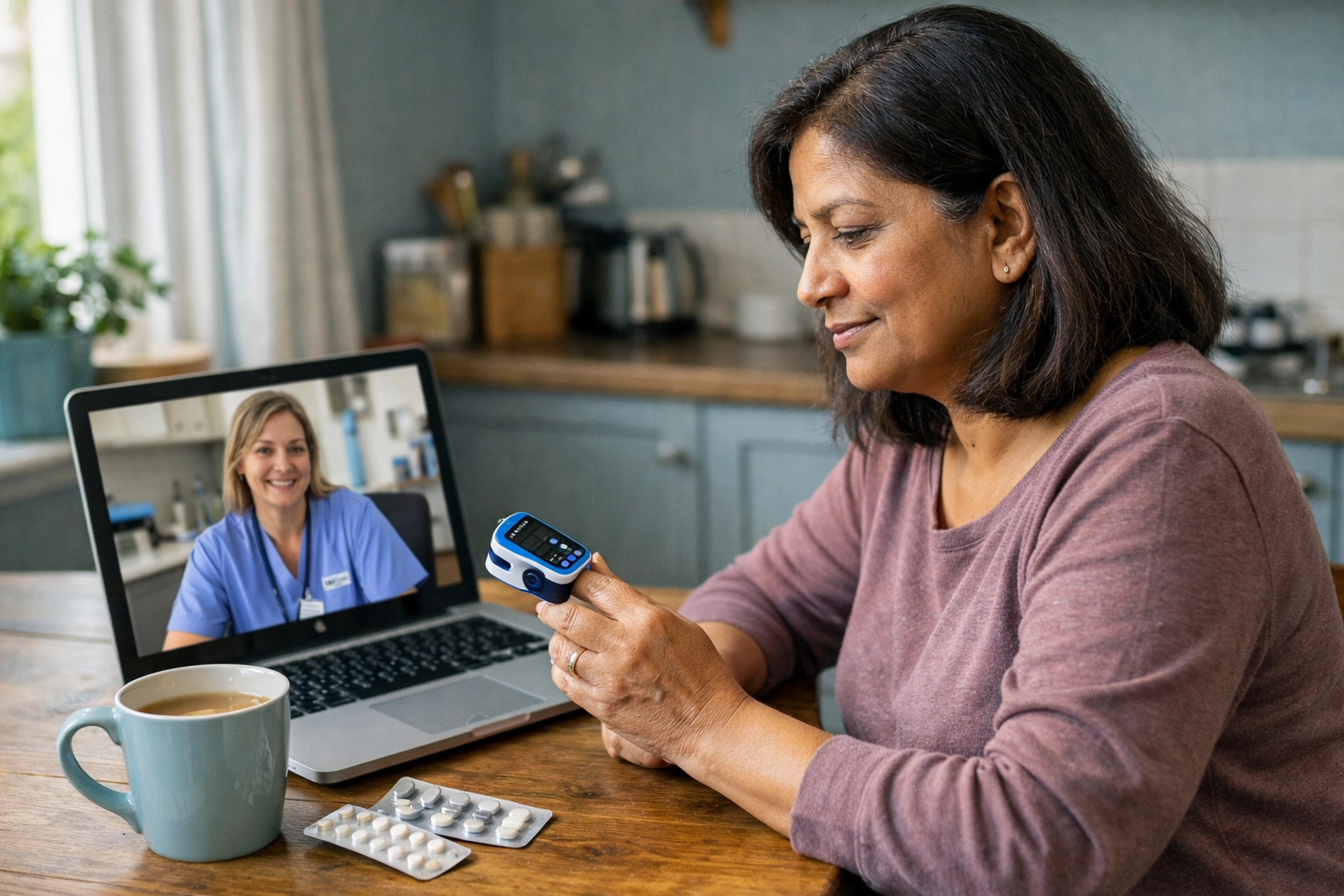
This isn’t just about keeping people out of hospital. An independent NHS England evaluation confirmed virtual wards as a “safe, effective alternative to inpatient care,” with patients at higher clinical risk safely supported for early discharge. Nearly half of virtual ward patients avoided readmission entirely within 90 days.
So the model can work. The question is: what separates the systems delivering those results from the ones struggling?
Where Implementation Falls Short
The gap usually isn’t the technology: it’s everything around it.
In practice, many virtual ward programmes suffer from three familiar problems:
Data burden without clinical value. Patients dutifully upload readings every day. The data sits in a system. Nobody reviews it in real time, or the review happens too late to intervene. The traffic-light triage system only works if somebody’s watching the lights.
Lack of integration. Remote monitoring bolted onto existing pathways, rather than redesigned around it. Patients get conflicting advice from the virtual ward team, their GP, and their community respiratory service because nobody’s working from the same care plan.
Equity blindspots. Remote monitoring assumes digital literacy, stable housing, reliable broadband, and a degree of health literacy that allows someone to interpret their own deterioration. For many COPD patients: particularly those in deprived areas or from BAME communities: those assumptions don’t hold.
What patients and clinicians often describe is a system that creates reassurance for the worried well, while missing the people most at risk.
What Actually Drives Success
The programmes that work share some clear characteristics. They don’t rely on technology alone.
Effective virtual wards combine remote monitoring with personalized care plans, multimedia patient education, rescue medication packs at home, and structured referral pathways back into secondary care when needed. The Donegal model, for instance, included 24-hour clinical oversight and proactive intervention: not passive data collection.
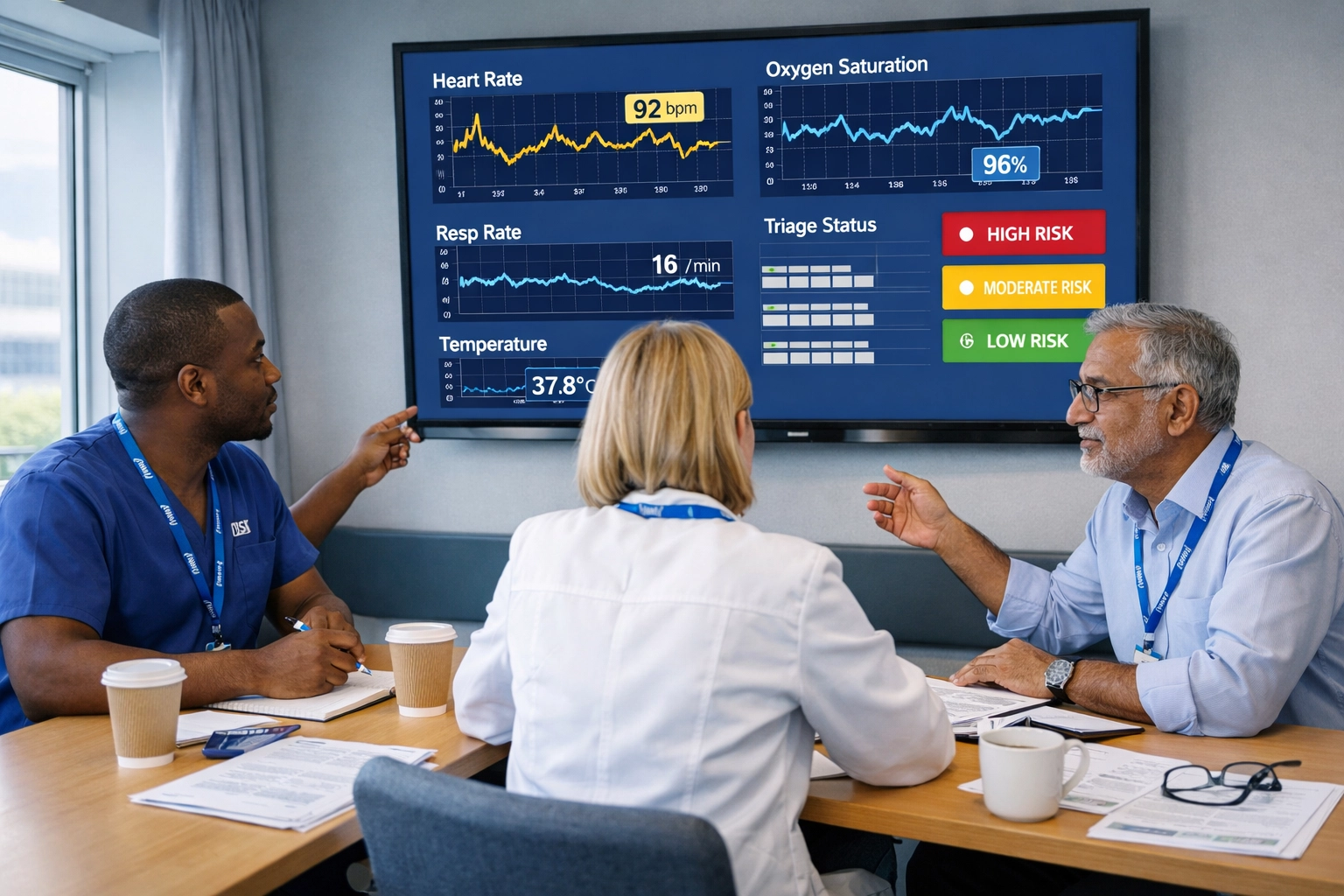
Crucially, healthcare staff need proper training. Many virtual ward pilots assume clinical teams will instinctively know how to interpret remote data and triage deterioration at a distance. They don’t. Education on how to use the system, escalate appropriately, and communicate with patients remotely is non-negotiable.
There’s also the issue of who gets referred. Virtual wards work best for patients stable enough to manage at home with support, but unwell enough to benefit from daily oversight. Referring too early (low acuity patients who’d be fine anyway) or too late (patients too unwell for safe remote care) undermines the model. Getting that threshold right requires clinical judgment, not algorithmic selection.
The Readmission Question
One counterintuitive finding from the NHS evaluation: 15% of readmissions occurred within one day of discharge. That sounds like failure until you understand the context. These were high-risk patients appropriately escalated by the virtual ward team because deterioration was identified early.
In other words, the system worked. Without remote monitoring, those patients might have waited until they were in crisis before seeking help. The virtual ward didn’t prevent the readmission: it prevented a much worse outcome.
This is where the conversation with commissioners and finance teams gets interesting. If you’re measuring success purely on readmission rates, virtual wards might look patchy. If you’re measuring avoidable harm, cost per episode, or patient experience, the picture shifts.
Equity and Access
Remote monitoring risks widening health inequalities if we’re not careful. The patients most likely to benefit from virtual wards: those with frequent exacerbations, limited mobility, poor social support: are often the least likely to have the digital infrastructure or confidence to use the technology.
What this looks like on the ground: virtual wards skewed toward affluent, digitally literate populations, while those in deprived areas continue to cycle through A&E and acute admissions.
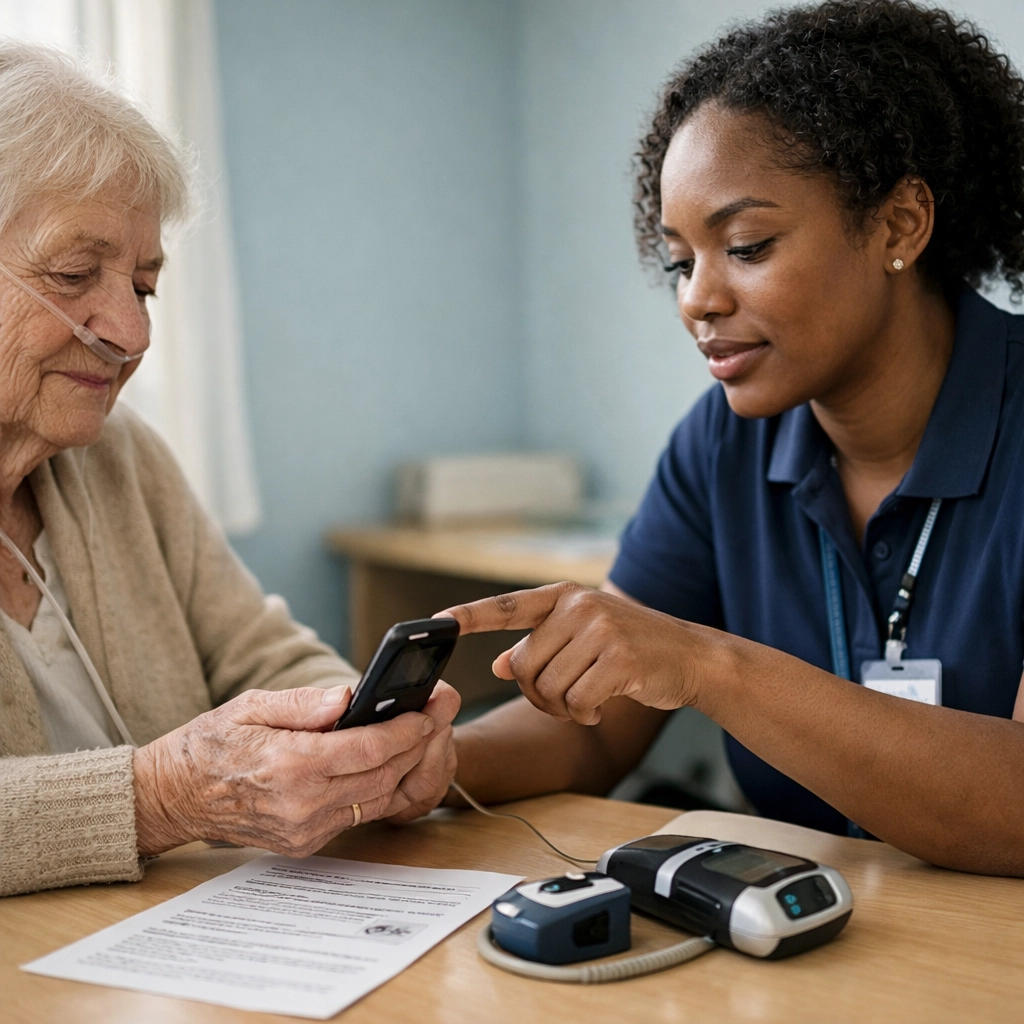
Addressing this requires deliberate effort. Some trusts provide loaned devices pre-configured with SIM cards. Others offer telephone-based monitoring as an alternative to app-based systems. A few have embedded digital navigators: non-clinical staff who support patients with the technology setup and troubleshooting.
The point is: equity doesn’t happen by accident. It has to be designed in.
What Life Sciences Can Learn
For industry partners developing remote monitoring platforms, the lesson is straightforward. Technology is necessary but not sufficient.
The most successful collaborations involve co-design with clinicians and patients from the start, not retrofitting a platform built elsewhere. They focus on interoperability: systems that talk to existing EPRs and care pathways, rather than creating yet another silo. And they recognize that adoption depends on reducing workload, not adding to it.
If your virtual ward solution requires a respiratory team to manually download, review, and input data from a separate portal, it’s not going to scale. If it generates alerts that clinicians learn to ignore because of low specificity, it’s not going to be trusted.
What patients and clinicians often describe is a need for systems that are intuitive, reliable, and genuinely reduce burden. Anything else is decoration.
So: Digital Decoration or Genuine Tool?
Virtual wards for COPD are not inherently one or the other. The model has proven clinical and economic value when implemented well. But “implemented well” carries a lot of weight.
It means:
- Active clinical oversight, not passive data collection
- Integration with existing pathways, not another bolt-on service
- Equity designed in from the start
- Staff trained to use the system effectively
- Technology that reduces burden, not adds to it
Where those conditions are met, virtual wards deliver. Where they’re not, you end up with expensive kit, frustrated staff, and patients who disengage after the first week.
The question for 2026 isn’t whether virtual wards work. It’s whether we’re prepared to invest in the infrastructure, training, and pathway redesign needed to make them work at scale.
Want to be part of the conversation shaping the future of respiratory care? Join The Respiratory Network to connect with NHS leaders, Life Sciences innovators, and patient advocates working to close the gap between policy and practice. Or join us at our 2026 Round Table event where we’ll be tackling exactly these questions.
Responses