

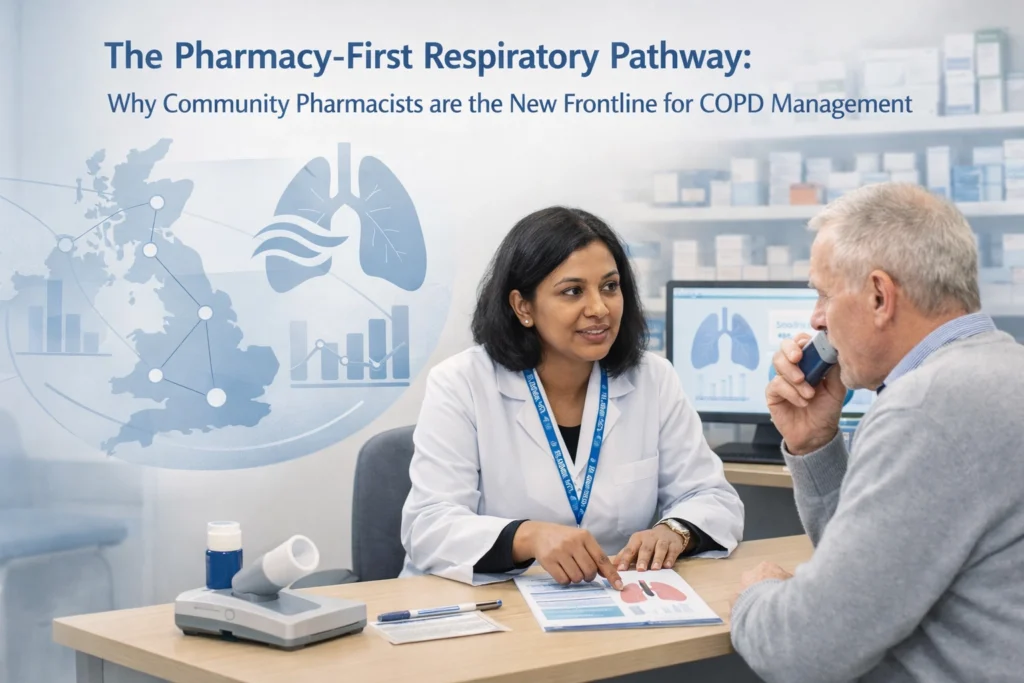
The Pharmacy-First Respiratory Pathway: Why Community Pharmacists are the New Frontline for COPD Management

Medical Disclaimer: This article provides general information about respiratory care and is not a substitute for professional medical advice. If you are experiencing severe breathlessness, chest tightness, or symptoms that are not relieved by your usual treatment, seek urgent medical attention. For questions about your care, treatment or inhaler use, please contact your GP, asthma nurse, or healthcare provider.
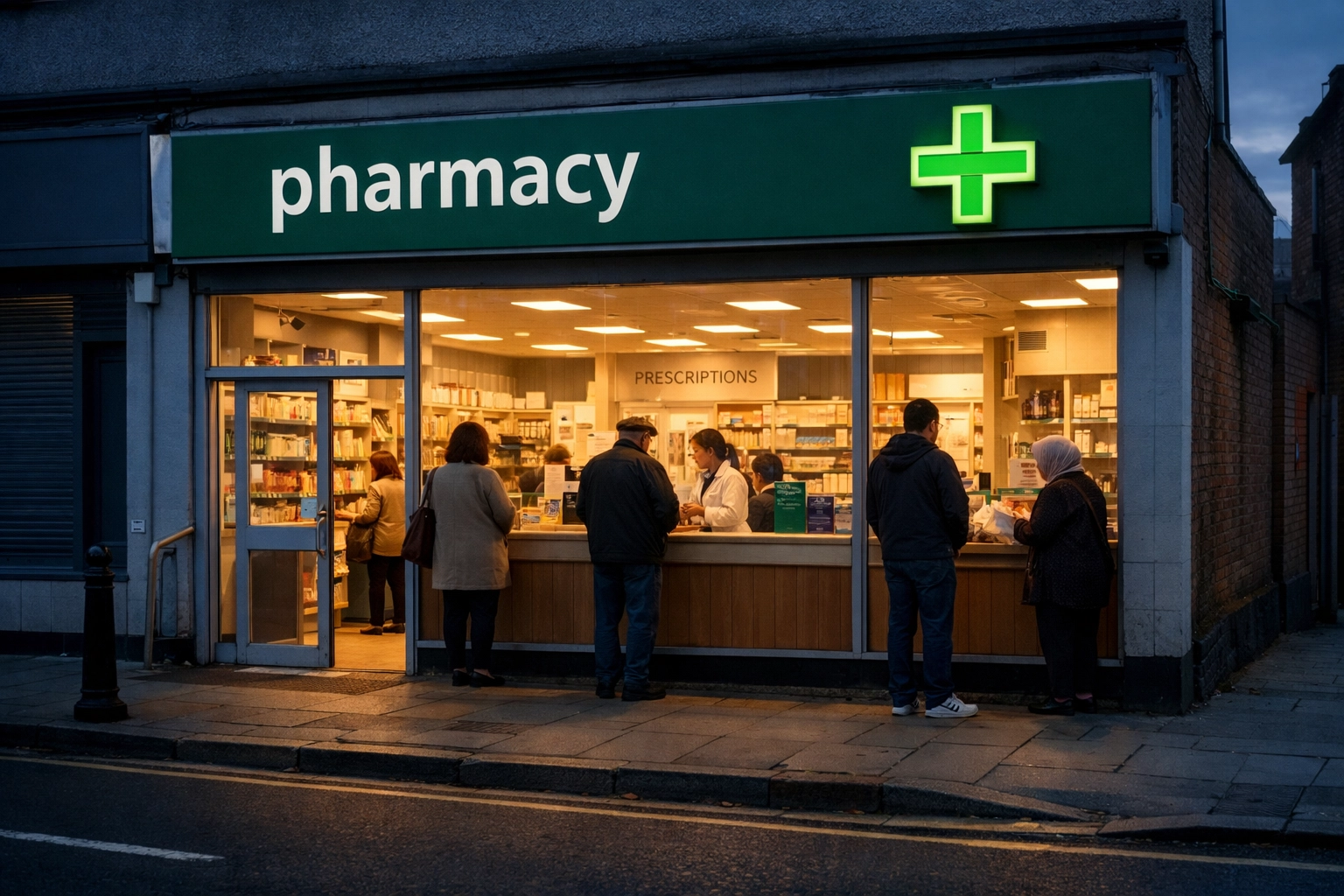
The last time most people see a healthcare professional isn't in a GP surgery. It's at their local pharmacy, picking up a prescription between work and the school run.
For the 1.2 million people living with diagnosed COPD in the UK: and the estimated million more who remain undiagnosed: that regular interaction represents something more than convenience. It's an opportunity.
Community pharmacists are increasingly being recognised as critical players in respiratory care, particularly for COPD management. Not as a replacement for specialist services, but as an accessible, expert touchpoint in a system where capacity is consistently under strain.
Why Pharmacists Make Sense for COPD Care
The logic is straightforward. Community pharmacists operate in every high street and neighbourhood. They're open early, late, and often at weekends. They require no appointment. And for many people with COPD, they're the healthcare professional they see most often.

What's less obvious is the clinical value of that frequency. Patients collecting repeat prescriptions create a natural rhythm for monitoring: an opportunity to check in, assess symptoms, and flag deterioration before it becomes a crisis.
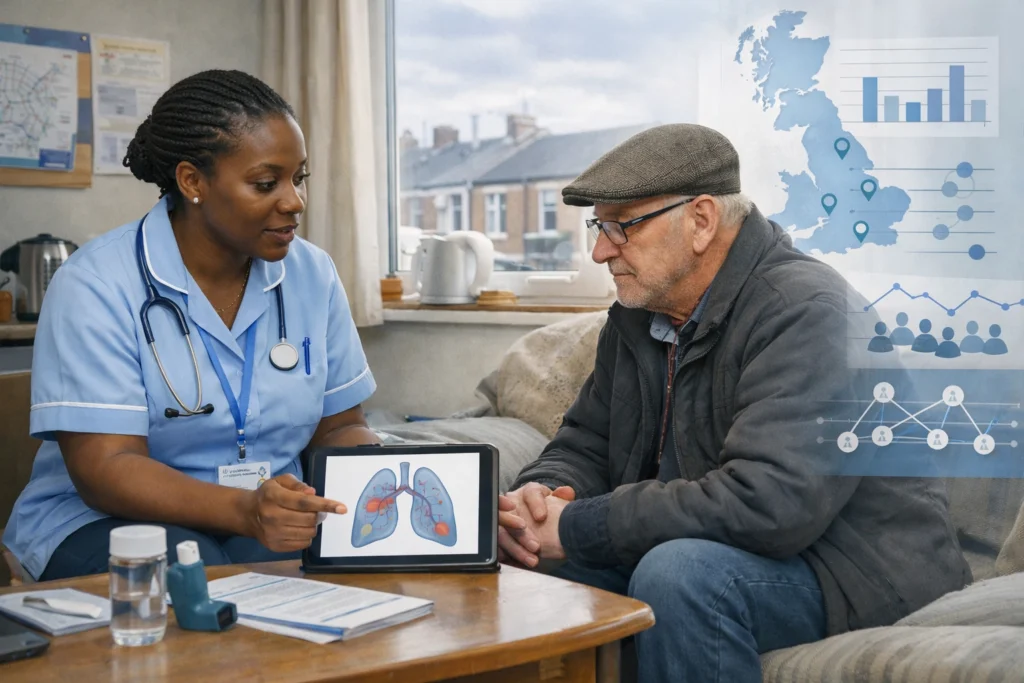
In practice, pharmacists are medicines experts working in primary care settings. They understand drug interactions, side effects, and therapy optimisation in ways that complement the work of GPs and respiratory nurses. When a patient mentions they've stopped using their inhaler because it "doesn't seem to work," a pharmacist can intervene immediately: checking technique, exploring adherence barriers, or recommending a GP review if clinically indicated.
This isn't theoretical. It's happening now, and it's being formalised through policy shifts like the NHS Pharmacy First scheme and integrated care system (ICS) pathway redesigns.
The Four Pillars of Pharmacy-Led COPD Support
Pharmacist involvement in COPD care isn't a single intervention. It spans the full patient journey, from prevention to long-term management.
Primary prevention includes health education for at-risk populations and smoking cessation support. Pharmacists are trained to deliver brief interventions, provide nicotine replacement therapy, and signpost to specialist stop-smoking services. For someone in their 40s with a persistent smoker's cough, a conversation at the pharmacy counter might be the first step toward diagnosis.
Early detection is where accessibility becomes critical. Community pharmacists can conduct initial COPD screening using validated questionnaires and peak flow measurements. They can't diagnose: that requires spirometry and clinical assessment: but they can identify people who need onward referral. In a system where diagnostic waits are measured in months, that early flag matters.
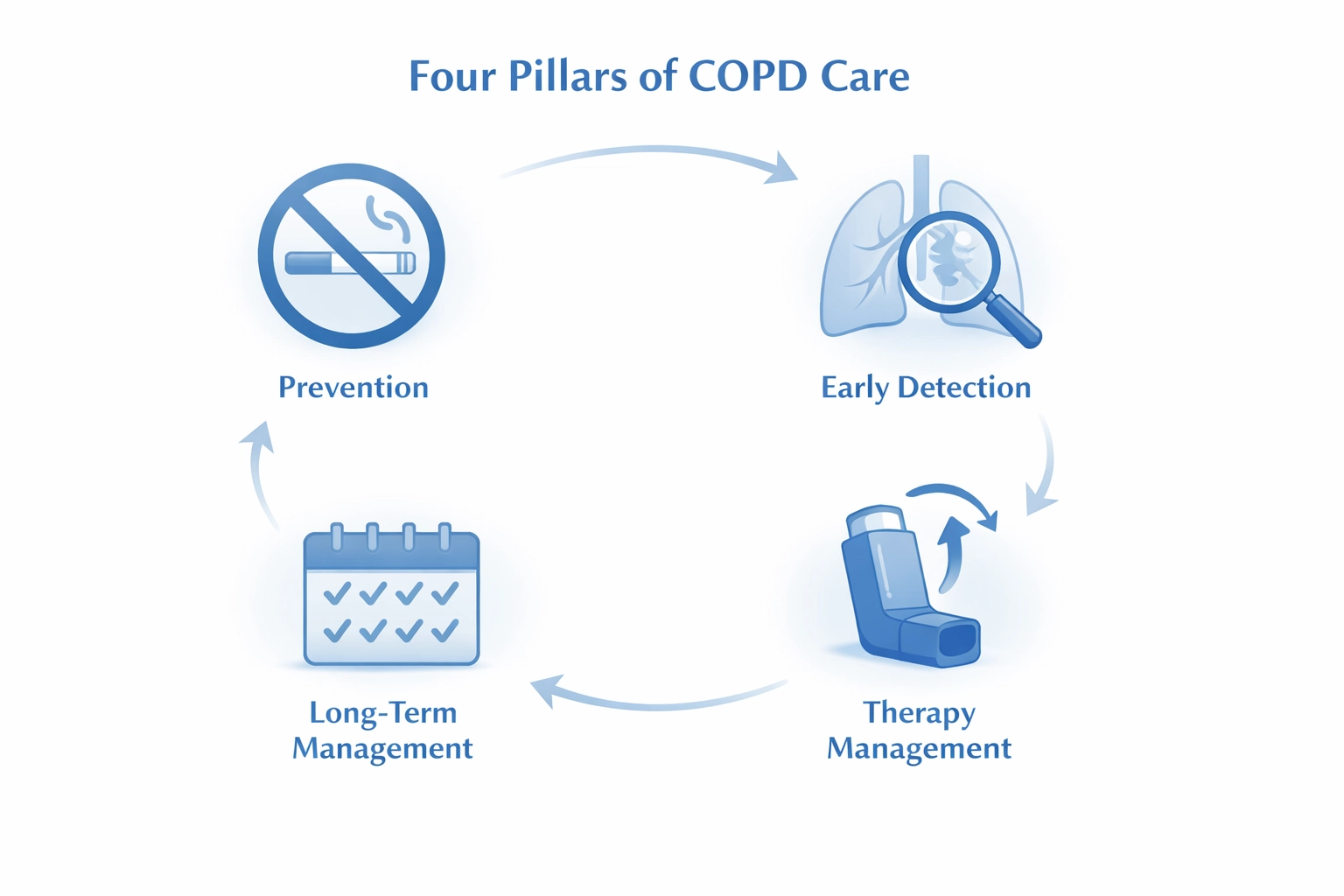
Therapy management is the most established pillar. Pharmacists routinely address medication-related issues: optimising drug selection, conducting medication reconciliation after hospital discharge, and resolving supply problems. They also provide structured education on inhaler technique: a persistent problem that affects up to 70% of COPD patients and directly undermines treatment effectiveness.
Long-term health management includes monitoring adherence, supporting self-management plans, and encouraging uptake of pulmonary rehabilitation and vaccinations. These aren't glamorous interventions, but they're the foundation of good COPD care. What patients and clinicians often describe is the value of someone checking in regularly, not just when things go wrong.
What the Evidence Shows
A pilot community pharmacy COPD programme demonstrated measurable improvements across multiple outcomes: better inhaler technique, increased disease knowledge, higher pneumonia vaccination rates, fewer exacerbations, and greater patient ownership of their care plan.
A broader review of randomised controlled trials found that pharmacist-led interventions showed positive effects in nearly 90% of studies, with primary gains in medication adherence and quality of life. Some studies also reported reductions in hospital admissions, though the evidence here is more mixed.

One transition-of-care programme: where pharmacists supported patients immediately after hospital discharge: achieved a 30-day readmission rate that was 13% lower than standard care. That's not a marginal difference. In a health system managing winter pressures and bed shortages, it's clinically and economically significant.
But the evidence isn't without caveats. A recent study in Alberta found that pharmacist-provided care plans didn't significantly reduce COPD-related hospitalisations or emergency department visits over one year when compared to matched controls. Researchers have also noted that much of the existing evidence is of low to moderate quality, with concerns about study design, blinding, and bias.
What this suggests is not that the pharmacy model doesn't work, but that it works best when it's structured, integrated, and targeted. Ad hoc interventions are unlikely to move the dial. Comprehensive, multidisciplinary involvement: where pharmacists are embedded into respiratory pathways alongside GPs, nurses, and specialists: shows far more promise.
What This Looks Like on the Ground
Across ICSs in England, pharmacy-led respiratory services are taking different shapes depending on local need and infrastructure.
Some areas have established dedicated respiratory pharmacists who work within primary care networks, conducting medication reviews and supporting practice-based clinics. Others have embedded community pharmacists into hospital discharge pathways, ensuring continuity of care as patients return home.
A growing number of ICBs are piloting COPD case-finding programmes, where pharmacies proactively identify undiagnosed patients using screening tools and refer them for spirometry. Early feedback suggests this can reach populations who don't typically engage with traditional healthcare settings: particularly people in areas of high deprivation or those with multiple long-term conditions.
There are challenges. Pharmacists report that time, reimbursement structures, and IT integration remain barriers to delivering more complex clinical services. Many community pharmacies still lack access to shared care records, meaning they're working without full visibility of a patient's clinical history.
There's also the question of role clarity. GPs, practice nurses, and respiratory specialists need to understand what pharmacists can and can't do, and how to refer appropriately. Without that shared understanding, the risk is duplication, gaps, or confusion for patients navigating an already fragmented system.
An Evolving Model: But Clear Clinical Boundaries
Patients with COPD should always follow the treatment plan agreed with their GP or specialist, and any concerns about symptoms or treatment should be discussed with a qualified clinician.
What's being described here is a shift in how healthcare is organised: not a change in clinical accountability.
The pharmacy-first model works because it redistributes clinical activity based on skill, accessibility, and patient need. It doesn't replace specialist care. It supports it, by ensuring that patients have multiple access points and that routine monitoring happens in the spaces where people already go.
For this to work at scale, it requires investment: not just in funding, but in training, infrastructure, and cultural change. Pharmacists need protected time, robust referral pathways, and access to clinical systems. ICSs need to design respiratory pathways that genuinely integrate pharmacy as a core component, not an add-on.
What Comes Next
The direction of travel is clear. Community pharmacists are increasingly positioned as frontline providers for COPD care, and the policy environment supports that shift. The NHS Long Term Plan, the Community Pharmacy Contractual Framework, and ICS transformation plans all point toward greater clinical responsibility for pharmacy teams.
What remains to be seen is whether the infrastructure, funding, and workforce development will keep pace. Pharmacists are willing to do this work. The question is whether the system will enable them to do it well.
For NHS leaders, Life Sciences partners, and patient advocates, the challenge is the same: how do we design respiratory pathways that make the most of the skills, expertise, and accessibility that pharmacists already offer?
Full Medical Disclaimer:
This article is intended for general informational and educational purposes only and does not constitute medical advice, diagnosis, or treatment. The content provided is based on current clinical guidelines and evidence available at the time of writing, but individual circumstances vary significantly.
Do not use this article to self-diagnose or change your treatment without consulting a qualified healthcare professional. Respiratory conditions are serious and require personalised medical assessment and ongoing monitoring by a GP, asthma nurse, respiratory specialist, or other qualified healthcare provider.
If you are experiencing any of the following, seek urgent medical attention immediately:
- Severe breathlessness or difficulty speaking in full sentences
- Blue lips or fingernails
- Feeling exhausted or unable to manage symptoms
- No improvement after using your reliever inhaler
- Symptoms rapidly worsening
For non-urgent concerns about your treatment, inhaler technique, or medication use, please contact your GP surgery, asthma nurse, or NHS 111 for advice.
The Respiratory Network does not provide clinical services or individual medical advice. Always follow the specific treatment plan provided by your healthcare team.
Want to be part of this conversation? The Respiratory Network brings together NHS leaders, clinicians, patients, and Life Sciences professionals to explore what's working: and what's not: in UK respiratory care. Join the network to stay connected, or join us at our next roundtable event to shape the future of integrated respiratory pathways.
Responses