

Transitioning Care: Avoiding the “Cliff Edge” for Young Asthma Patients Moving to Adult Services

Medical Disclaimer: This article provides general information about respiratory care and is not a substitute for professional medical advice. If you are experiencing severe breathlessness, chest tightness, or symptoms that are not relieved by your usual treatment, seek urgent medical attention. For questions about your care, treatment or inhaler use, please contact your GP, asthma nurse, or healthcare provider.
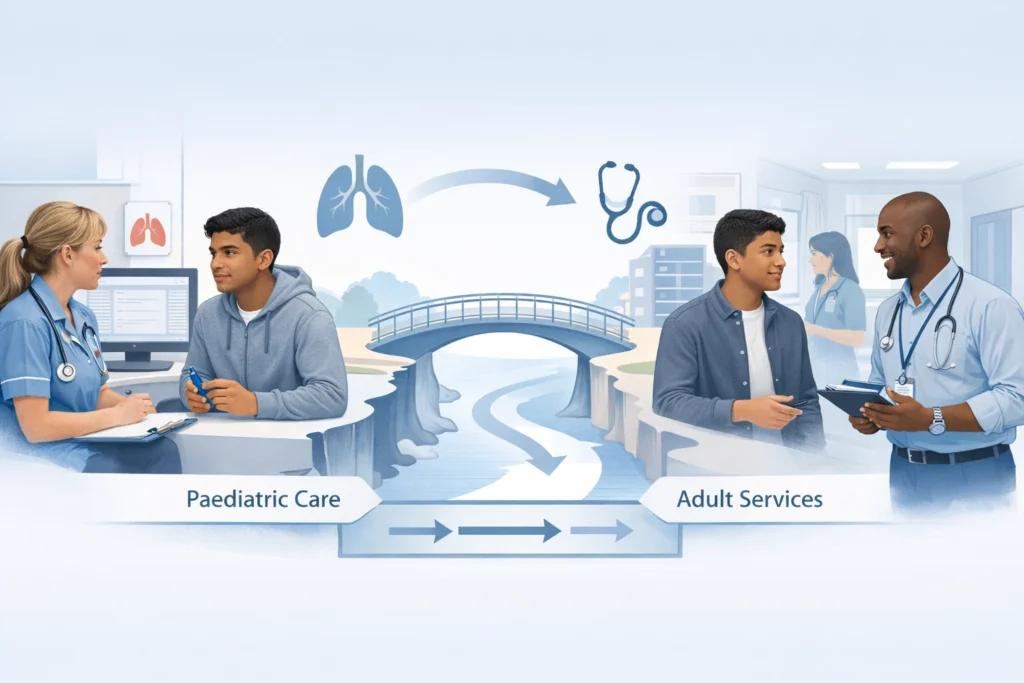
Every year, thousands of young people with asthma reach their 18th birthday and find themselves abruptly moved from pediatric to adult respiratory services. What should be a planned handover often becomes a sudden drop in continuity of care: a transition so poorly managed that clinicians and patients alike have a name for it: the cliff edge.
The consequences are real. Hospital admissions increase. Medication adherence drops. Young adults who had stable asthma under pediatric care start missing appointments, stop using preventers, and present in A&E during exacerbations. In some cases, they disengage from respiratory services altogether.
This isn't a failure of individual clinicians. It's a structural gap: one that ICSs, respiratory leads, and transition teams are now working hard to close.
What the Cliff Edge Actually Looks Like
In practice, the cliff edge happens when a young person leaves a familiar pediatric team and enters an adult service without preparation, coordination, or continuity.
One day, they're seeing a consultant who has known them since childhood. Appointments are booked by a parent. Medication is managed by the family. Then, often with little warning, they receive a letter redirecting them to an adult clinic.
The new service operates differently. Appointments are shorter. Expectations are higher. There's an assumption of self-management that many young adults aren't ready for. And crucially, the new team doesn't always have access to a detailed understanding of the patient's history, triggers, or treatment response.
What patients and clinicians often describe is a loss of trust, a sense of starting again from scratch, and a drop in asthma control that could have been avoided.
Why Adolescence Is a High-Risk Period
Even without a poorly managed transition, adolescence is already a vulnerable time for asthma management.
Young people are seeking independence. They want control over their own lives: and that includes healthcare decisions. But independence without preparation often leads to poor adherence. Preventive inhalers get forgotten. Trigger avoidance becomes inconsistent. Asthma action plans are left in drawers.
Add to this the transfer of responsibility at 18, where suddenly the young adult: not their parent: must book appointments, collect prescriptions, and advocate for themselves. For some, this works well. For many, it doesn't.
Research shows that most young adults transitioning to adult care do not receive adequate preparation from their pediatric teams. In some cases, the concept of transitioning care isn't even discussed until the final appointment. This leaves young people unprepared for what comes next and uncertain about who to turn to if their asthma deteriorates.

What Structured Transition Actually Involves
Preventing the cliff edge requires planning, coordination, and time. It cannot happen at a single handover appointment.
The most effective transition programs begin early: ideally from ages 13 to 14. This allows enough time for young people to gradually take on responsibility for their own care while still under the support of their pediatric team.
A structured transition process typically includes three phases: preparation, transfer, and integration into adult services.
Preparation starts in early adolescence. The pediatric team introduces the idea of transition and begins building self-management skills. Young people are encouraged to attend appointments alone for part of the consultation, to understand their own treatment plan, and to ask questions directly to clinicians rather than through their parents.
Transfer happens when the young person is developmentally ready: not necessarily at a fixed age. The best models involve a joint appointment where both the pediatric and adult teams are present. This gives the young adult a chance to meet their new clinician in a familiar environment and ask questions with the support of someone they already trust.
Medical records, including detailed notes on asthma history, current treatment, and known triggers, are transferred in full. The adult team receives not just a discharge summary, but a comprehensive handover that allows them to continue care without disruption.
Integration into adult services continues beyond the first appointment. Follow-up is scheduled early to ensure the young person has engaged with the new team and that asthma control is maintained. Some services offer a safety net period where young adults can contact the pediatric team if needed.
The Role of Self-Advocacy and Family Support
One of the key shifts during transition is the expectation that young adults will advocate for themselves. This is appropriate and necessary: but it requires preparation.
Pediatric teams play a crucial role in helping young people develop confidence in managing their own health. This includes understanding what asthma is, recognizing early warning signs, knowing when to step up treatment, and being able to explain their condition to a new clinician.
But it also means recognizing that not all young adults are ready at the same time. Some will thrive with full independence at 18. Others may benefit from continued parental involvement, particularly if they have complex asthma or co-existing conditions.
What matters is that the transition is individualized. A rigid, one-size-fits-all approach increases the risk of disengagement.
Families also need preparation. Parents who have managed their child's asthma for years must learn to step back while remaining available for support. This can be difficult, particularly if there have been previous life-threatening exacerbations. Clear communication from both pediatric and adult teams helps families understand what their role should be during this period.
What This Looks Like on the Ground
Across the UK, ICSs and respiratory networks are starting to develop formalized transition pathways. Some have introduced transition coordinators who support young people through the process. Others have established joint pediatric-adult clinics to create a smoother handover.
The most effective programs share common features: early planning, multi-disciplinary involvement, clear communication, and flexibility to meet individual needs.
But gaps remain. Not all areas have dedicated transition services. In some trusts, the handover still happens as a one-off letter. And in many cases, adult respiratory teams are under such pressure that there simply isn't capacity to offer the level of continuity that young people need.
This is not about blame. It's about recognizing that transition care requires resource, coordination, and a shared understanding between pediatric and adult services that this is a clinical priority.

Why This Matters Beyond the Individual Patient
Poor transition doesn't just affect individual young people: it has system-wide consequences.
Hospital admissions increase when asthma control deteriorates. A&E attendances rise. Patients disengage from primary care and lose touch with respiratory services altogether. By the time they re-engage, their asthma may have become harder to manage.
Conversely, well-managed transition improves long-term outcomes. Young adults who maintain continuity of care are more likely to achieve good asthma control, avoid exacerbations, and stay engaged with their treatment plan into adulthood.
From a life sciences perspective, this is also relevant. Therapies introduced in pediatric care are more likely to be continued if transition is smooth. Conversely, poorly managed handovers often result in treatment changes, non-adherence, or a reversion to reliever-only use.
Supporting structured transition programs is not just good clinical practice: it's an investment in long-term respiratory health.
Moving Forward
Addressing the cliff edge in asthma transition care requires collaboration across pediatric and adult services, support from ICSs, and recognition that this is a pathway issue, not a one-off appointment.
Young people with asthma deserve more than an abrupt handoff at 18. They deserve preparation, continuity, and support as they take on responsibility for managing their own health.
For those working in respiratory care: whether as clinicians, commissioners, or industry partners: transition represents an opportunity to improve outcomes at a critical stage in a patient's journey.
Full Medical Disclaimer:
This article is intended for general informational and educational purposes only and does not constitute medical advice, diagnosis, or treatment. The content provided is based on current clinical guidelines and evidence available at the time of writing, but individual circumstances vary significantly.
Do not use this article to self-diagnose or change your treatment without consulting a qualified healthcare professional. Respiratory conditions are serious and require personalised medical assessment and ongoing monitoring by a GP, asthma nurse, respiratory specialist, or other qualified healthcare provider.
If you are experiencing any of the following, seek urgent medical attention immediately:
- Severe breathlessness or difficulty speaking in full sentences
- Blue lips or fingernails
- Feeling exhausted or unable to manage symptoms
- No improvement after using your reliever inhaler
- Symptoms rapidly worsening
For non-urgent concerns about your treatment, inhaler technique, or medication use, please contact your GP surgery, asthma nurse, or NHS 111 for advice.
The Respiratory Network does not provide clinical services or individual medical advice. Always follow the specific treatment plan provided by your healthcare team.
The Respiratory Network brings together NHS leaders, life sciences partners, and patient voices to share insight and improve respiratory care across the UK. If you're working on transition pathways or want to connect with others addressing this challenge, register here or join us at our next Round Table event.


Responses