

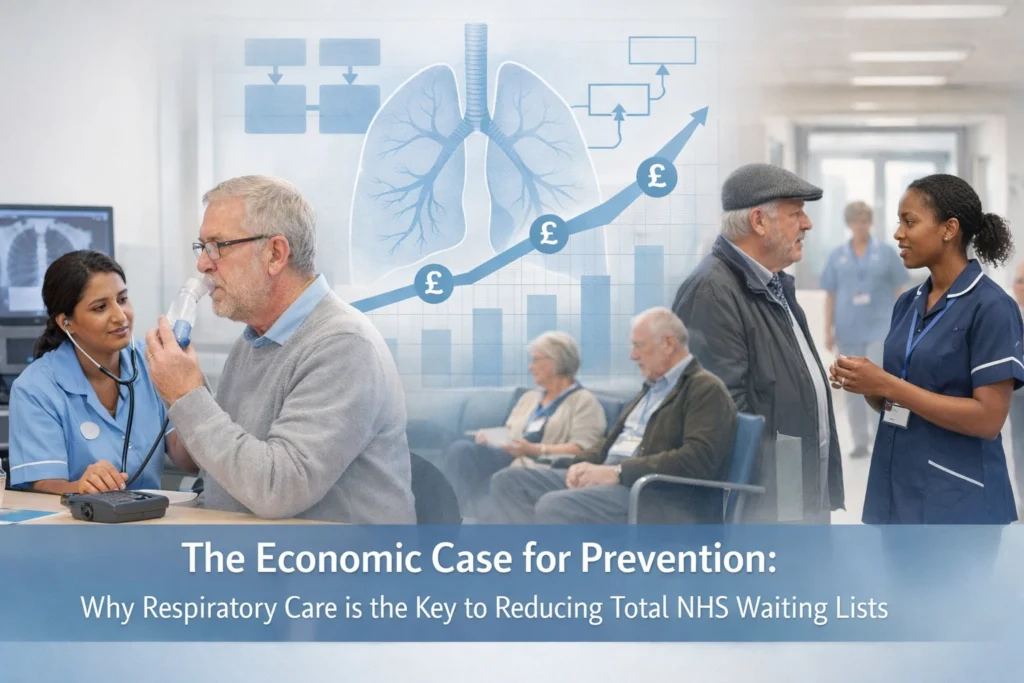
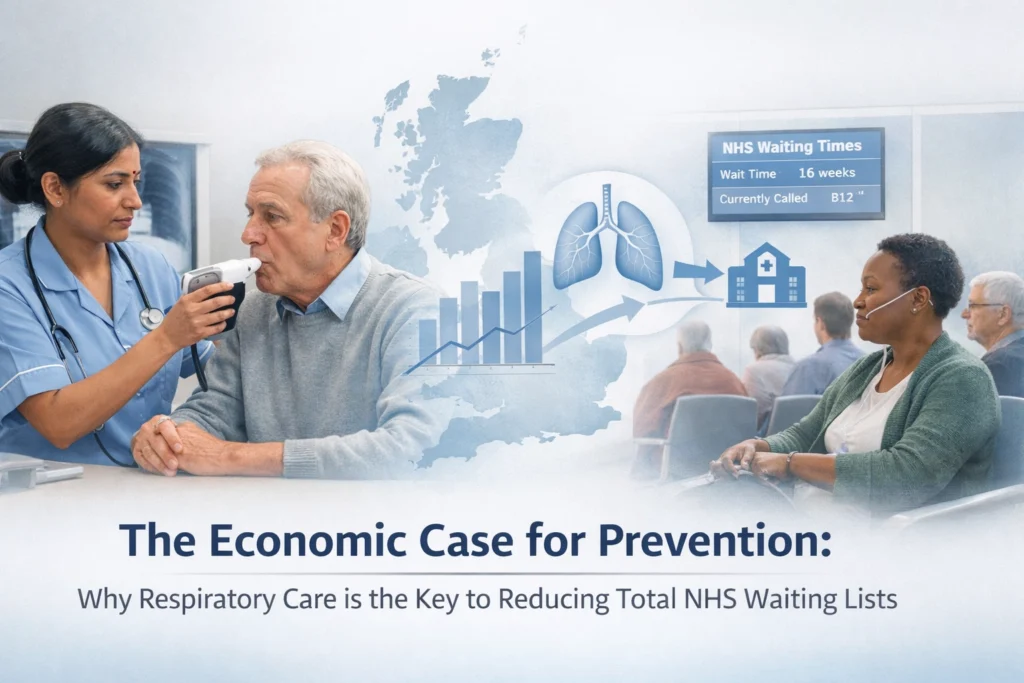
The Economic Case for Prevention: Why Respiratory Care is the Key to Reducing Total NHS Waiting Lists

Medical Disclaimer: This article provides general information about respiratory care and is not a substitute for professional medical advice. If you are experiencing severe breathlessness, chest tightness, or symptoms that are not relieved by your usual treatment, seek urgent medical attention. For questions about your care, treatment or inhaler use, please contact your GP, asthma nurse, or healthcare provider.
The NHS waiting list narrative often focuses on elective surgery backlogs, A&E pressures, and diagnostic delays. But there's a quieter story playing out across the system, one that affects more people, costs more money, and rarely makes headlines.
Respiratory conditions account for one in five emergency admissions in the UK. COPD alone costs the NHS approximately £1.9 billion annually. Asthma leads to over 70,000 hospital admissions each year. Yet most of these events are preventable with the right interventions at the right time.
This isn't about innovation. It's about arithmetic.
The Hidden Cost of Reactive Care
In practice, the NHS spends the majority of its respiratory budget managing crises rather than preventing them. A patient with uncontrolled COPD might visit their GP twice a year, miss a spirometry review, and then arrive at A&E in respiratory distress. That single admission costs thousands of pounds, and occupies a bed that could have been used for planned surgery.
What patients and clinicians often describe is a system that intervenes too late. The patient knew something wasn't right weeks earlier. The GP surgery had capacity constraints. The community respiratory team had a three-month wait. By the time secondary care becomes involved, the clinical and financial cost has multiplied.

This pattern repeats across every Integrated Care System in the country. And it directly impacts waiting lists in ways that aren't immediately obvious.
When respiratory patients occupy emergency beds, elective surgery gets cancelled. When diagnostic services are overwhelmed with acute referrals, routine scans get pushed back. When ambulances are tied up with preventable exacerbations, response times lengthen for everyone else.
What Prevention Actually Looks Like
Prevention in respiratory care isn't a single intervention. It's a sequence of small, well-timed actions that compound over time.
It looks like:
- A pharmacy-led inhaler technique review that prevents three exacerbations over the next year
- A community nurse identifying early signs of deterioration during a home visit
- A pulmonary rehabilitation programme that reduces hospital readmissions by 40%
- A digital monitoring system that alerts a clinical team before symptoms escalate
- A case-finding initiative in areas with high smoking prevalence that diagnoses COPD five years earlier
Each of these interventions costs less than a single emergency admission. And each one frees up capacity elsewhere in the system.
The economic case isn't theoretical. Royal Papworth Hospital recently doubled capacity in its sleep lab, increasing overnight diagnostic tests from 21 to 40 patients per week. This doesn't just help sleep disorder patients, it prevents downstream complications that would eventually burden cardiology, neurology, and mental health services.
The Ripple Effect Across Waiting Lists
Respiratory care sits at the intersection of multiple specialties. An undiagnosed or poorly managed respiratory condition doesn't just affect one pathway, it creates demand across the system.
Consider a patient with severe asthma. Without proper management, they might develop anxiety related to breathlessness, requiring mental health input. They might avoid physical activity, leading to cardiovascular deconditioning. They might experience repeated chest infections, requiring multiple courses of antibiotics and follow-up appointments. Each of these adds to different waiting lists.
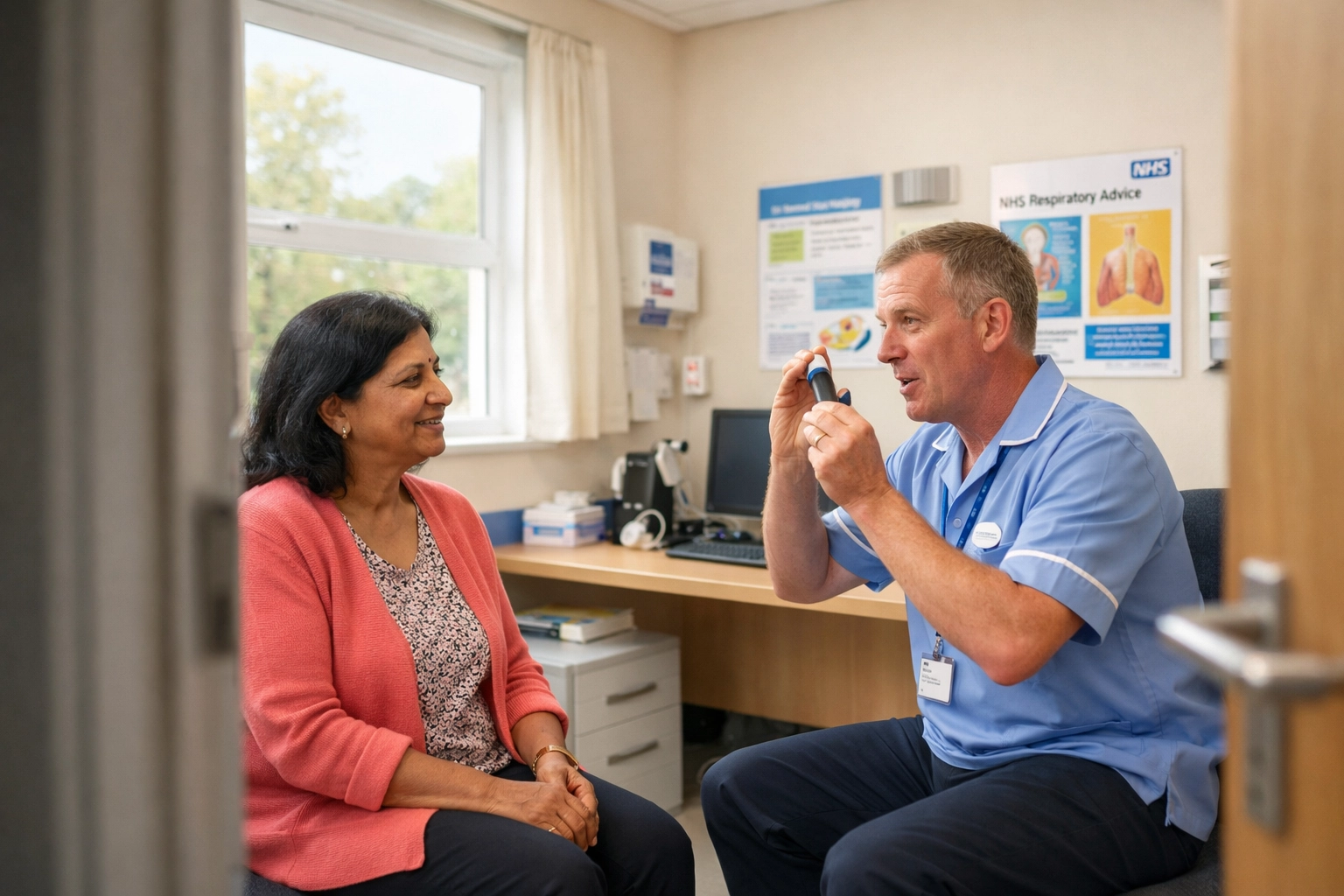
What this looks like on the ground is a patient bouncing between services, each treating symptoms rather than addressing the underlying respiratory control issue. It's inefficient clinically, exhausting for the patient, and expensive for the system.
When respiratory care is delivered well, with early diagnosis, regular monitoring, and proactive intervention, this cascade doesn't happen. The patient remains stable. Other specialties aren't drawn in. Capacity is preserved.
Since July 2024, the NHS has reduced waiting lists by over 206,000 patients through surgical hubs, Community Diagnostic Centres, and evening clinics. These are essential initiatives. But they address the backlog, not the inflow.
Prevention addresses the inflow.
Where Respiratory Services Fit in the 2026 Landscape
Respiratory services have been identified as a priority in the NHS's technology expansion plans, alongside cardiology and dermatology. This reflects recognition that these specialties are high-volume, high-impact, and amenable to innovation.
The shift toward delivering most outpatient care outside hospitals by 2035 is already underway. Community Diagnostic Centres are expanding access to spirometry and imaging. Remote monitoring platforms are enabling clinicians to track patients with chronic conditions at home. Pharmacy-led services are taking pressure off general practice.
In this landscape, respiratory care isn't a standalone service, it's a test case for what prevention at scale could achieve.

If an ICS can demonstrate that investing in community respiratory teams reduces emergency admissions by 15%, the model becomes replicable across other long-term conditions. If a region can show that case-finding in primary care identifies patients earlier and reduces downstream costs, the business case for prevention strengthens across the board.
The Economic Reality
The challenge isn't a lack of evidence. Multiple studies demonstrate that proactive respiratory management reduces hospitalisations, improves quality of life, and saves money. The challenge is that the benefits often accrue in a different budget line or a different financial year than the investment.
A community respiratory service might be funded by primary care, but the savings appear in secondary care admissions data six months later. A pulmonary rehabilitation programme might cost £300 per patient, but the avoided A&E attendance worth £150 happens next winter, not this quarter.
This is where system-level thinking becomes essential. Integrated Care Systems exist, in part, to solve exactly this problem, to enable investment decisions based on total system cost rather than organisational silos.
What This Means in Practice
For NHS leaders, the question isn't whether prevention works: it's how to make the case internally when budgets are constrained and waiting list targets are measured in months, not years.
The answer lies in making prevention visible. That means:
- Tracking avoided admissions alongside activity data
- Reporting emergency department deflections as a positive metric
- Measuring bed days saved, not just procedures completed
- Demonstrating how early intervention reduces demand across multiple pathways
For Life Sciences partners, it means understanding that the value proposition isn't just clinical efficacy: it's system efficiency. A device, diagnostic tool, or digital platform that helps identify high-risk patients earlier or enables monitoring in the community doesn't just improve outcomes. It preserves capacity.
For patients and patient advocates, it means shifting the conversation from treatment access to earlier intervention. The right question isn't just "how long will I wait for an appointment?" It's "could this have been prevented with better support six months ago?"
The Path Forward
The NHS is under immense pressure. Waiting lists, workforce shortages, and financial constraints dominate every planning conversation. In that context, prevention can feel like a long-term aspiration rather than an immediate priority.
But the data tells a different story. Respiratory conditions are among the most common reasons people interact with the NHS. They're also among the most preventable.
Investing in respiratory care isn't a distraction from waiting list reduction: it's a prerequisite for it. Every exacerbation prevented is a bed freed up for elective surgery. Every early diagnosis is one less complex case years down the line. Every patient stabilised in the community is one fewer ambulance call.
This isn't about choosing between prevention and treatment. It's about recognising that they're economically inseparable.
Full Medical Disclaimer:
This article is intended for general informational and educational purposes only and does not constitute medical advice, diagnosis, or treatment. The content provided is based on current clinical guidelines and evidence available at the time of writing, but individual circumstances vary significantly.
Do not use this article to self-diagnose or change your treatment without consulting a qualified healthcare professional. Respiratory conditions are serious and require personalised medical assessment and ongoing monitoring by a GP, asthma nurse, respiratory specialist, or other qualified healthcare provider.
If you are experiencing any of the following, seek urgent medical attention immediately:
- Severe breathlessness or difficulty speaking in full sentences
- Blue lips or fingernails
- Feeling exhausted or unable to manage symptoms
- No improvement after using your reliever inhaler
- Symptoms rapidly worsening
For non-urgent concerns about your treatment, inhaler technique, or medication use, please contact your GP surgery, asthma nurse, or NHS 111 for advice.
The Respiratory Network does not provide clinical services or individual medical advice. Always follow the specific treatment plan provided by your healthcare team.
Want to be part of the conversation shaping respiratory care across the UK? Join The Respiratory Network to connect with NHS leaders, Life Sciences innovators, and patient advocates working to build better pathways. Or register for our next round table event to explore these challenges with peers across the system.

Responses