

CF Reality: The 24/7 Battle with Cystic Fibrosis That Goes Unseen

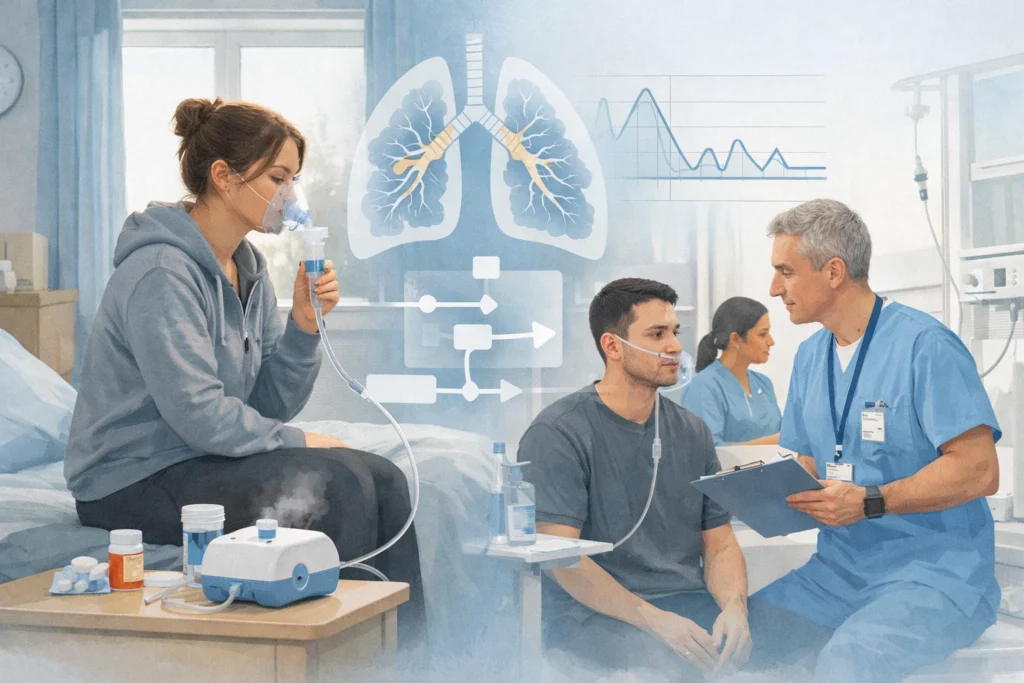
When we talk about Cystic Fibrosis in clinical settings, the conversation typically centres on lung function, exacerbations and treatment adherence. What we don't often discuss: what doesn't make it into the care plans or the data returns: is the sheer weight of living with CF every single day.
This isn't about raising awareness. Most people working in respiratory care know CF is serious. What's less visible is the relentless nature of the disease: the exhaustion that doesn't show on the outside, the constant mental planning, the impact on relationships and futures. For patients and families, CF isn't a diagnosis. It's a daily reality that starts the moment they wake up and doesn't stop when they go to bed.
If we're serious about person-centred care, we need to understand what that reality actually looks like.
The Treatment Treadmill
The first thing to understand about CF is that it demands hours every day. Not occasionally. Every day.
Patients describe waking up and immediately beginning a treatment routine that can take two hours before they're ready to start their actual day. Nebulisers, airway clearance, inhalers, medications: each step carefully timed, often painful, always non-negotiable.
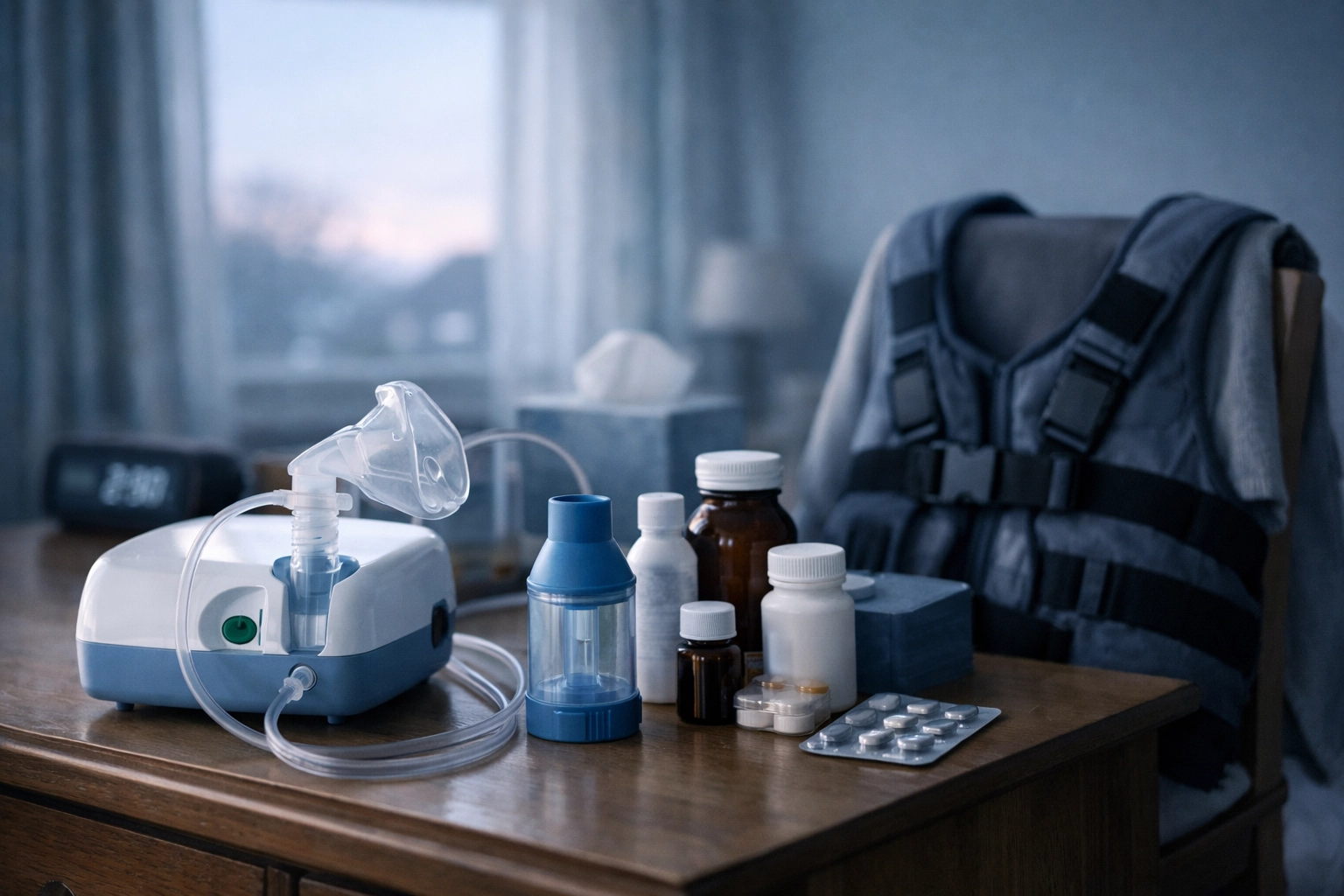
For children, this means parents structuring their lives around treatment schedules. For working adults, it means setting alarms earlier, planning around meetings, finding private spaces to complete treatments during the day. For teenagers, it's trying to balance a treatment regime with school, exams and the normal pressures of adolescence.
Long-term antibiotics and steroids are standard. The side effects: nausea, fatigue, mood changes: are just part of the package. And when an exacerbation hits, that baseline regime doubles or triples. Hospital admissions, IV antibiotics, more intensive physiotherapy. Life pauses. Work pauses. Everything pauses.
What clinicians often don't see is the cumulative cost of this. It's not just the time. It's the mental load of never being able to switch off.
The Invisible Exhaustion
CF fatigue is different from ordinary tiredness. It's the product of chronic infection, constant inflammation, poor sleep due to coughing, and the physical effort required just to breathe properly.
But here's the thing: many people with CF don't look unwell day to day. They're at work, at school, managing their lives. From the outside, they might seem fine. What's invisible is how much energy it takes to maintain that appearance.
Patients describe the phenomenon of "looking well" as both a blessing and a burden. It means they can participate in normal life, but it also means their exhaustion is often dismissed or misunderstood. They're constantly managing other people's expectations: proving they're unwell enough to need adjustments, but not so unwell that they're seen as incapable.
This plays out in workplaces, in social settings, in healthcare encounters. A young person with CF might cancel plans repeatedly not because they don't want to participate, but because they've run out of energy after a full day of managing their condition. A parent might need flexible working not because they're unreliable, but because their child's treatment schedule is rigid and unavoidable.

The Weight of Uncertainty
One of the hardest aspects of CF is the unpredictability. The disease progresses differently in different people. Two individuals with the same mutations can have vastly different experiences. What this means in practice is that it's difficult to plan a future with any certainty.
Young adults with CF describe living with a constant sense of precariousness. Can they commit to a career that requires long hours? Can they plan a family? Will they see their children grow up?
Fertility has historically been a particularly painful question. Many men with CF are infertile. Women with CF have faced difficult conversations about pregnancy risk, lung function decline, and life expectancy. Recent advances with CFTR modulators have changed this picture for some: pregnancy rates have doubled since 2019: but the uncertainty remains for many, and the emotional toll of these questions doesn't disappear just because treatment has improved.
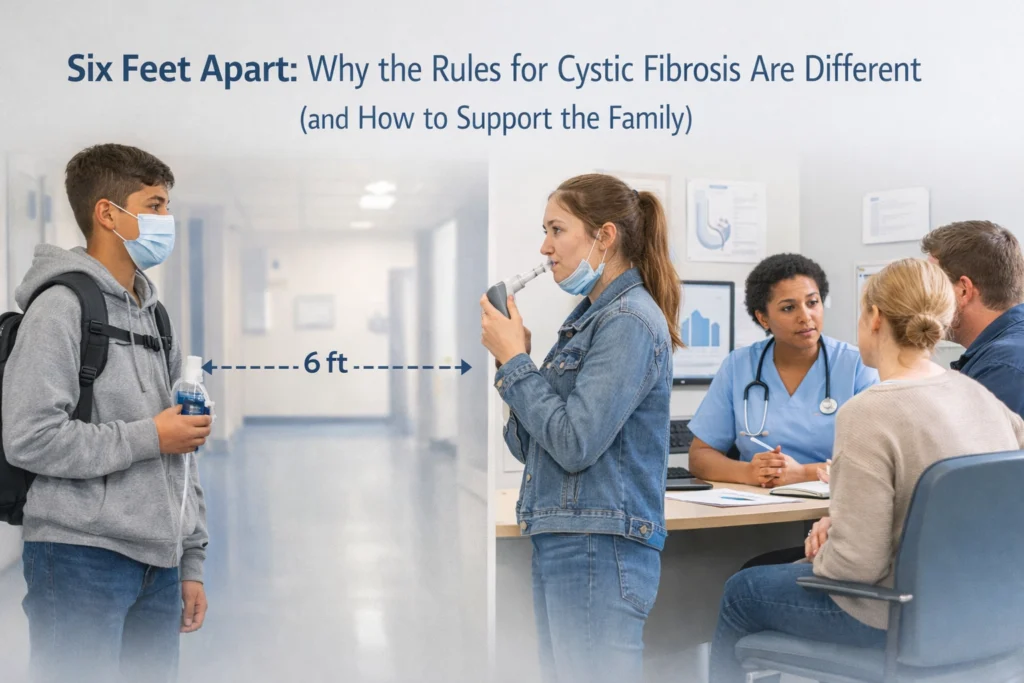
Relationships are complicated by CF in ways that people outside the community rarely understand. The practicalities of infection control mean that people with CF can't spend time together in person, cutting them off from peer support in a way that doesn't affect other chronic conditions. Romantic relationships require partners who understand the demands of the disease and are prepared to share that burden.
A 21-year-old patient interviewed in recent research asked simply, "Will I ever have a relationship?" A 36-year-old spoke about the anxiety of approaching the average life expectancy for CF. These aren't abstract concerns. They shape every decision, every plan, every day.
Important medical note: This article discusses the challenges of living with Cystic Fibrosis and is not a substitute for professional medical advice. If you or someone you care for has CF, treatment decisions and care planning should always be made in consultation with your specialist CF team, who can provide guidance based on individual circumstances.
The Mental Load
Beyond the physical burden, there's the constant mental work of managing CF.
Every meal requires calculation. Enzyme doses need to match food intake. Calories need to be maximised because CF affects digestion and weight maintenance. Going out for dinner isn't spontaneous: it requires planning, medication, and often explaining to others why eating looks different.
Every trip away from home needs advance logistics. Medications, nebulisers, airway clearance equipment all need to travel too. Flights require letters from doctors. Accommodation needs to be suitable for treatments. There's no such thing as packing light.

Every infection risk needs to be assessed. Crowded spaces, public transport, someone with a cold at work: all of these require constant vigilance. During COVID, people with CF were shielding before shielding was a term most of us understood.
And all of this sits alongside the normal demands of life: work, study, relationships, family, bills. Patients describe feeling like they're running two lives in parallel: the one everyone sees, and the one spent managing CF.
What We Can Do Differently
If we accept that this is the reality of CF, what does that mean for how we design care and support?
It means recognising that adherence isn't a simple yes or no question. When someone misses treatments, the question isn't "why aren't you following the plan?" It's "what's making this impossible right now?"
It means building flexibility into how care is delivered. Clinic appointments that require half a day off work are a barrier. Virtual reviews, home monitoring, and care closer to home all reduce the additional burden on patients who are already carrying a heavy load.
It means taking the mental health impact seriously. Depression and anxiety are common in CF, not because patients are weak, but because the disease is relentless. Psychological support should be embedded in CF care, not offered as an afterthought.
And it means listening to lived experience. Patients and families are the experts on what it's like to live with CF. Their insight should shape service design, research priorities, and policy decisions.
The Respiratory Network brings together people with lived experience, clinicians, NHS leaders and Life Sciences to have exactly these kinds of conversations. Because improving care for people with CF: and all respiratory conditions: requires everyone at the table.
Moving Forward Together
CF is exhausting, uncertain and all-consuming in ways that don't always show up in clinic letters or MDT discussions. But that invisible reality is what patients and families are living every day.
Understanding that reality doesn't mean we can fix it. But it does mean we can design care that respects it, support that acknowledges it, and conversations that centre it.
If you're working in respiratory care, commissioning services, or developing treatments, the question is simple: are we designing for the reality patients are living, or for the version we see in 15-minute appointments?
Because the 24/7 battle with CF deserves a response that matches its intensity.
Want to be part of the conversation? Join The Respiratory Network to connect with people who are reshaping respiratory care across the UK. Become a member, follow our updates, or join us at our next Round Table event where lived experience meets clinical expertise and system leadership.
The content in this article reflects observed experiences of living with Cystic Fibrosis and is intended to inform understanding within the respiratory care community. It is not medical advice. Anyone living with CF should work closely with their specialist CF team for personalised care and treatment decisions.

Responses