

Smart Lungs: Can wearable tech actually predict a COPD exacerbation before it happens?

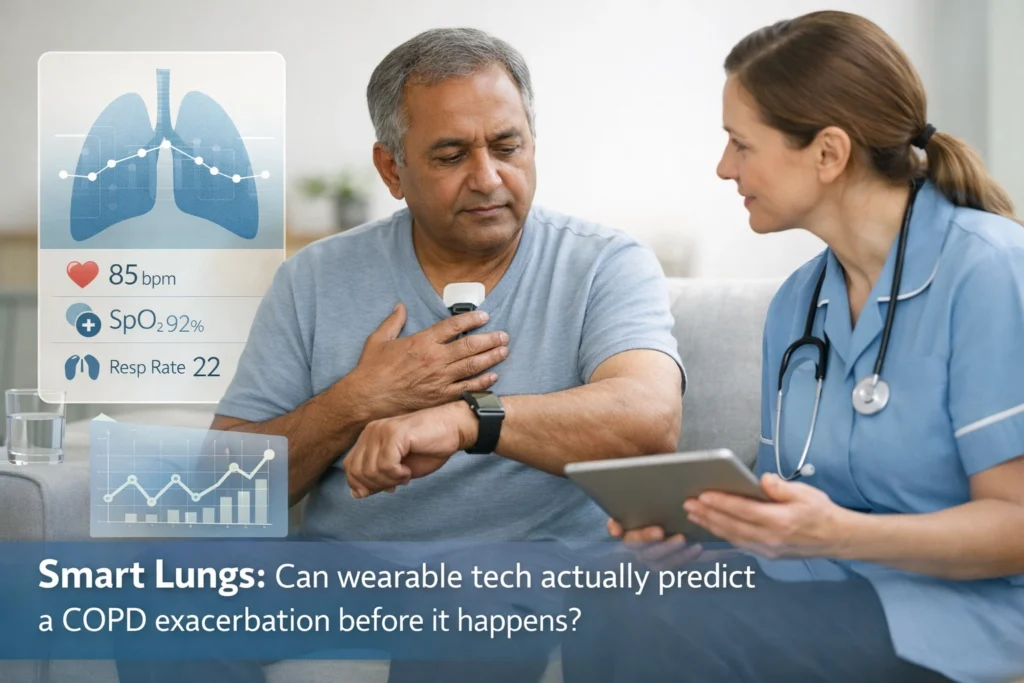
The management of Chronic Obstructive Pulmonary Disease (COPD) has traditionally been a reactive process. For decades, the standard respiratory pathway has relied on patients recognising their own worsening symptoms, such as increased breathlessness, changes in sputum, or a persistent cough, and seeking help from NHS respiratory services. By the time someone presents at a GP surgery or an A&E department, things can already have moved on, often leading to emergency admissions and a real impact on day-to-day life.
However, the landscape of respiratory care UK is shifting. We are moving into a period where "Smart Lungs" no longer feel like a distant idea but a practical area of interest for modern MedTech. The central question for NHS respiratory leadership and life sciences engagement UK is whether wearable technology can help move care from early detection towards something more proactive.
The Current State of 'Wait and Watch'
In the current UK landscape, COPD care UK is heavily burdened by the unpredictability of exacerbations. These flare-ups are the leading cause of emergency hospitalisations, placing immense pressure on the workforce. For the person living with the condition, an exacerbation is often a source of significant anxiety. The "panic loop": where breathlessness leads to fear, which in turn worsens the breathing: is a common experience.
The integration of digital health into NHS respiratory services aims to break this cycle. We are seeing a move toward virtual wards and remote monitoring, but much of this still relies on the patient manually entering data or the technology flagging a crisis that is already underway. To truly transform respiratory health UK, we need to identify the physiological "whispers" that occur before the "scream" of a full-blown exacerbation.
From Reactive to Proactive: The Wearable Promise
Recent research has highlighted the potential of non-invasive wearables: such as smart wristbands, rings, and even chest patches: to monitor biometrics continuously. Unlike traditional spot-checks, these devices provide a longitudinal view of a patient’s health.
Key metrics being studied include:
- Heart Rate and Respiratory Rate: Shifts in the baseline of these two metrics can indicate physiological stress.
- Oxygen Saturation: While a late indicator of a crisis, continuous monitoring can show subtle dipping patterns during sleep or exertion.
- Physical Activity and Sleep Quality: A reduction in steps or a change in sleep architecture often precedes a patient’s conscious awareness of feeling unwell.
A significant study conducted at McGill University monitored patients using advanced wristbands and rings. The research revealed that distinct physiological patterns could predict whether a patient was likely to recover or worsen during an exacerbation. This is a vital step forward for healthcare networking UK, as it allows for targeted interventions to be deployed precisely when they are needed most.
The Science of Prediction vs. Detection
There is a subtle but important distinction between detecting an exacerbation that has already started and predicting one before it becomes obvious. Most current technology is better at detection. For instance, if a patient’s respiratory rate rises and their oxygen levels fall, the device can alert the clinical team. This is still useful, and it can support the respiratory pathway by helping teams respond sooner.
The bigger ambition is prediction. An NIH-funded initiative is currently working on wearable devices that may be able to pick up early signs of an exacerbation within hours rather than days. Researchers are exploring how heart rate and respiratory rate interact during exertion. By analysing these patterns through AI-driven algorithms, it may become possible to identify the signature of an impending flare-up before the patient notices a clear change themselves.

Integrating Data into the UK Respiratory Pathway
For NHS respiratory leadership, the challenge is not just the hardware, but the data. How do we fit these "smart lungs" into an already stretched system?
The success of respiratory care UK depends on turning raw data into useful insight without creating "alarm fatigue" for clinicians. This is where life sciences engagement UK matters. The industry needs to work alongside the NHS to make sure these devices are validated, secure, and able to feed into patient records in a workable way.
When data flows seamlessly from a wearable device to a specialist respiratory team, it allows for:
- Prioritisation of High-Risk Patients: Clinicians can focus their attention on those whose data shows a downward trend.
- Reduced Hospital Admissions: Earlier intervention at home can prevent the need for an acute bed.
- Informed Consultations: Instead of relying on a patient’s memory of the last three months, a consultant has a digital diary of their physiological health.
The Human Factor: Patient Engagement and Lived Experience
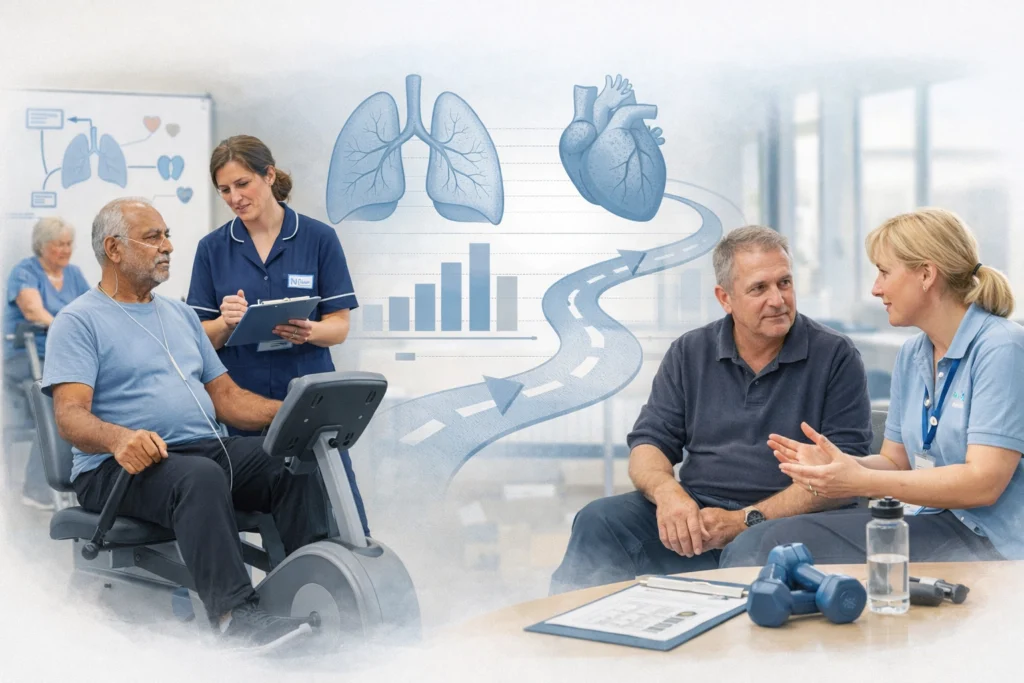
One of the most encouraging findings in recent trials is that even those with severe respiratory conditions can engage well with wearable tech. There is still a common misconception that digital health is only for the "tech-savvy" younger generation. In practice, people living with chronic conditions are often very willing to use tools that help them feel more informed and more in control.
Patient engagement healthcare UK is about more than handing someone a gadget. It is about co-production: making sure devices are comfortable, interfaces are accessible, and the data shared with the patient feels meaningful. For a person living with COPD, knowing that their "smart lungs" are being monitored by a professional team may help reduce some of the anxiety associated with breathlessness.
The Strategic View for NHS Leadership and Life Sciences
The transition to wearable-led care requires a shift in strategy. It is not merely an equipment upgrade; it is a fundamental redesign of the respiratory pathway.
For NHS respiratory leadership, this involves:
- Workforce Training: Ensuring staff are confident in interpreting digital data.
- Digital Inclusion: Addressing the risk that those in lower socio-economic groups may not have the internet access or hardware to benefit from these innovations, which could inadvertently widen health inequalities.
- Funding Models: Moving away from tariff-based systems that reward hospital activity and toward models that incentivise prevention and home-based care.
For Life Sciences, the focus must be on evidence. While the technology is exciting, it must be backed by robust data showing it improves outcomes and is cost-effective for the NHS. Collaboration through healthcare networking UK is the best way to bridge the gap between a prototype and a standard-of-care device.
Looking Ahead: The Future of Breath
Are we at the point where a wearable can tell you that you will have an exacerbation next Tuesday? Not quite. But the direction of travel is becoming clearer. The aim is to move from reacting to a crisis towards managing a condition earlier and with better information.
As these technologies develop, the focus needs to stay on the person at the centre of care. Technology should support the connection between the patient and their clinical team, not replace it. Used well, "Smart Lungs" could offer a clearer picture of respiratory health and help teams spot patterns earlier.
The future of asthma care UK and COPD care UK is likely to sit in this intersection of human expertise and digital innovation. At The Respiratory Network, we are committed to supporting these conversations and bringing together people from across the NHS and Life Sciences to explore what this means in practice.
Join the Conversation
Are you an NHS leader, a Life Sciences professional, or someone with lived experience of a respiratory condition? We invite you to be part of the change.
- Become a Member: Join our growing community at The Respiratory Network.
- Join the Forums: Discuss the latest in MedTech and digital health with peers in our Forums.
- Attend Our Event: Join us at our next Round Table on June 24th to shape the future of the respiratory pathway. Find out more on the event page.
- Register: Sign up or access the network here: Register.
Together, we can ensure that innovation leads to better care for everyone.
Please note: The information in this blog is for educational and networking purposes only. It is not intended to be a substitute for professional medical advice, diagnosis, or treatment. Always seek the advice of your physician or other qualified health provider with any questions you may have regarding a medical condition.



Responses