

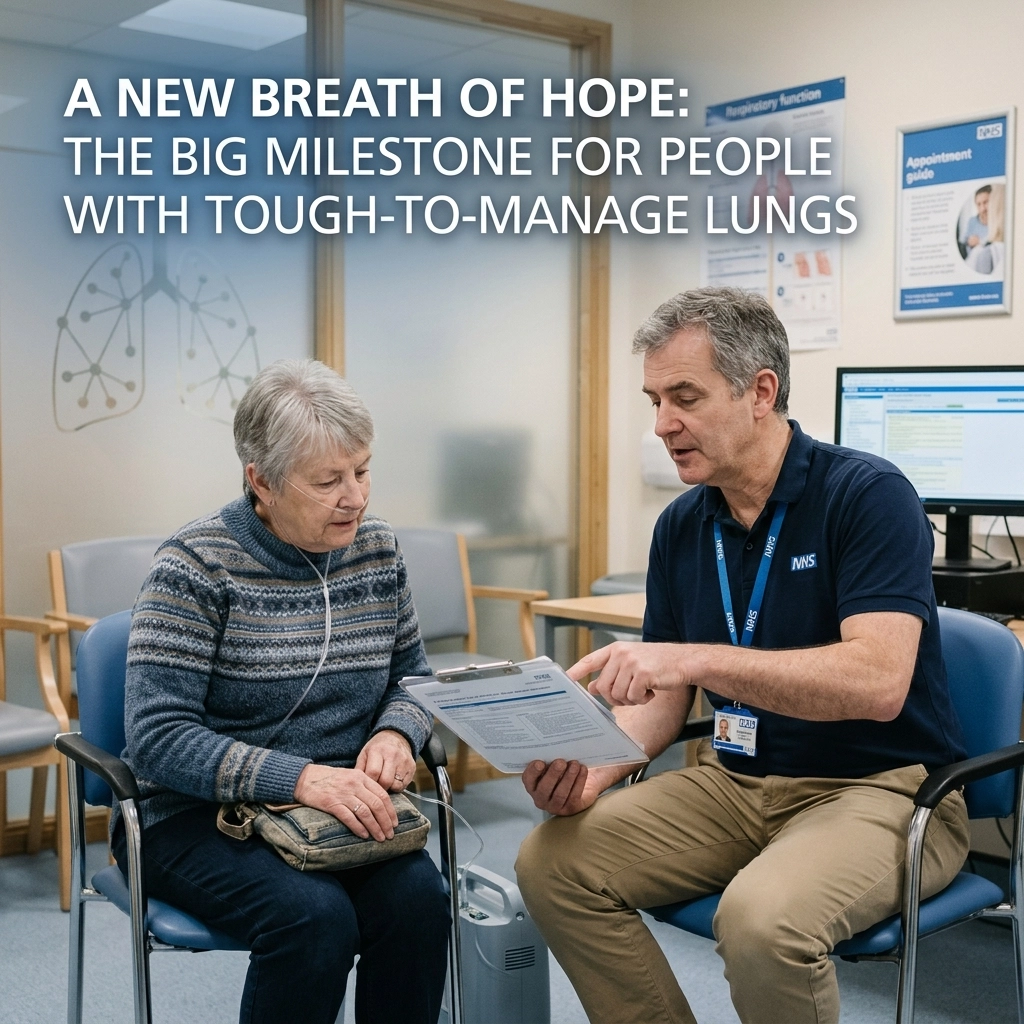
A New Breath of Hope: The Big Milestone for People with Tough-to-Manage Lungs

Disclaimer: The Respiratory Network provides information and insight for educational purposes only. This content does not constitute medical advice, diagnosis, or treatment. If you have questions about your health or symptoms, please speak to a qualified healthcare professional.
Dealing with a chronic lung condition is often a full-time job that nobody applied for. It’s not just about the breathlessness; it’s about the constant planning, the missed social events, and the nagging worry that the next flare-up is just around the corner. For a significant number of people, even with the best currently available care, their symptoms remain “tough-to-manage.” They are caught in a cycle of hospital visits and temporary fixes.
However, we’ve recently seen a major milestone that is worth talking about. NICE has recently given the green light to a new targeted treatment for certain types of chronic lung conditions. While we don’t focus on specific medications here, the shift in how we approach these conditions is what really matters. It represents a move away from “one size fits all” and toward something much more personal.
Why this milestone matters right now
For years, respiratory care has often relied on a standard ladder of treatments. You start on step one, and if that doesn’t work, you move to step two. But for those with complex or severe symptoms, that ladder sometimes feels like it’s leaning against the wrong wall.
This recent news is a sign that the system is starting to recognise the biological differences between patients. By targeting the specific drivers of inflammation or airway damage, we aren’t just masking symptoms; we are looking at the root causes for specific groups of people. For the person who has been told “there’s nothing more we can do,” this isn’t just a clinical update: it’s a genuine breath of hope.

What “targeted” means in plain English
When we talk about targeted care, we are essentially talking about precision. In the past, if ten people had a persistent cough and wheeze, they might all receive the same type of inhaler. Today, through better diagnostics and a deeper understanding of the body, we can identify that person A has a different biological “signature” than person B.
The recent milestone focuses on a treatment designed specifically for those whose conditions don’t respond to standard routines. It’s about finding the right key for a very specific lock. For the NHS, this is a huge step toward more efficient care. Instead of prescribing treatments that might only be partially effective, clinicians can now look toward options that have a much higher chance of making a real difference in a person’s quality of life.
The view from the ground
In practice, we hear from clinicians all the time about the frustration of seeing “revolving door” patients: people who are doing everything right but still end up back in the clinic or A&E. There is a heavy emotional weight on healthcare professionals when they feel their toolkit is limited.
What this milestone represents on the ground is a new conversation. Instead of a consultation being about managing a decline, it becomes a conversation about finding a new path forward. It gives clinical leads a new way to structure pathways, potentially reducing the massive pressure on emergency services by keeping people stable at home.

Bridging the diagnostic gap
Of course, a new treatment is only as good as the system’s ability to find the people who need it. This brings us to one of the most important topics we discuss at The Respiratory Network: diagnostics.
To benefit from a targeted approach, patients need access to specific tests that identify their particular “type” of lung condition. We often hear that the challenge isn’t the lack of science, but the lack of access to that science at a local level. Whether it’s spirometry, blood tests, or more advanced imaging, the milestone we are celebrating today highlights the urgent need for a diagnostic infrastructure that keeps pace with pharmaceutical innovation.
If we want these breakthroughs to reach the people living in every corner of the UK: not just those near major teaching hospitals: we have to talk about how we fund and staff our local respiratory hubs.
Why collaboration is the secret sauce
No single part of the system can solve respiratory health alone.
- Life Sciences companies create these incredible new tools.
- The NHS provides the framework and the dedicated staff to deliver them.
- Patients bring the lived experience that tells us if a treatment is actually working in the real world.
When these three groups don’t talk to each other, progress stalls. This latest milestone was only possible because researchers listened to the needs of those with the most severe symptoms, and the NHS worked with NICE to figure out a way to make the treatment accessible.
This is exactly why we do what we do at The Respiratory Network. We want to make sure the Life Sciences director, the NHS clinical lead, and the patient advocate are all in the same room (or on the same forum) discussing how to make these milestones a reality for everyone.

Looking ahead to June 24th
These are the exact kinds of shifts we’ll be digging into at our upcoming event. How do we take a “milestone” on paper and turn it into a better day-to-day life for someone living with a lung condition? How do we ensure that “targeted care” doesn’t become a postcode lottery?
We’d love for you to be part of this conversation. We are hosting the Respiratory Network Round Table 2026 on Wednesday, June 24th. It’s a chance to step away from the daily grind and think about the bigger picture of where lung care is heading.
- When: June 24th, 2026
- Where: The King’s Fund, London
- Event Details: Find out more here
- Registration: Register your interest here
A grounded close
It is easy to get swept up in the technicalities of NICE guidelines and clinical trial data. But at the heart of this recent news is a person who might soon be able to walk to the shops without stopping, or play with their grandkids without fear of a flare-up.
Progress in respiratory health is often slow, but every now and then, we hit a milestone that feels like a genuine leap forward. This is one of those times. By moving toward care that respects the individuality of our lungs, we aren’t just treating a disease: we are supporting a person.
Let’s keep the conversation going. If you’re a professional working in this space or someone with lived experience, your voice matters in shaping how these new opportunities are rolled out across the country.
Categories: Clinical Updates, NHS Strategy & Leadership, The Patient Voice
Tags: NICE Guidelines, COPD Care UK, Asthma Care UK, Pathway Innovation, Lived Experience, NHS Respiratory Services

Responses