

Two Hearts, One Breath: A Gentle Look at Navigating Pregnancy and Respiratory Health

Disclaimer: The Respiratory Network provides information and insight for educational purposes only. This content does not constitute medical advice, diagnosis, or treatment. If you have questions about your health or symptoms, please speak to a qualified healthcare professional.
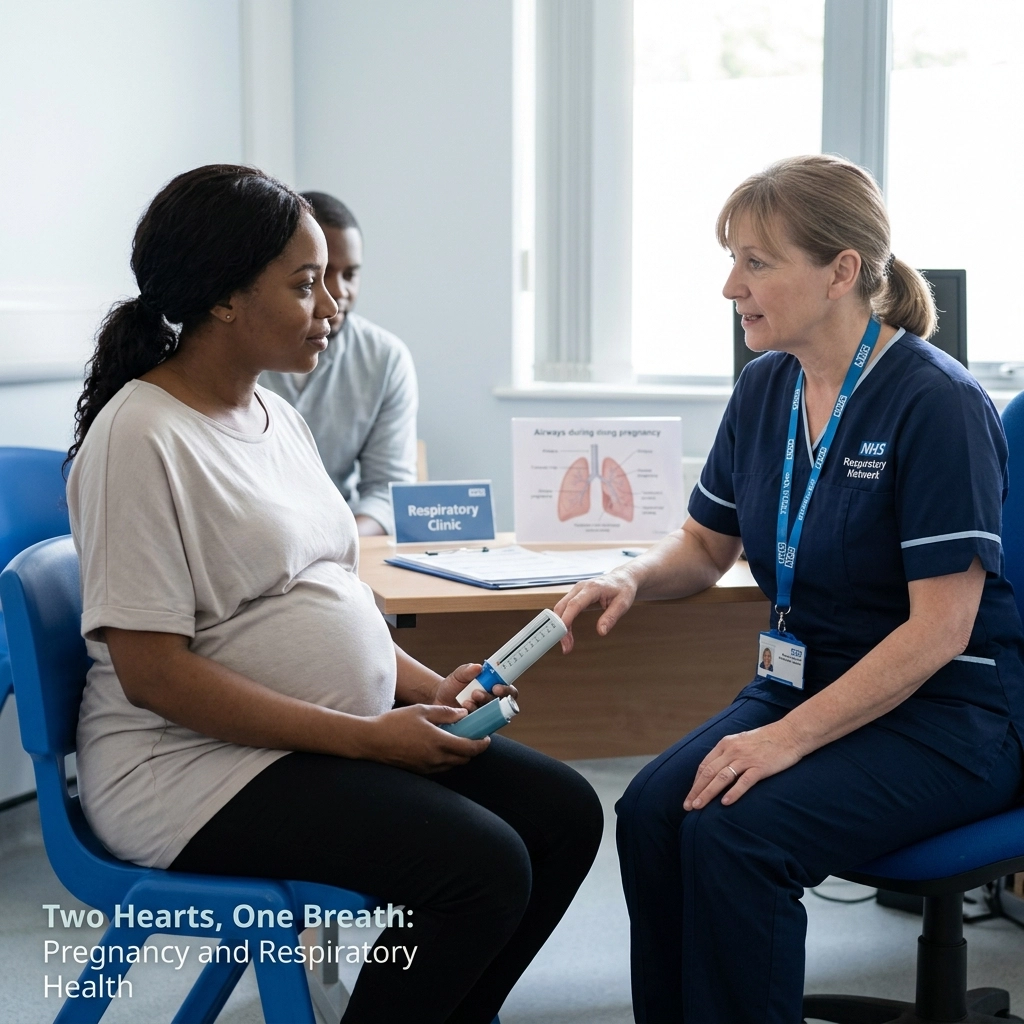
There is a certain kind of magic that happens when you’re growing a tiny human, but let’s be honest, it’s also a bit of a physical marathon. For those of us already navigating the world with what I like to call "fussy lungs," adding a pregnancy into the mix can feel like trying to run that marathon while wearing a very heavy, very wriggly backpack.
It’s a topic that doesn’t always get the spotlight it deserves. We talk about morning sickness and nursery colours, but we don't always talk about the literal "squeeze" on our respiratory system. At The Respiratory Network, we’re all about bridging the gap between clinical expertise and the real-life, "on the ground" experience. So, let’s take a gentle look at what’s actually happening when you’re breathing for two, and how the system, from the NHS to Life Sciences, is looking at this unique journey.
The Biological Dance: More Than Just a Deep Breath
It’s fascinating when you look at the science behind it. We often think of our breathing as something that just happens in the background, but during pregnancy, your breath becomes a sort of conductor for a very important orchestra. Research has shown that a mother’s breathing rate actually influences how her heartbeat synchronises with her unborn baby’s.
It’s a physiological connection that’s quite beautiful when you think about it. When a mother’s breathing shifts, the fetal heart rate often responds in kind. It’s like a silent conversation happening through the diaphragm. However, when your respiratory health is already a bit of a challenge, this "dance" can feel a little more laboured. You aren't just breathing for your own energy anymore; you’re the primary oxygen supplier for a growing customer who is increasingly taking up more real estate in your torso.

The Physical Squeeze: Why It Feels Different
In practice, the changes to the body during pregnancy are pretty substantial. By the time you reach the third trimester, your oxygen consumption has jumped up by about 20% to 30%. Your body is working overtime, but at the same time, that growing baby is starting to push upwards. The diaphragm, the main muscle responsible for helping you breathe, gets pushed up by about 4 centimetres.
Now, 4 centimetres might not sound like much when you’re measuring curtains, but inside your chest cavity, it’s a massive shift. It means your lungs have a bit less room to expand downwards. For someone with a perfectly clear respiratory pathway, this usually just results in a bit of huffing and puffing while walking up the stairs. But for those living with chronic respiratory conditions, that "squeeze" is felt much more acutely.
What patients often describe is a feeling of "air hunger", that sensation that you just can’t quite get a full, satisfying breath. It’s not just in your head; it’s a result of your functional residual capacity (the amount of air left in your lungs after a normal breath) decreasing. It’s a bit of a biological paradox: you need more oxygen than ever, but you have less physical space to move the air.
Navigating the "Rule of Thirds"
In the world of respiratory health and pregnancy, clinicians often talk about a "Rule of Thirds." While everyone’s journey is unique, it’s often observed that for people with existing respiratory challenges, things go one of three ways. About a third find their symptoms actually improve during pregnancy (thanks, perhaps, to the natural anti-inflammatory changes in the body). Another third stay exactly the same. And the final third might find things get a little more difficult.
What this looks like on the ground is a need for constant, gentle monitoring. It’s about staying in tune with what your body is saying. Because the fetus is incredibly sensitive to even slight drops in maternal oxygen levels, keeping that "breath" steady becomes a top priority. It’s not about being "perfect" or "strong"; it’s about being aware and having a supportive team around you who understands that your lungs are working double shifts.
The Healthcare Perspective: Joining the Dots
This is where the "Network" part of The Respiratory Network really comes into play. Managing respiratory health during pregnancy isn't just a job for a midwife, and it isn't just a job for a respiratory consultant. It requires a joined-up approach.
We see a lot of talk about "integrated care," but in practice, for a pregnant person with breathing difficulties, this means their GP, their obstetrician, and their respiratory specialist all need to be reading from the same hymn sheet. From a Life Sciences perspective, there is also a constant drive to understand how we can better support this demographic without relying on heavy interventions.
It’s about pathway innovation. How do we make sure a woman in a rural area has the same access to specialist respiratory-midwifery care as someone in a major city? How do we ensure that the "patient voice" isn't lost in a sea of clinical observations? These are the questions that keep us busy.

Daily Life: The "Boring" Bits are the Superpowers
When you’re in the middle of it, you don't need "innovation" or "strategy", you need to know how to get through the day. Many people find that the small, seemingly boring habits are actually their secret superpowers.
Pacing becomes essential. The "marathon" mindset is great, but even marathon runners take water breaks. It’s about learning to move at a speed that respects your lung capacity. Positioning also plays a huge role; finding ways to sit or sleep that give the diaphragm as much room as possible can make a world of difference to that "air hunger" feeling.
It’s also about environment. We know that things like air quality and temperature can trigger "fussy lungs" much more easily during pregnancy. Keeping your space cool and well-ventilated isn't just a comfort thing; it’s a respiratory management thing.
Community and Collaboration
None of us should have to navigate these challenges in a vacuum. Whether you are a patient advocate, an NHS lead trying to improve maternal pathways, or a Life Sciences professional looking at the next generation of care, we all have a part to play in making this journey smoother.
That is exactly why we hold our sessions. We want to bring these different worlds together to talk about what’s working and what isn't. We aren't interested in just looking at charts; we want to hear what it’s like on the ground for the person who is actually trying to catch their breath while preparing for a new arrival.

Looking Ahead: The June 24th Round Table
If these are the kinds of conversations that resonate with you, the intersection of real life, clinical excellence, and system-wide improvement, then you really should join us.
We are hosting our next Round Table event on the 24th of June 2026. It’s going to be a fantastic opportunity to dive deeper into how we shape the future of respiratory care in the UK, ensuring that no one, including those navigating the complexities of pregnancy, is left behind.
We’d love to have you there. Whether you work in the NHS, the Life Sciences sector, or you’re a patient advocate with lived experience, your voice is what makes the network work.
You can find all the details and grab your spot here: Round Table June 24th Event.
And if you haven't already, please do Register with The Respiratory Network to stay updated with all our latest insights, forums, and community discussions. We’re building something special here, and it’s much better when we do it together.
Final Thoughts
Pregnancy is a time of immense change, and when you have respiratory challenges, those changes are felt in every single breath. By understanding the mechanics, respecting the physical limits, and ensuring we have a "joined-up" healthcare village, we can make sure that "Two Hearts, One Breath" is a journey of connection rather than a struggle for air.
Take it one breath at a time. We’re here to help make sure those breaths are as easy as possible.
Want to stay connected?
- Follow us on our News Feed
- Meet the experts on our Speakers Page
Categories: The Patient Voice, Pathway Excellence
Tags: Respiratory Health UK, Lived Experience, Patient Engagement UK, Pathway Innovation, NHS Respiratory Services, Breathlessness.

Responses