

Not Just a Walk in the Park: Why Green Spaces Matter for Our Lungs

Disclaimer: The Respiratory Network provides information and insight for educational purposes only. This content does not constitute medical advice, diagnosis, or treatment. If you have questions about your health or symptoms, please speak to a qualified healthcare professional.
There is something about the first real heatwave of the year that changes the rhythm of a neighborhood.
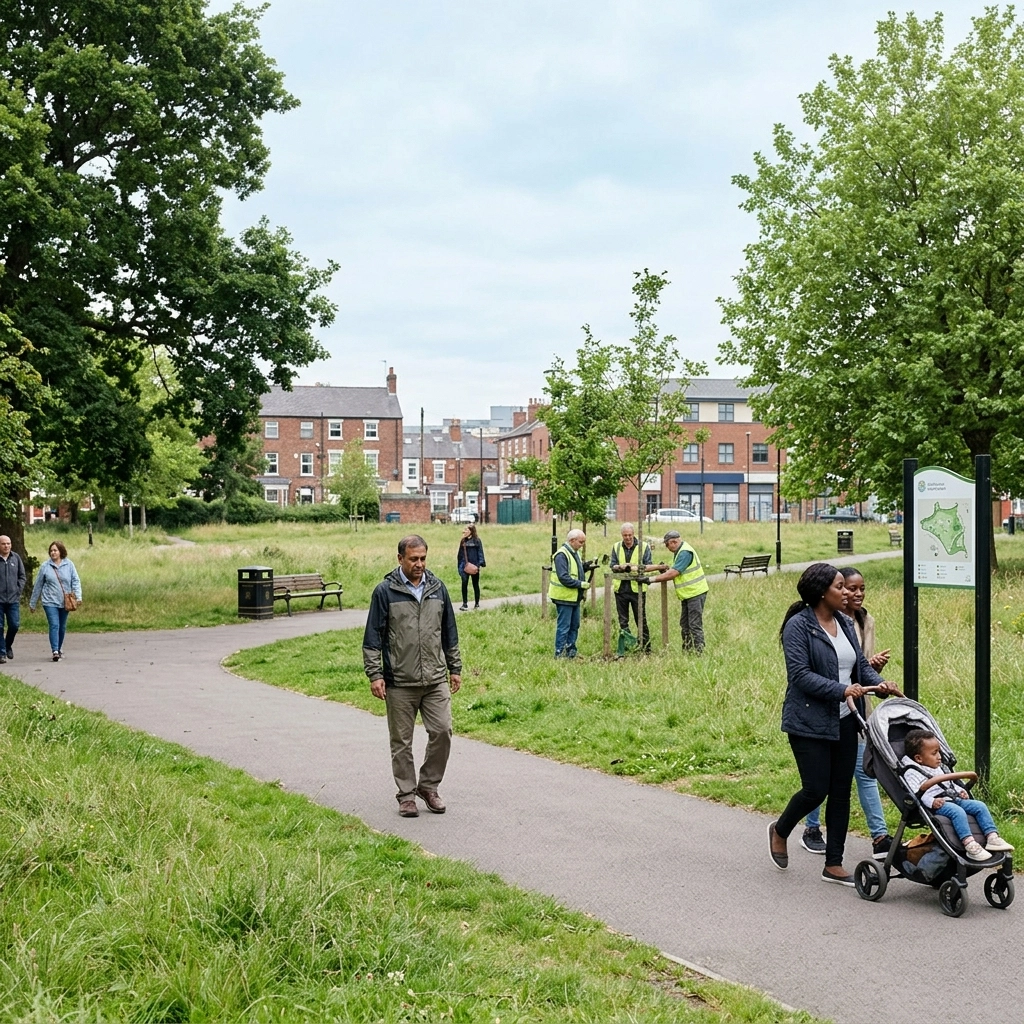
Here in the UK, as soon as the sun breaks through the clouds for more than ten minutes, we all seem to have a collective instinct to find the nearest patch of grass. Whether it’s a sprawling country park or a tiny urban square with a single bench and a brave-looking oak tree, we gravitate toward the green.
For those of us working within the respiratory community, whether you’re navigating life with a chronic condition, leading an NHS clinical team, or developing new technologies in the life sciences sector, we often talk about "environments." Usually, we mean the clinical environment, the home environment, or the internal environment of the lungs themselves. But with our latest Round Table event coming up on June 24th, it feels like the right time to look out the window and talk about the external environment: our green spaces.
Just a quick note from our colleague Linda: this blog is for sharing insights and starting conversations, not for medical advice. Always chat with your healthcare team about your specific needs. Also, you won’t find any mentions of specific medications or drug names here, we’re focused on the bigger picture of how our surroundings shape our breathing.
More Than Just a Pretty View
In practice, we’ve always known that getting some "fresh air" feels good. But what we’re starting to see on the ground is that the "greenness" of our surroundings isn't just a nice-to-have aesthetic choice; it’s a fundamental part of the respiratory health puzzle.
When we look at how people with lived experience describe their daily lives, the availability of a local park often comes up as a lifeline. It’s not just about the exercise, though that’s a huge part of it, it’s about the quality of the air being moved through the lungs. There’s a growing body of insight suggesting that the biological and environmental mechanisms at play in our parks are doing a lot of heavy lifting for our respiratory health.
The Natural Filter System
What patients and clinicians often describe is a noticeable difference in "air heaviness" when moving from a busy, concrete-heavy road into a wooded area or a large park. This isn't just psychological. Trees and vegetation act as a natural filtration system. They trap dust, bind exhaust particles, and absorb gases that can make breathing a struggle for many.
In the life sciences sector, there is constant innovation around air filtration and purification. Yet, nature has been providing a "low-tech" version of this for millennia. In urban areas, where air quality is a constant concern for those with conditions like COPD or asthma, these green buffers aren't just parks; they are protective zones. They cool the air by releasing humidity, which can be a game-changer during these hot June weeks when dry, hot air can often feel "thicker" and harder to navigate.
The Microbial Connection: Lessons from Childhood
One of the most fascinating areas of insight recently involves how green spaces affect us from a very young age. There was a significant study involving around 35,000 children across Europe that looked at the link between where they lived and how their lungs developed. The findings were quite striking: children who grew up in greener neighborhoods tended to have better lung function as they got older.

What’s interesting is the "why." It wasn’t just that there was less pollution (though that helped). It was also about what researchers call "beneficial microbiota." Essentially, being around nature exposes us to a wider variety of healthy bacteria and organisms. For a developing immune system, this exposure is like a training camp, helping the body learn how to react, and how not to overreact, to the world around it. This early intervention in the respiratory timeline is something we are discussing more and more at The Respiratory Network.
The Movement Factor
We can’t talk about green spaces without talking about movement. For someone managing a respiratory condition, the idea of "exercise" can sometimes feel daunting or even a bit clinical. But a "walk in the park" feels different. It’s social, it’s visual, and it’s grounded in reality rather than a gym setting.
Green spaces that are close to home provide a safe, low-pressure environment for physical activity. Whether it's a child playing on the grass or an adult practicing their pacing techniques on a flat path, these spaces encourage the kind of gentle, consistent movement that supports lung health over the long term. When we build these spaces into our communities, we are essentially building "pulmonary rehab" into the landscape of our lives.
The Inequality Gap
However, we have to be honest about what we see across the UK. Access to high-quality green space isn't equal. What we often see on the ground is that the neighborhoods with the highest rates of respiratory challenges are often the ones with the least amount of green canopy.
This is a key part of the conversation for NHS strategy and leadership. If we know that green spaces act as a buffer against poor air quality and help develop stronger lungs in children, then the lack of parks in lower-income urban areas is a significant health inequality. It’s not just a planning issue; it’s a respiratory health issue.
Mental Wellbeing and the Breath
There is a very real, very documented link between stress and breathing. Anyone who has ever felt their chest tighten during a moment of anxiety knows this. Chronic lung conditions can be exhausting and stressful to manage, creating a bit of a "panic loop" where stress affects breathing, which in turn causes more stress.
Green spaces provide a "reset" button. The visual of greenery, the sound of wind in leaves, and the relative quiet compared to city traffic all contribute to lowering stress levels. When the body is less stressed, the immune response is often more resilient, and the muscles involved in breathing are less tense. It’s a holistic benefit that’s hard to replicate in a clinical setting.
Joining the Conversation
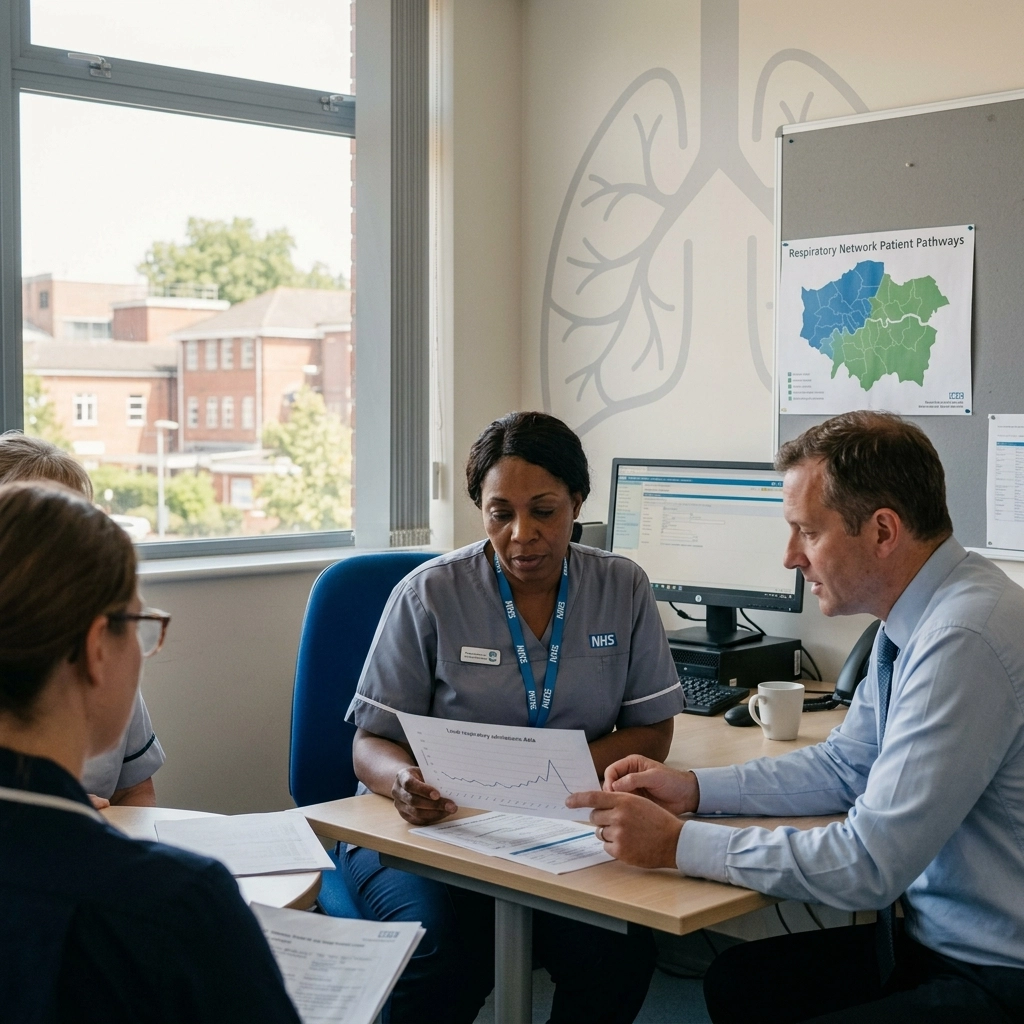
On June 24th, we will be hosting a major discussion on these very topics. Our Round Table 2026 will bring together experts from the NHS, patient advocates with lived experience, and leaders from the life sciences to talk about how we can make our respiratory pathways more sustainable and integrated with our environment.
We don't believe that healthcare happens in a vacuum. It happens in our homes, our streets, and our parks. By understanding the impact of our surroundings, we can better support those living with respiratory conditions and work toward a future where "clean air" isn't a luxury.

What This Looks Like on the Ground
In practice, this means advocating for more than just clinical solutions. It means:
- Supporting local initiatives that turn "grey" spaces into "green" ones.
- Integrating nature-based activities into standard respiratory care plans.
- Ensuring that urban planning takes air filtration and "green buffers" seriously.
- Recognizing that a park bench can be a vital piece of healthcare infrastructure for someone who needs to pace their breathing.
We’d love to hear your thoughts on this. Does your local green space make a difference to how you feel? If you’re a clinician, do you find yourself talking about the outdoors with your patients?
It’s a space where we move away from the authoritative "doctor-knows-best" model and instead focus on collaborative insight. We are all part of this system: patients, industry, and healthcare professionals alike: and it’s only by talking to each other that we can make sense of the challenges we see every day.
As the sun continues to shine this June, let’s remember that our lungs are deeply connected to the world around them. Sometimes, the most professional thing we can do is step outside, take a breath, and appreciate the green.
Are you joining our Round Table on June 24th?
If you're coming to London for the event at The King's Fund, we look forward to seeing you there. Together, we can shape the future of respiratory care in the UK: one park, one breath, and one conversation at a time.
Responses