

Boarding Pass and Breath: Your No-Nonsense Guide to Flying with Fussy Lungs

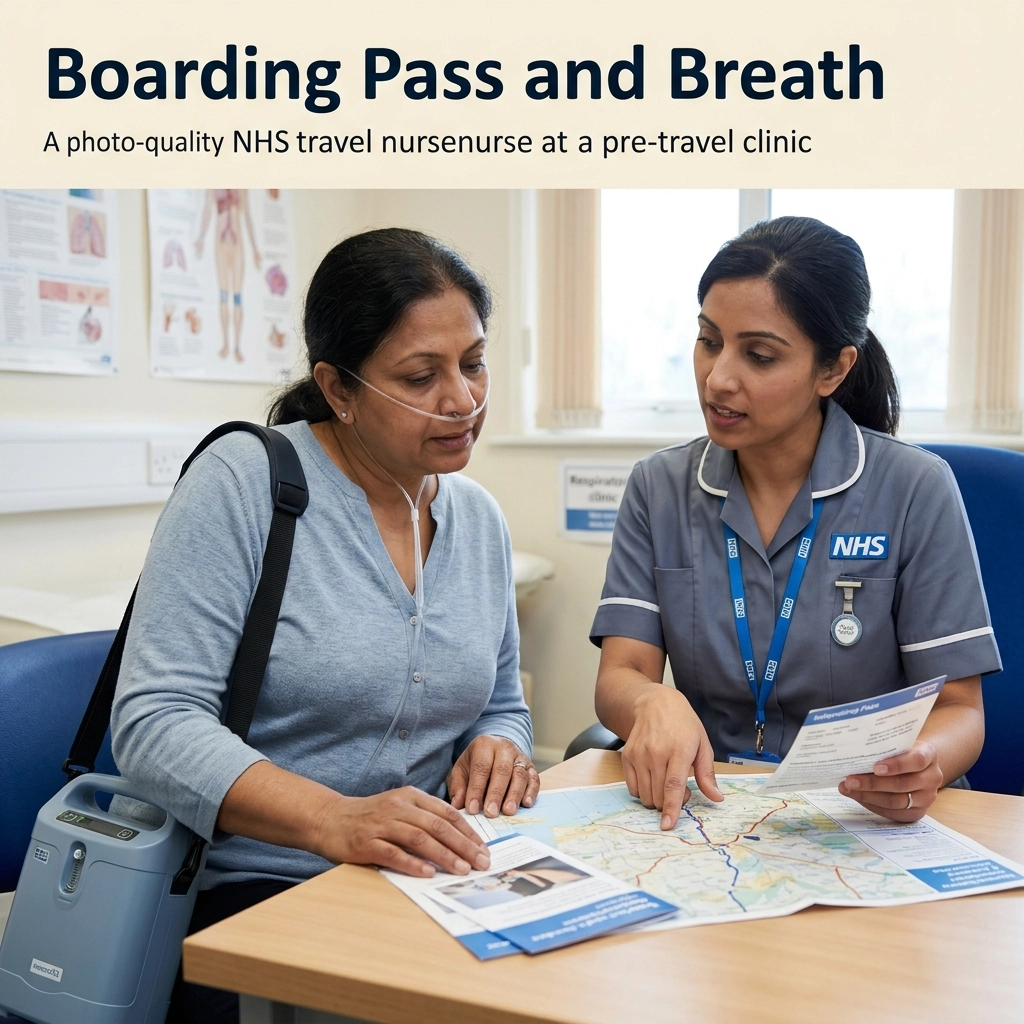
Let’s be honest: flying is rarely the glamorous experience the movies make it out to be. When you’re living with lungs that are a bit more "fussy" than the average person’s, whether that’s down to a long-term condition or a recent chesty bug, the stress levels can hit cruising altitude before you’ve even left the house.
At The Respiratory Network, we spend a lot of time talking about the big-picture stuff: NHS strategy, data, and clinical pathways. But we also know that for the person sitting in the waiting room or the clinician trying to offer practical advice, the "big picture" is often just wanting to know if they can safely get to a beach in Spain without ending up in a local hospital.
So, let’s talk about flying. No jargon, no "doctor-speak," just a practical look at how to handle air travel when your breathing isn't playing ball.
The Science of the Sky (In Plain English)
You don’t need a PhD in aeronautics to understand why flying feels different. When you’re at 35,000 feet, the plane is pressurized, but it’s not pressurized to sea level. It’s more like standing on top of a very tall hill, usually somewhere between 6,000 and 8,000 feet.
For most people, that’s fine. But if your lungs are already working overtime, that slight drop in available oxygen can make you feel a bit more puffed than usual. Add in the fact that cabin air is notoriously dry (about as dry as the Sahara Desert, actually), and you’ve got a recipe for a tickly cough and a tight chest.

The "Fit to Fly" Chat: Why It’s Not Just a Formality
We’ve all been tempted to just "wing it" (pun intended), but if you’ve got a respiratory condition, having a quick chat with your healthcare team is the smartest move you can make. It’s not about them giving you permission like a schoolteacher; it’s about making sure your body can handle the "mountain-top" environment of the cabin.
In many cases, they might suggest something called a "hypoxic challenge test." It sounds fancy, but it’s basically just you sitting in a chair, breathing in air with slightly less oxygen while they monitor how you’re doing. It’s a great way to figure out if you might need a little extra help, like supplemental oxygen, during the flight.
The goal here isn't to stop you from going on holiday; it's to make sure you actually enjoy it once you land.
Paperwork and Portable Kits
If you do need extra oxygen or if you use specific equipment to help you breathe, you can’t just turn up at the gate and hope for the best. Airlines are… let's say "particular" about what they allow on board.
Most airlines require a MEDIF (Medical Information Form). This is a bit of paperwork your doctor fills out to tell the airline that you’re safe to fly and what equipment you’re bringing.
A few pro-tips for the packing stage:
- The 48-Hour Rule: Most airlines want to know about oxygen or special needs at least 48 hours before you fly. Don't leave it until you're packing your suitcase.
- Battery Life: If you use a portable concentrator, make sure you have enough battery life for the flight plus a bit extra for delays. There’s nothing quite like the stress of a low-battery beep while sitting on a Gatwick tarmac.
- Hand Luggage Only: Keep all your essential bits and pieces, spacers, peak flow meters, whatever you use, in your carry-on. If the airline loses your checked bag (and let’s face it, it happens), you don’t want your breathing tools sitting in a warehouse in Zurich while you're in Rome.
Navigating the Airport Without the Sprint
Airports seem to be designed by people who enjoy walking five miles between security and the gate. If you’re feeling a bit breathless, that walk can feel like a marathon.
Don't be "too proud" to ask for assistance. Every major airport has a special assistance team. They can provide wheelchairs or those little electric buggies to get you where you need to go. It saves your energy for the things that matter, like arguing over which fridge magnet to buy.

On the Ground and In the Air
Once you’re on the plane, hydration is your best friend. Skip the second coffee or the tiny bottle of wine (tempting as it is) and stick to water. It keeps the mucus in your lungs thin and makes it easier to clear any irritation caused by the dry cabin air.
Also, don’t be afraid to move around. It's good for your circulation and helps you feel less "stuck." If you're using oxygen, just keep an eye on your tubing so you don't accidentally trip up a passing flight attendant.
Why This Matters to Us
At The Respiratory Network, we believe that good care doesn't stop at the hospital exit. It’s about how people live their lives in the real world. Whether you’re a patient advocate looking for better resources, an NHS leader looking at how we support travel pathways, or a Life Sciences professional developing the next generation of portable tech, these everyday challenges are what drive our conversations.
Speaking of conversations, we’re hosting a Round Table event on the 24th of June 2026. This is where we get into the weeds of respiratory care in the UK, moving away from just "managing" conditions and looking at how we can improve the quality of life across the board.
If you’re interested in how we can make respiratory pathways smoother (and maybe even make flying a bit easier for everyone), we’d love to have you there. You can find all the details for the event here: https://therespiratorynetwork.co.uk/event/round-table-2026/.
Join the Conversation
We’re more than just a blog; we’re a community. If you have tips for flying with "fussy lungs" or if you want to see what other people are talking about regarding respiratory health, head over to our Public Forum.
You can also register as a member to stay updated on all our upcoming events, including more insights into the June 24th Round Table.
Flying with a respiratory condition takes a bit more planning, sure. But with the right prep, a bit of patience, and a solid "fit to fly" plan, there’s no reason you can’t see the world. Just maybe skip the tuna sandwich in 14B.
Disclaimer: The Respiratory Network provides information and insight for educational purposes only. This content does not constitute medical advice, diagnosis, or treatment. If you have questions about your health or symptoms, please speak to a qualified healthcare professional.
Category: The Patient Voice
Tags: Respiratory Health UK, Patient Engagement UK, COPD, Asthma, Healthcare Networking UK, Integrated Care Systems (ICS), NHS Strategy, Lived Experience.




Responses